
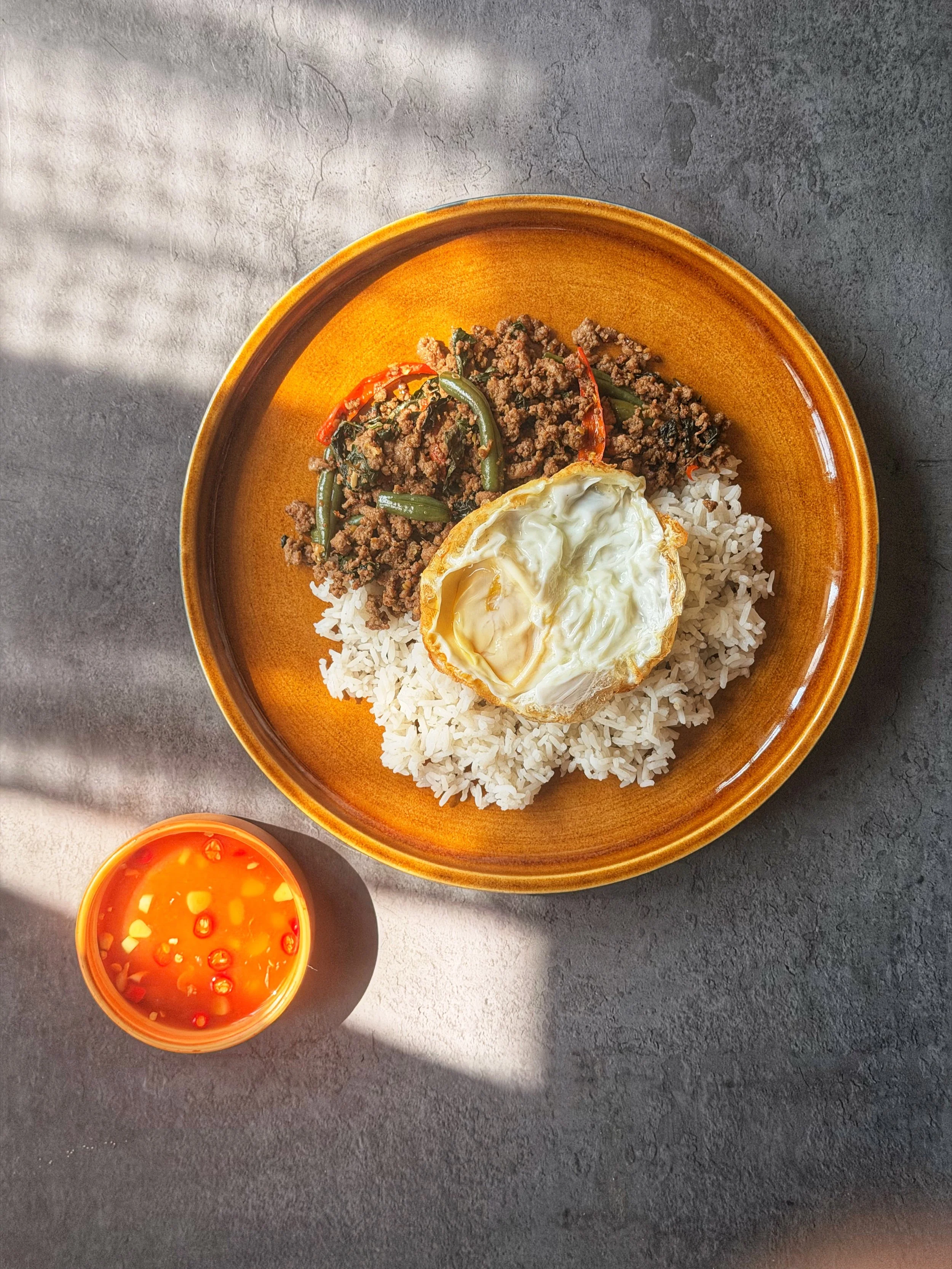
Pad Kra Pao Beef
Pad Kra Pao is more than just one of Thailand's most popular dishes. It's practically a national institution, found everywhere from roadside stalls and small neighbourhood eateries to bustling food courts. In Thailand, it's often associated with the expression ahan sin khit, loosely meaning “food for when you can't think of what to eat.” It's the dependable everyday meal people turn to when they're hungry, in a hurry or simply don't want to make another decision.
Much of its popularity comes from Thailand's ahan tam sang culture, where inexpensive meals are freshly prepared to order. Pad Kra Pao fits perfectly into this world. It's quick, affordable and endlessly adaptable, made with everything from pork and chicken to beef and seafood. Yet, for such a seemingly simple dish, it inspires surprisingly passionate debates about ingredients, particularly the use of holy basil, which gives the dish its name and distinctive peppery aroma.
What makes Pad Kra Pao special is precisely how ordinary it is. It isn't ceremonial food or something reserved for celebrations. It's the food of working days, lunch breaks and late-night hunger. A reminder that some of a country's most important culinary traditions aren't found at elaborate feasts, but in the everyday meals people return to again and again.
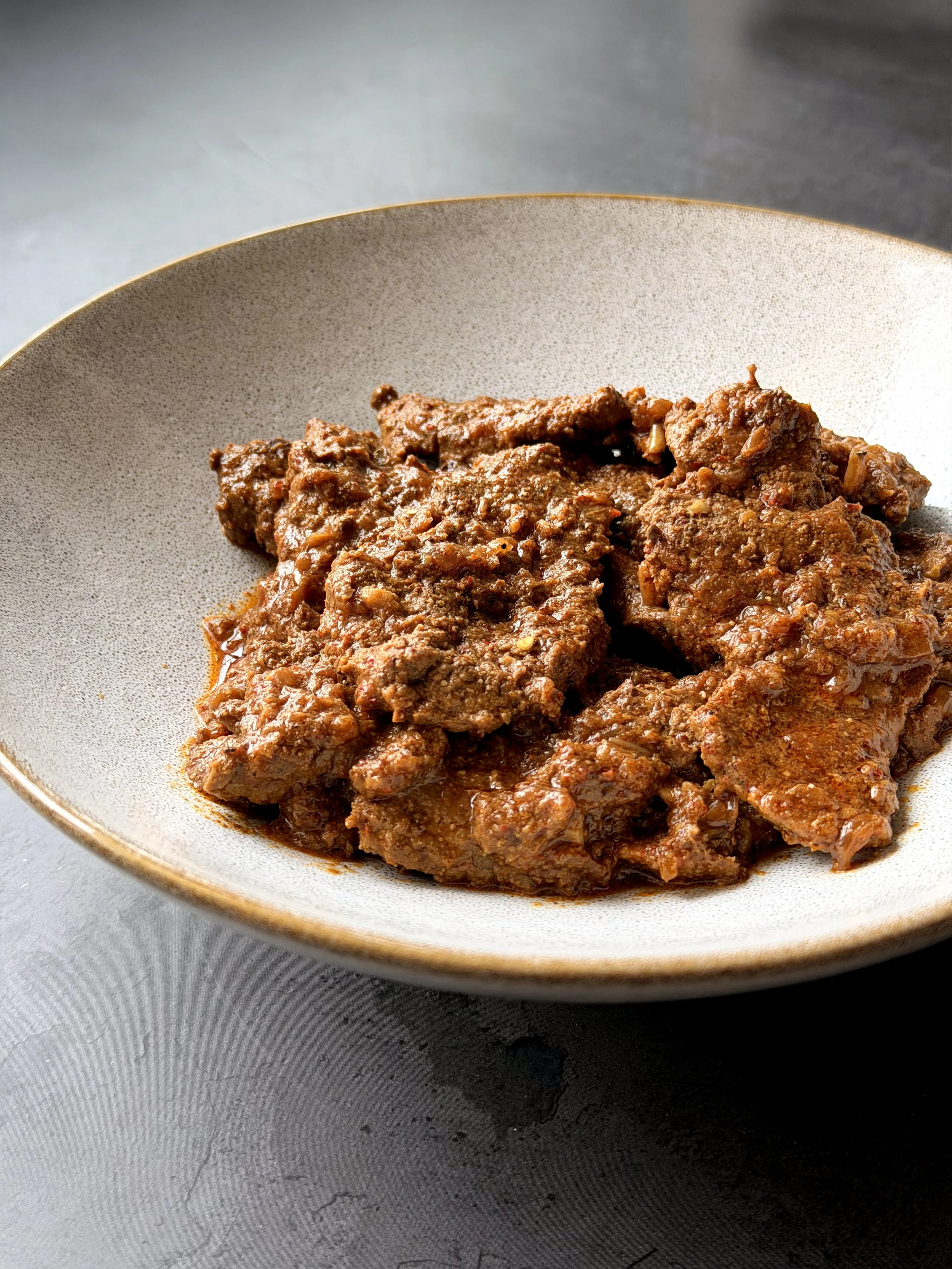
Beef Pasanday
Pasanday is one of those dishes that reminds you how much difference a little attention to the meat can make. The name comes from the Persian pasand, meaning something liked or favoured, and the dish has long been associated with the Mughal-influenced kitchens of the Indian subcontinent. Particularly popular in Pakistan, it takes a rather different approach to beef curry.
Instead of the usual chunks of meat, pasanday uses thin slices of beef, gently pounded to tenderise them and marinated overnight in yogurt, ginger, garlic and a rather enthusiastic collection of spices. The masala is especially interesting. Roasted almonds and poppy seeds lend richness and body, while browned onions provide sweetness and depth, all without a tomato in sight.
The meat is briefly seared before being simmered in its marinade, which gradually reduces into a thick, intensely aromatic gravy that clings to every slice. It's rich, deeply spiced and a little indulgent, but that's rather the point.
Best enjoyed with hot naan or paratha, preferably with very little conversation getting in the way.
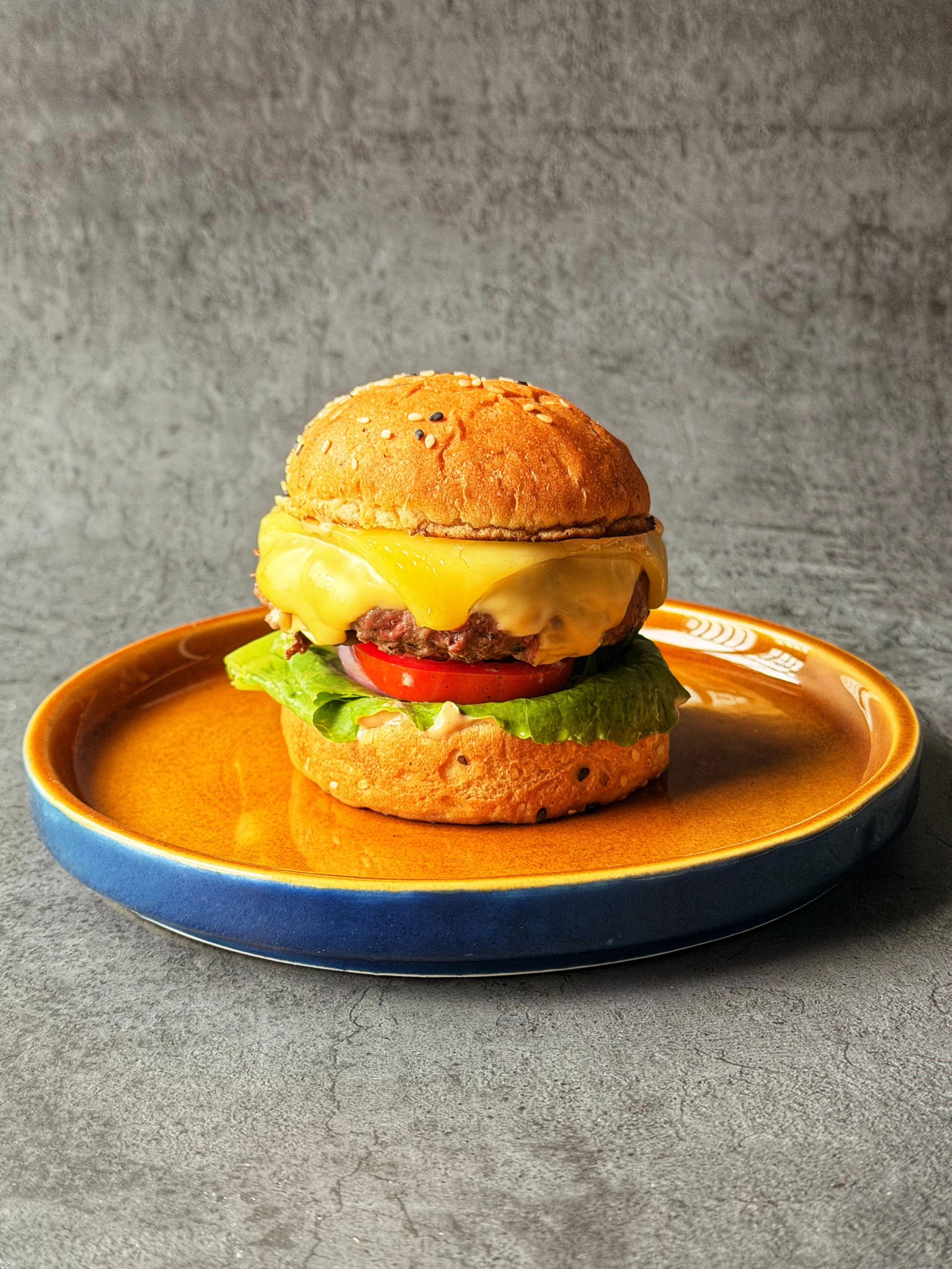
Diner-Style Cheeseburger
The American diner cheeseburger is a wonderful exercise in getting a few very ordinary ingredients to behave extraordinarily well. Beef, cheese, bread, pickles and a slightly suspicious-looking pink sauce. Nothing particularly sophisticated, yet the difference between a mediocre burger and a great one comes down to a handful of small decisions.
Start with the beef. An 80:20 meat-to-fat ratio gives you enough fat for flavour, browning and juiciness. Handle the mince gently, season it only after shaping, and let a hot pan build a proper crust. Salt mixed into the meat too early can produce something closer to sausage than hamburger. And American cheese, despite its rather unromantic reputation, is practically engineered for the job, melting into a smooth, glossy blanket.
This is my take on the classic diner cheeseburger. No elaborate toppings, no towering architecture, no need to dislocate your jaw. Just a properly browned beef patty, melted cheese, a toasted bun and enough tangy burger sauce to justify keeping a napkin nearby.
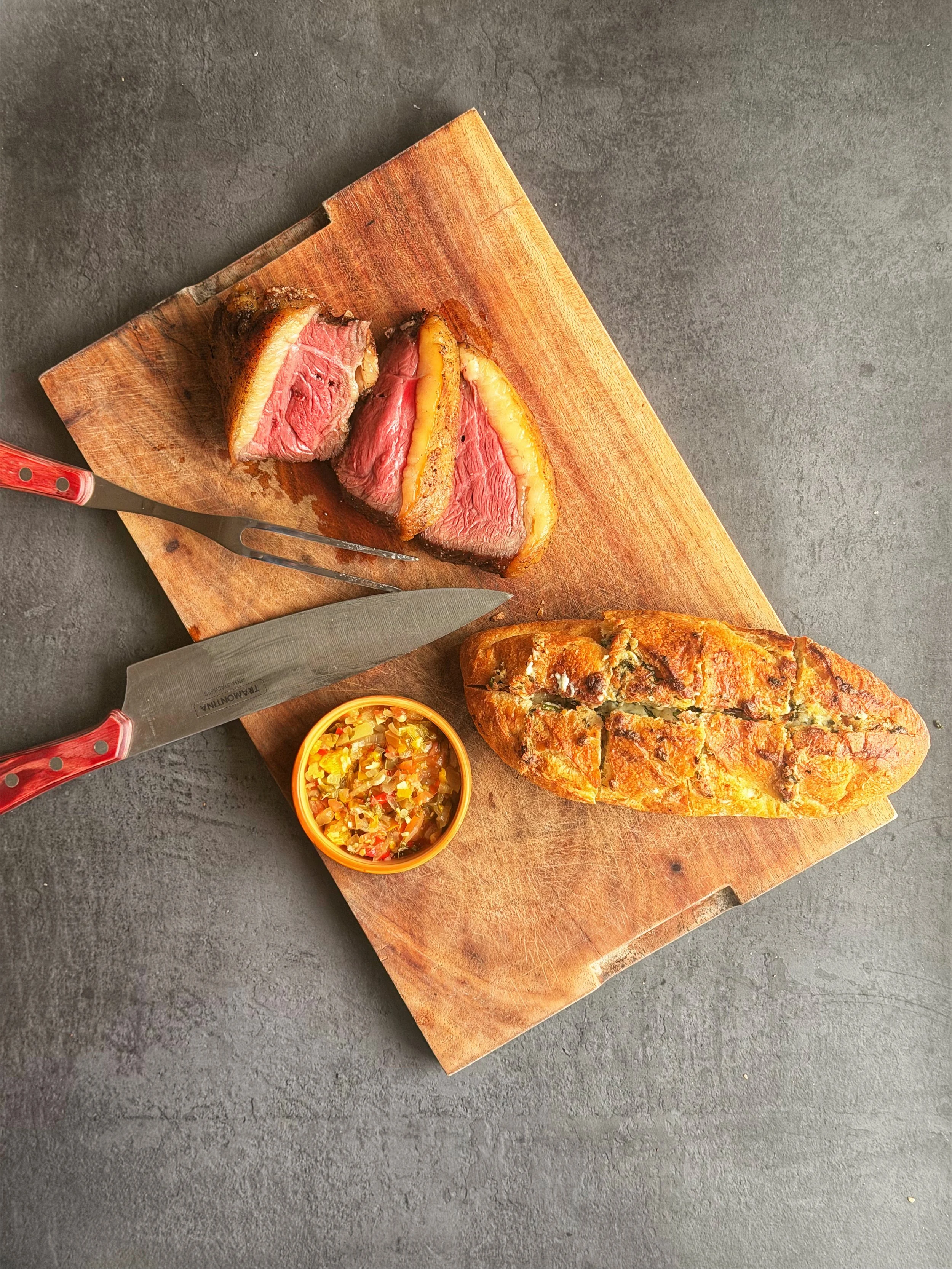
Churrasco-Style Picanha with Pão de Alho
Brazilian churrasco is built around a rather appealing philosophy: good meat, coarse salt, fire, and the understanding that sometimes the fat is the best part. Picanha, the prized rump-cap cut with its distinctive layer of fat, is practically an institution in Brazilian barbecue culture.
Traditionally cooked over charcoal, this version takes the party indoors. A slow roast brings the beef gently towards medium-rare before a hot cast-iron skillet renders the fat cap into something golden, crisp and deeply satisfying. It's a little less theatrical than a churrasqueira, but considerably more practical in an apartment.
Alongside it is pão de alho, Brazil's gloriously excessive contribution to garlic bread, stuffed with butter, mayonnaise, garlic and cheese, then baked until bubbling.
The Brazilians have clearly figured out that beef fat and garlic butter are not problems requiring solutions.
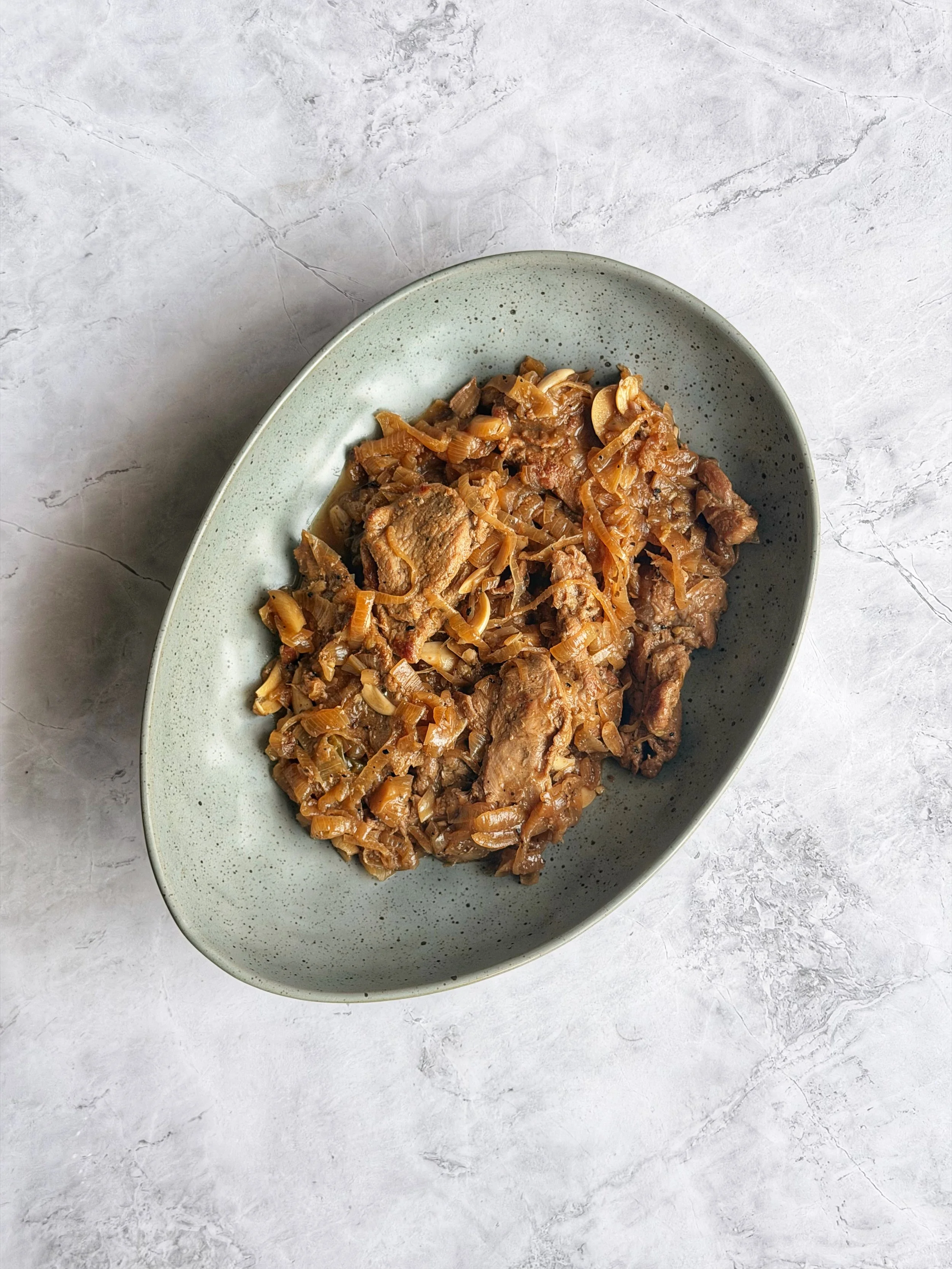
Bife de Cebolada
The Portuguese have a rather sensible approach to onions: use plenty of them, cook them slowly, and let them do most of the work. Bife de Cebolada is built around exactly that idea, with beef cooked in a generous tangle of softened onions, garlic, bay leaves and wine.
The dish also has a place in Goan cooking, one of the many culinary connections left by centuries of Portuguese influence. Goan versions retain the onion-heavy character but may introduce local touches such as green chillies, vinegar and a slightly more assertive seasoning. It's a lovely example of how a dish can travel across continents and gradually acquire a different accent.
While Portuguese versions often use steaks cooked relatively quickly, this adaptation takes a slower route, using thinly sliced hindquarter beef gently braised in white wine and stock until tender. The onions become sweet and silky, while the wine and vinegar keep everything balanced.
Six hundred grams of onions for a kilo of beef. Apparently, this was one Portuguese idea Goa saw absolutely no reason to argue with.
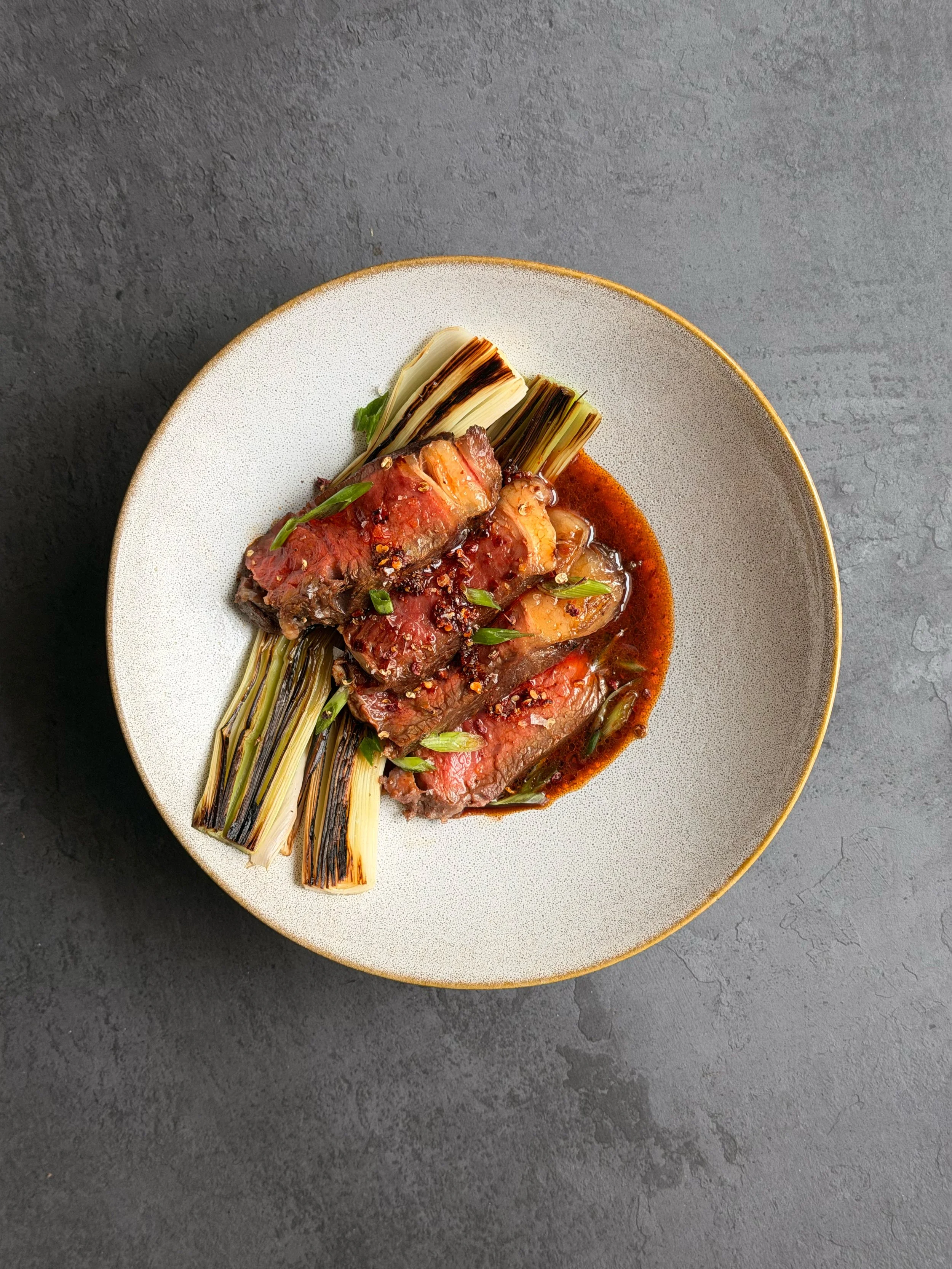
Sichuan Ribeye with Charred Leeks & Chilli-Oil Beef Jus
A French steak wandered into a Sichuan pantry and things escalated.
The ribeye gets the classic treatment: hard sear, gentle oven, proper rest. The beef jus, however, gets doubanjiang, Shaoxing wine, soy, Chinkiang vinegar, Sichuan pepper and chilli oil. Underneath, leeks are deliberately taken to the edge of burnt, turning sweet, smoky and almost creamy inside.
Not quite Sichuan steak. Not steak with Sichuan sauce either. More like French technique having a very good time with Sichuan problems.

East Indian Beef Curry
I wanted to see what would happen if an East Indian curry met a piece of beef that had absolutely nowhere to be.
A whole slab of short ribs gets the long treatment with homemade bottle masala, red wine and beef stock, before coconut milk joins the party towards the end. The idea was to let the beef get properly tender without cooking the coconut into oblivion.
Three-and-a-half hours later, the ribs were barely holding onto the bone, the gravy had picked up all that beefy, gelatinous goodness, and the bottle masala was doing exactly what bottle masala does best.
Not exactly a weeknight curry. Very much worth cancelling plans for.

Shamdey
There was something unexpectedly meditative about making Shamdey. The ingredient list is remarkably short, which means instead of rushing through a dozen spices and processes, you get to spend a little time with each one.
Brown the onion properly, then take it out. Let the beef fry. Wait for the ginger and garlic to become aromatic. Give the meat all the time it needs to soften. Add the fennel only with the potatoes so its fragrance stays fresh. Finely chop the fried onion and return it right at the end. Every ingredient has a job, and every step seems to happen only when it needs to.
The result is deceptively simple: beef, potatoes and a light, soupy gravy, but with layers of sweetness, warmth and aroma built from very little.
A quiet recipe with very loud attention to detail.

Lonvas
Lonvas begins with a rather excellent proposition: what if the radish got to cook in beef stock?
The East Indian answer involves beef, chunks of radish, coconut milk, tamarind and a generous spoonful of bottle masala. As everything simmers together, the radish goes from sharp and crunchy to soft, juicy little sponges full of beefy, spiced gravy. Frankly, it may be getting the better end of the arrangement.
Bottle masala is responsible for most of the personality here. That famously crowded East Indian spice blend brings heat, warmth and complexity, while tamarind sharpens things up and coconut milk rounds out the gravy at the end.
The beef is excellent, obviously. But don't be surprised if you find yourself fishing around the pot for another piece of radish.

Nadan Beef Curry
Nadan Beef Curry is Kerala comfort food doing what it does best: beef, coconut milk, curry leaves and spices slowly getting acquainted in a pot. Unlike the darker, drier beef roasts, this one stays gloriously gravy-forward, with potatoes soaking up all that beefy, coconutty goodness along the way. A final tempering of shallots, mustard, fennel and curry leaves provides the customary Kerala fireworks. There is also a sneaky spoonful of coconut powder for extra body, a trick I picked up from a Mallu friend and have absolutely no intention of giving back. Best eaten with appam, rice or anything capable of soaking up an unreasonable amount of gravy.

Swedish Meatballs
Swedish meatballs are probably one of the world's most famous examples of a dish that looks deceptively simple. The meatballs themselves are soft and gently spiced with nutmeg and allspice, browned in a pan and then finished in a silky cream gravy made from all those delicious browned bits. The result is a rich, comforting dish where the savory sauce ties everything together and makes the whole plate feel complete. It is comfort food with surprisingly good engineering.

Slow-Braised Malabar Beef Roast
Few dishes are as rewarding as a well made Kerala beef roast, especially when the meat is given the time it deserves. This version takes a slightly longer route: the beef is first slow-braised until tender, then cut into chunks and roasted again with deeply caramelised onions, coconut oil, curry leaves, pepper and spices. The result is dark, intensely savoury and just a little bit sticky, with the braising liquid doing double duty as the secret weapon in the final masala. It is not exactly a quick dinner, but then again, good beef has never been particularly interested in your schedule.

Thattukada-Style Beef Curry
There is something very satisfying about a good thattukada curry. Nothing fancy, just beef, onions, spices and enough coconut oil to make everything behave properly. The spices are ground together rather than added separately, which gives the curry a deep, rounded flavour as they cook down with the onions and beef. The final result is thick, spicy and gloriously messy, exactly what you want alongside a flaky parotta or a pile of puttu.