
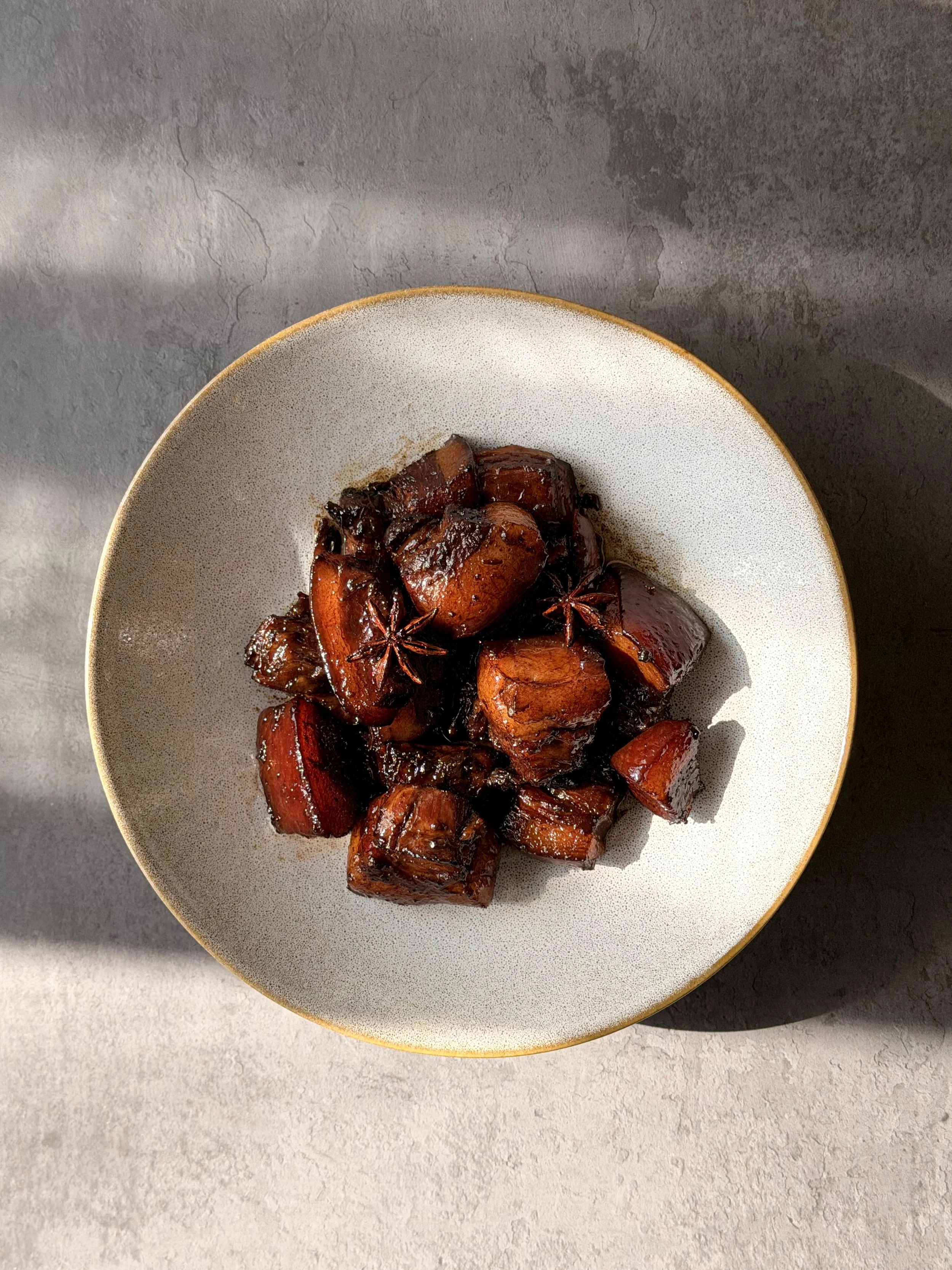
Shanghai-Style Braised Pork Belly
Hong Shao Rou, or red-braised pork belly, is one of those Chinese dishes that manages to turn a handful of everyday ingredients into something quite extraordinary. Found in different variations across China, the Shanghai-style preparation is particularly known for its rich, slightly sweet flavour, deep reddish-brown colour and beautifully glossy sauce.
The magic lies in the technique rather than an elaborate list of ingredients. Skin-on pork belly is first blanched, then lightly browned in caramelised sugar before being slowly braised with Shaoxing wine, light and dark soy sauces, ginger and a few aromatics. Over the course of cooking, the fat softens, the connective tissue turns gelatinous and the meat becomes wonderfully tender while still holding its shape.
The final stage is perhaps the most satisfying. The braising liquid is reduced until the sugar, soy sauce and rendered pork fat come together into a thick, glistening glaze that coats every piece. The result is a wonderful balance of sweet, savoury and deeply porky flavours, with soft, almost melting layers of fat contrasting against the slightly chewy skin.
Despite its luxurious appearance, Hong Shao Rou is surprisingly uncomplicated to make. It simply requires good pork belly, a little patience and the discipline not to rush the braising process. Serve it with plain steamed rice and some greens, because with something this rich, you really don't need much else.
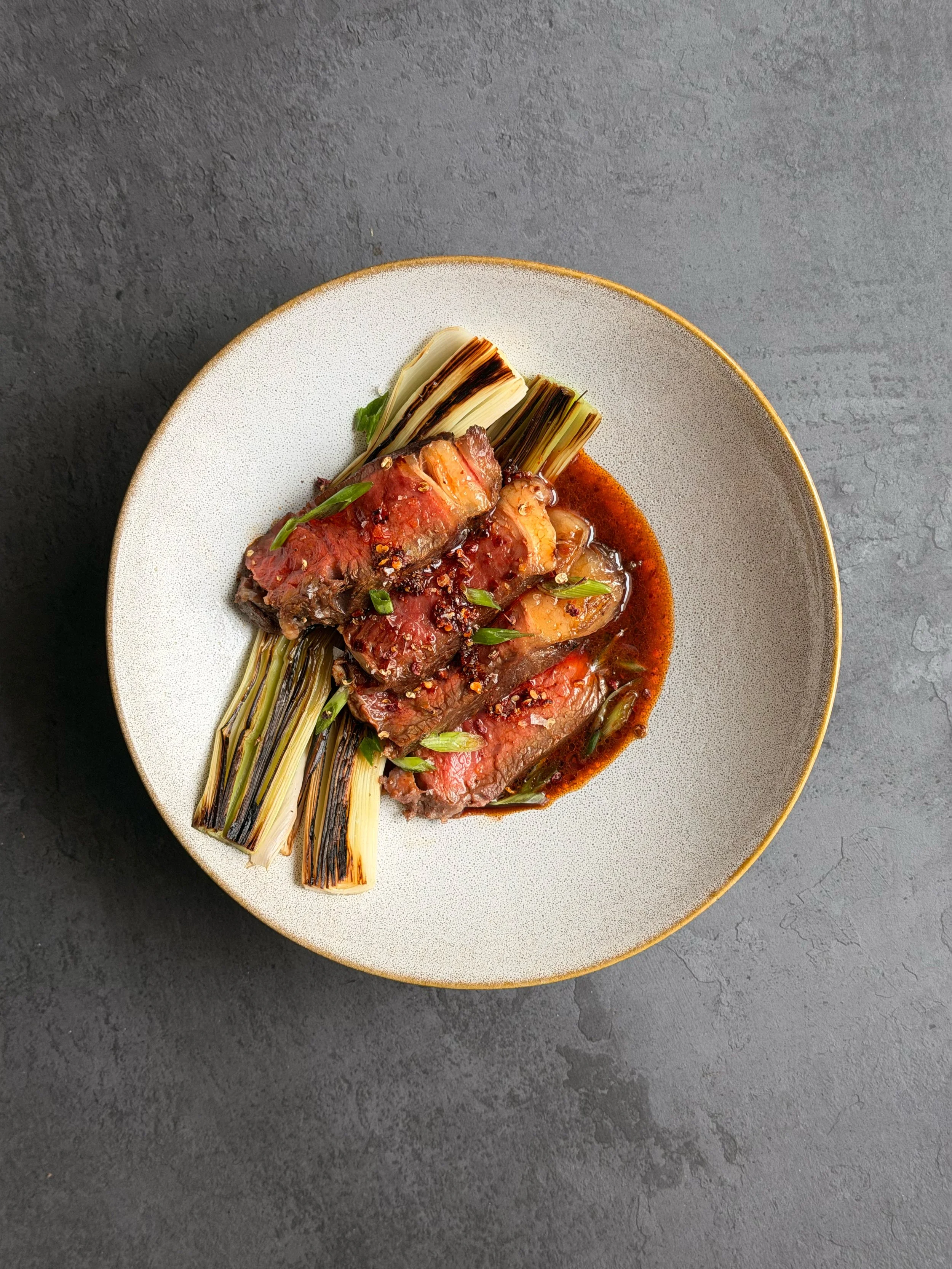
Sichuan Ribeye with Charred Leeks & Chilli-Oil Beef Jus
A French steak wandered into a Sichuan pantry and things escalated.
The ribeye gets the classic treatment: hard sear, gentle oven, proper rest. The beef jus, however, gets doubanjiang, Shaoxing wine, soy, Chinkiang vinegar, Sichuan pepper and chilli oil. Underneath, leeks are deliberately taken to the edge of burnt, turning sweet, smoky and almost creamy inside.
Not quite Sichuan steak. Not steak with Sichuan sauce either. More like French technique having a very good time with Sichuan problems.
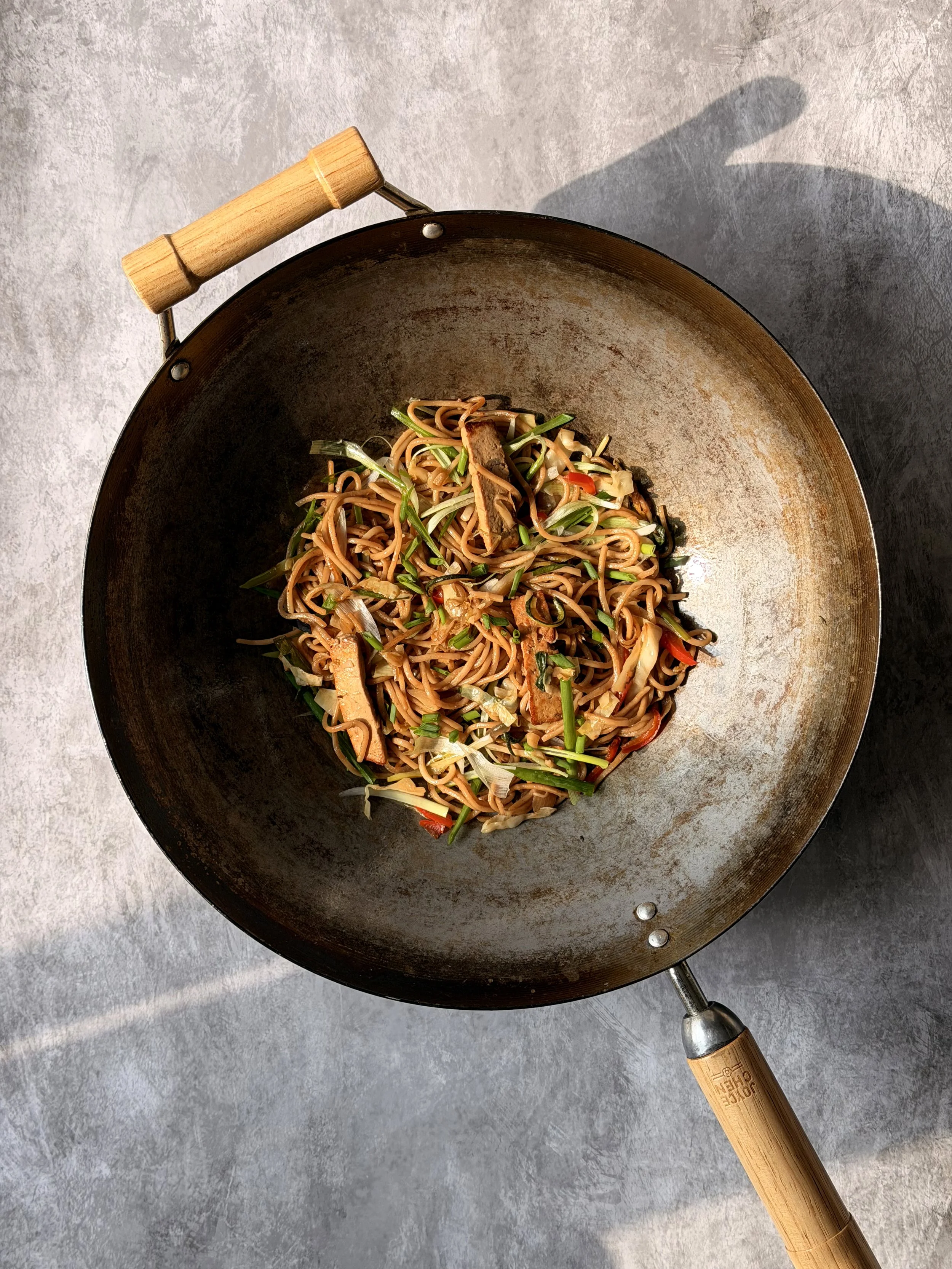
Tofu Lo Mein
Lo mein is one of those dishes where the ingredient list makes it look like there isn’t much going on. Noodles, vegetables, tofu, soy sauce. Fine. Then everything hits a screaming-hot wok and suddenly dinner becomes a small logistical operation.
The trick is having absolutely everything ready before you start. The tofu is pressed and lightly seasoned, the vegetables are cut into similar-sized strips, the noodles are cooked, and the sauce is waiting within grabbing distance. Once the wok starts smoking, there is no leisurely chopping of spring onions.
What makes this version particularly satisfying is the takeout-style finish: the sauce and a splash of stock are allowed to bubble and thicken in the centre of the wok before everything gets tossed through it. That turns a handful of fairly ordinary ingredients into slippery noodles coated in a dark, glossy, savoury sauce, with crisp vegetables and golden-edged tofu mixed throughout.
Twenty minutes of preparation. About six minutes of controlled panic.

Sichuan Braised Duck with Potatoes
Duck and potatoes are already a pretty great duo, but Sichuan cooking turns them into something a lot more exciting. The duck starts by rendering in its own fat, then gets a glossy coat of doubanjiang, dried chillies, and warming spices before being gently braised into tenderness. The potatoes join the party later, just long enough to turn soft and creamy while soaking up all that spicy, savoury sauce. Three stages, one very happy pot.

Dan Dan Noodles
Dan Dan Noodles are a small bowl with a slightly unreasonable amount going on. There is spicy chilli oil, numbing Sichuan pepper, fermented greens, savoury pork and a rich sesame sauce, all fighting for attention in the best possible way. Traditionally, the noodles arrive beautifully layered and completely unmixed. That part is your problem. Get your chopsticks in there and mix everything until every strand is coated, then try to work out which flavour hit you first.