
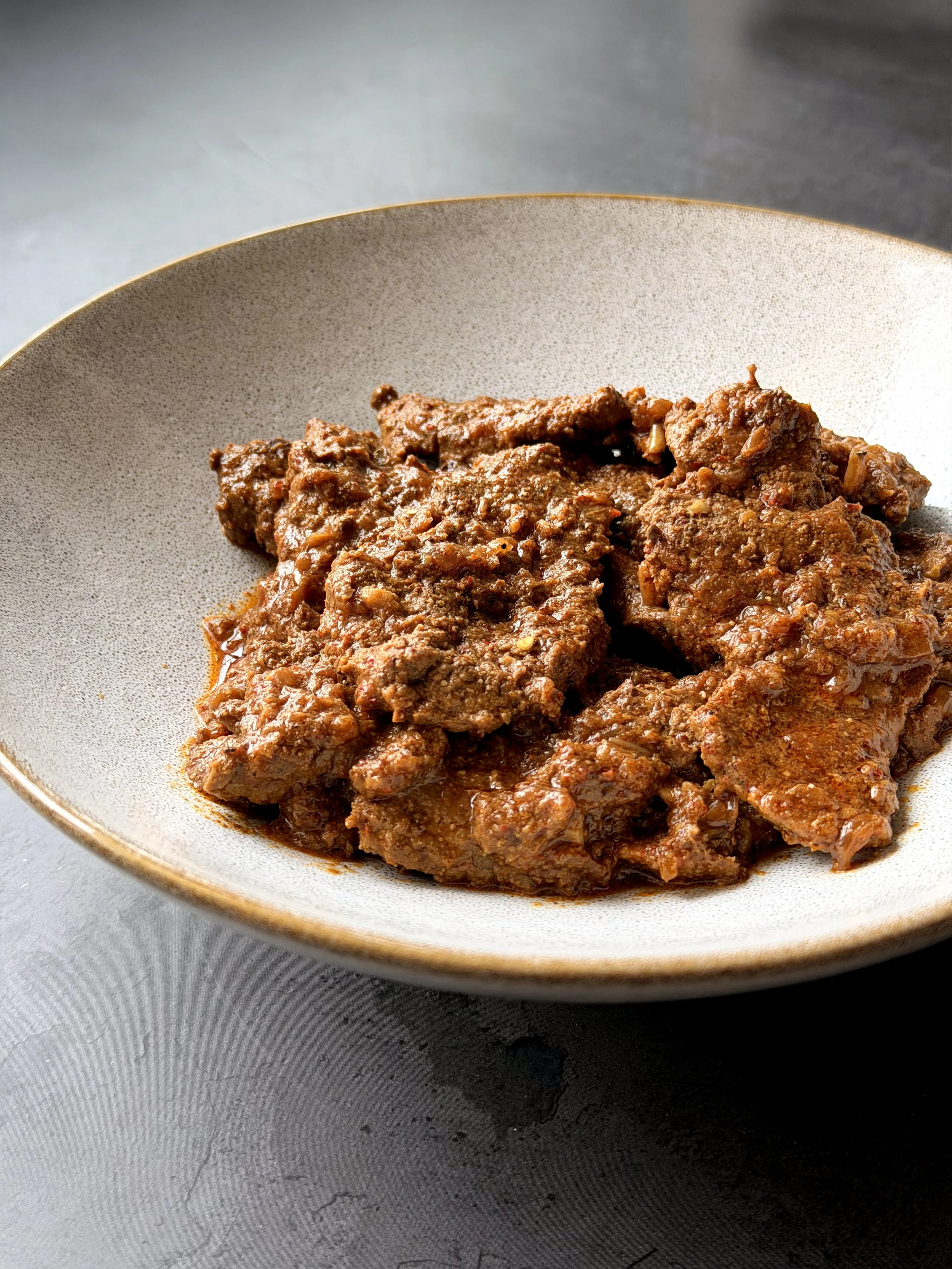
Beef Pasanday
Pasanday is one of those dishes that reminds you how much difference a little attention to the meat can make. The name comes from the Persian pasand, meaning something liked or favoured, and the dish has long been associated with the Mughal-influenced kitchens of the Indian subcontinent. Particularly popular in Pakistan, it takes a rather different approach to beef curry.
Instead of the usual chunks of meat, pasanday uses thin slices of beef, gently pounded to tenderise them and marinated overnight in yogurt, ginger, garlic and a rather enthusiastic collection of spices. The masala is especially interesting. Roasted almonds and poppy seeds lend richness and body, while browned onions provide sweetness and depth, all without a tomato in sight.
The meat is briefly seared before being simmered in its marinade, which gradually reduces into a thick, intensely aromatic gravy that clings to every slice. It's rich, deeply spiced and a little indulgent, but that's rather the point.
Best enjoyed with hot naan or paratha, preferably with very little conversation getting in the way.
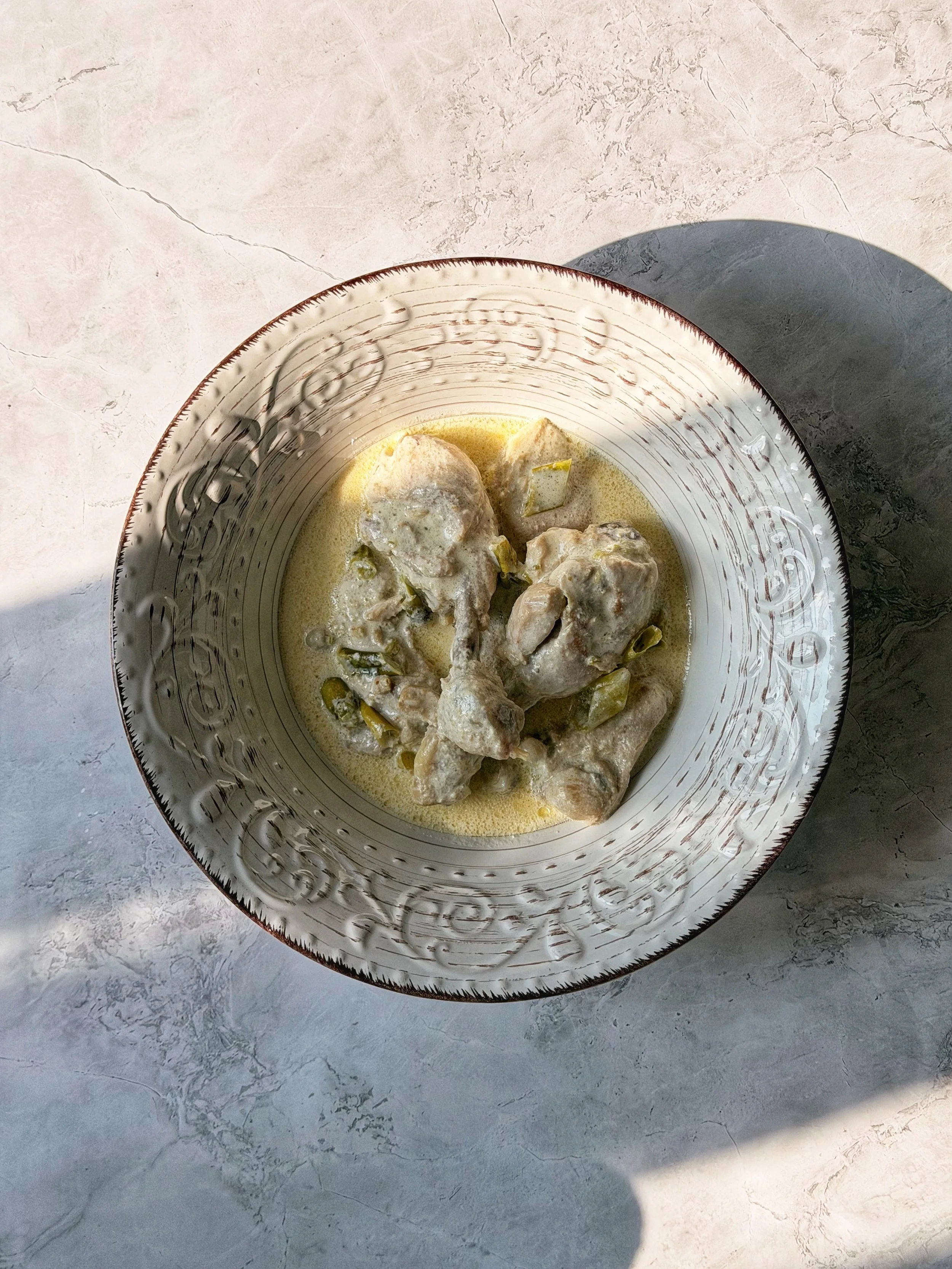
Chicken Haleeb
A Pakistani chicken curry built around the unlikely efficiency of green chillies, milk and cream. No onion, no ginger-garlic paste, no powdered spices. The chicken is first fried with blistered green chillies, then gently simmered in milk and finished with cream, creating a sauce almost entirely from dairy, chicken juices, fat and chilli.
It’s a particularly good example of technique doing the work normally assigned to a long ingredient list. The chillies perfume the oil, the chicken is allowed to brown before any liquid goes in, and the milk is kept at a careful simmer until it reduces around the meat. What looks almost suspiciously simple on paper turns into something rich, savoury and distinctly chicken-forward.
It’s also one of those recipes worth keeping around for days when the desire to eat properly is considerably greater than the desire to prep anything.

Lahori Murg Chanay
This is one of those dishes that makes perfect sense once you think about it. Chickpeas are cooked slowly in chicken stock until they become rich and savoury, then the shredded chicken goes back in at the end. Nothing complicated, just a very efficient exchange of flavours. The chickpeas get the chicken, the chicken gets the chickpeas, and everyone wins. Chemistry, but delicious.