
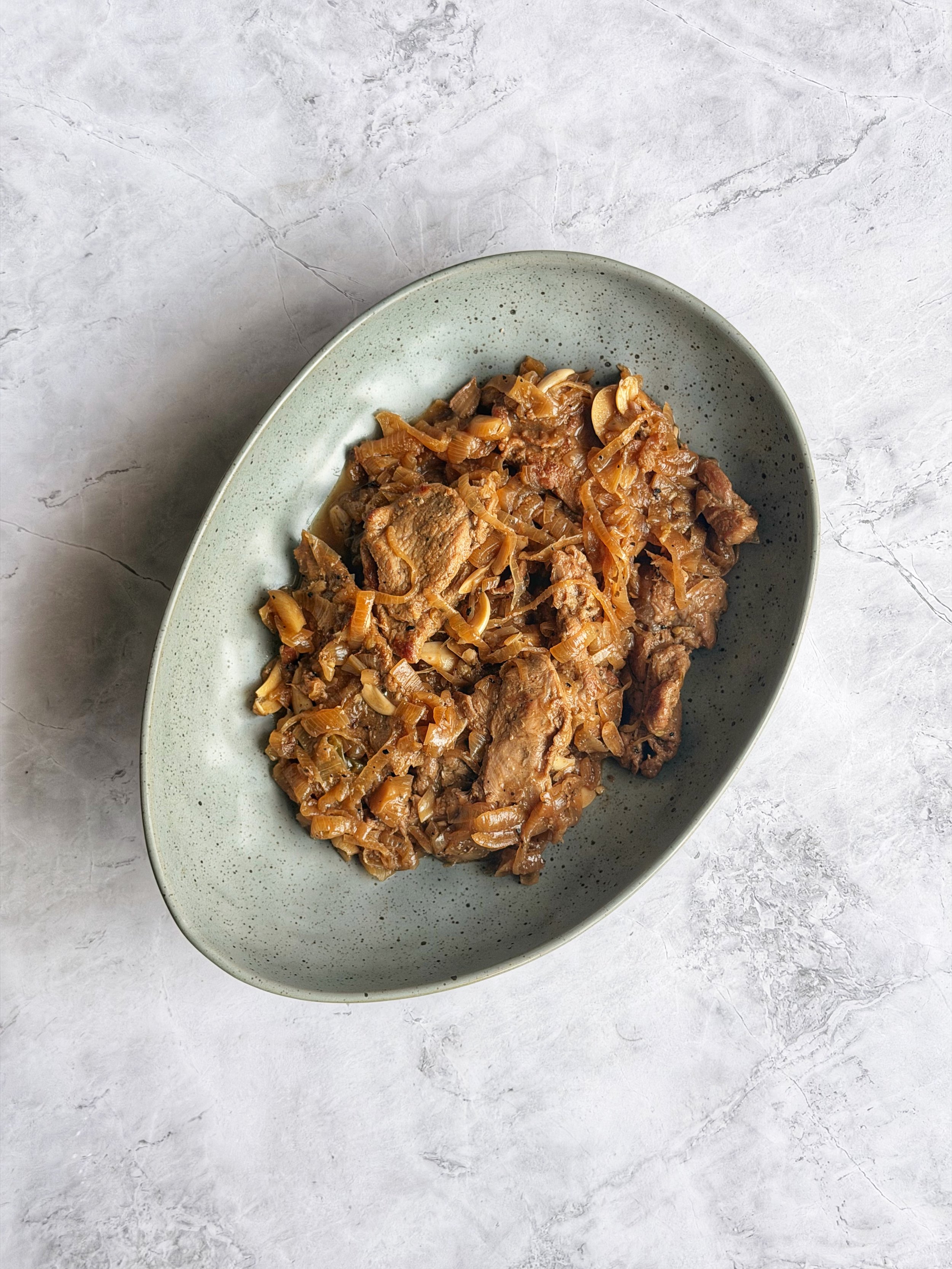
Bife de Cebolada is a Portuguese preparation of beef cooked with generous quantities of onions until they soften into a sweet, savoury sauce. Garlic, bay leaves and wine provide much of the flavour, while the beef contributes richness to the cooking liquid.
This version uses thinly sliced beef from the hindquarter, a relatively lean cut that benefits from gentle cooking. Rather than quickly frying the steaks, the meat is first seared and then slowly braised with onions, white wine and beef stock until tender.
Ingredients
For the beef and marinade
1 kg boneless beef, sliced 5–10 mm thick
8 garlic cloves, crushed
1½ tsp freshly crushed black pepper
2 tbsp white wine vinegar
1½ tsp salt
2 bay leaves
For the onion and white wine sauce
600 g onions, thinly sliced into rounds
6 garlic cloves, thinly sliced
300 ml dry white wine
300 ml beef stock, plus extra if needed
4 tbsp olive oil, divided
20 g butter
1 tsp sugar
1 bay leaf
½ tsp freshly crushed black pepper
2 green chillies, slit, optional
1–2 tsp white wine vinegar, to finish
Salt, to taste
Method
Marinate the beef
Pat the beef slices dry with kitchen paper.
If the slices contain noticeable connective tissue or feel particularly firm, lightly pound them with a meat mallet to help tenderise them. Avoid flattening them excessively.
Combine the crushed garlic, black pepper, white wine vinegar and salt. Rub the mixture thoroughly over the beef, ensuring that all the slices are evenly coated.
Add the bay leaves, cover and refrigerate for 1–2 hours.
Remove the beef from the refrigerator approximately 20 minutes before cooking.
Sear the beef
Heat 2 tablespoons of olive oil in a large, heavy-bottomed pan over medium-high heat.
Lift the beef from the marinade, scraping off any excess garlic so it doesn't burn during searing. Reserve the remaining marinade.
Sear the beef in batches for approximately 30–45 seconds per side, until lightly browned.
Avoid overcrowding the pan, which will cause the meat to release moisture and steam rather than sear.
The beef does not need to cook through at this stage. The objective is to develop some colour and leave behind flavourful browned residues in the pan.
Transfer the seared slices to a plate, retaining any juices they release.
Slowly cook the onions
Reduce the heat to medium-low.
Add the remaining 2 tablespoons of olive oil and the butter to the same pan.
Add the sliced onions with a small pinch of salt and cook gently for 20–25 minutes, stirring occasionally.
The onions should become very soft, translucent and lightly golden. Avoid deeply caramelising them, as the finished sauce should retain a delicate onion sweetness rather than a pronounced roasted flavour.
Add the sliced garlic, bay leaf and green chillies, if using. Cook for another 2 minutes, until fragrant.
Deglaze with white wine
Increase the heat to medium-high.
Pour in the white wine, scraping the bottom of the pan to release the browned beef residues.
Allow the wine to simmer for 5–7 minutes, until reduced by approximately half.
Add the beef stock, sugar, black pepper and any juices collected from the seared beef.
Stir to combine and bring the sauce to a gentle simmer.
Slowly braise the beef
Return the beef slices to the pan, arranging them in layers among the softened onions.
Add any remaining marinade and bring the sauce back to a simmer.
Cover with a tight-fitting lid and reduce the heat to low.
Cook at a very gentle simmer for approximately 45 minutes, then check the tenderness of the beef.
If the meat is still firm or chewy, continue cooking in 15–20-minute increments until tender.
Depending on the exact muscle and the age of the animal, the total braising time may range from 60–120 minutes.
Check the liquid level periodically, adding a little hot beef stock or water if the sauce reduces too much.
The liquid should barely bubble. Avoid a vigorous boil, which can cause the relatively lean beef to tighten and become dry.
Reduce the onion sauce
Once the beef is tender, carefully transfer the slices to a warm plate.
Increase the heat to medium and simmer the onion sauce uncovered for 5–10 minutes, until slightly reduced and glossy.
The onions should remain soft and visible as individual strands rather than completely dissolving into the gravy.
Taste and adjust the salt.
Add 1 teaspoon of white wine vinegar, stir and taste. Add the remaining teaspoon only if the sauce needs additional acidity.
Return the beef to the pan and gently turn the slices to coat them in the finished sauce.
Rest and serve
Turn off the heat and allow the beef to rest in the sauce for 5–10 minutes.
Serve the slices with generous spoonfuls of the softened onions and white wine gravy.
Traditionally inspired accompaniments include boiled potatoes, fried potatoes, rice or crusty bread to soak up the sauce.
Getting the texture right
The beef: The slices should be tender enough to cut easily with a fork while still retaining their shape. Because this recipe uses lean hindquarter meat, cooking time will depend heavily on the exact cut. Start checking early and cook only until tender.
The onions: Soft, sweet and silky, with individual strands still visible. They should provide much of the body of the sauce.
The sauce: Relatively loose and glossy rather than thick like a curry gravy. The flavour should balance savoury beef, sweet onions, garlic, white wine and a gentle acidity.
A few notes
Choosing the beef: Traditional Portuguese versions often use steaks that cook relatively quickly. This adaptation is designed for thinly sliced hindquarter beef that may require a longer braise. If using a naturally tender steak cut, shorten the cooking time considerably.
White wine: Choose a dry, unoaked white wine rather than a sweet or heavily aromatic one. The wine should contribute acidity and complexity without overwhelming the beef.
Green chillies: These are an optional adaptation rather than an essential feature of the Portuguese preparation. They introduce a little heat without significantly changing the character of the onion sauce.
Sugar: The teaspoon of sugar helps round out the acidity of the wine and vinegar. If the onions are naturally very sweet, you can reduce or omit it.