
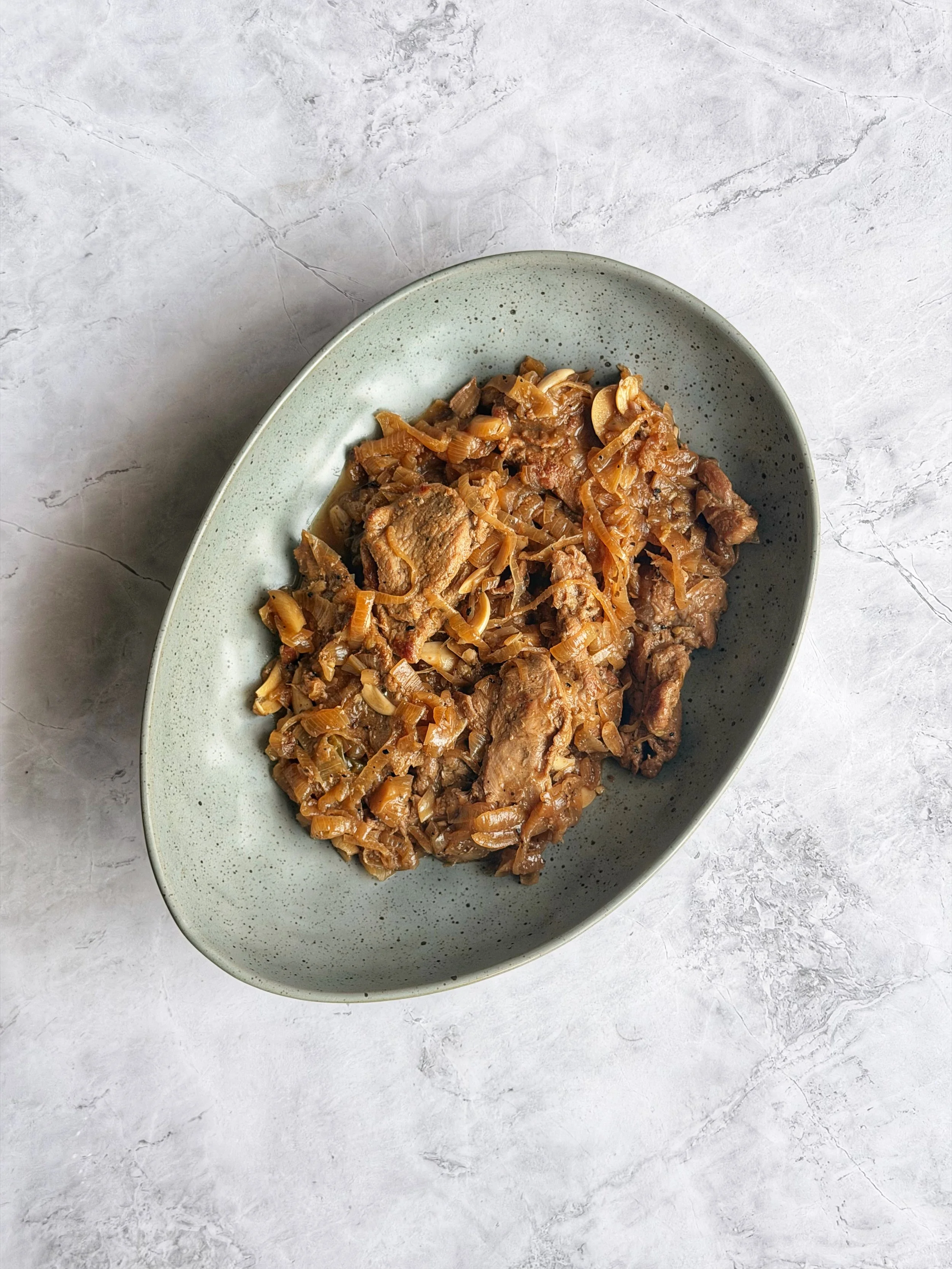
Bife de Cebolada
The Portuguese have a rather sensible approach to onions: use plenty of them, cook them slowly, and let them do most of the work. Bife de Cebolada is built around exactly that idea, with beef cooked in a generous tangle of softened onions, garlic, bay leaves and wine.
The dish also has a place in Goan cooking, one of the many culinary connections left by centuries of Portuguese influence. Goan versions retain the onion-heavy character but may introduce local touches such as green chillies, vinegar and a slightly more assertive seasoning. It's a lovely example of how a dish can travel across continents and gradually acquire a different accent.
While Portuguese versions often use steaks cooked relatively quickly, this adaptation takes a slower route, using thinly sliced hindquarter beef gently braised in white wine and stock until tender. The onions become sweet and silky, while the wine and vinegar keep everything balanced.
Six hundred grams of onions for a kilo of beef. Apparently, this was one Portuguese idea Goa saw absolutely no reason to argue with.

Caril de Frango
This is what happens when a curry takes the scenic route. With roots leading back to Goa, caril travelled through Portuguese-ruled Mozambique before eventually finding a comfortable home in Lisbon, picking up a Portuguese refogado and losing quite a few spices along the way.
Unlike the more complex curries of Goa, this version is deliberately mild. Onion, garlic, tomato and bay leaf are slowly cooked in plenty of oil before commercial curry powder, turmeric and coconut milk enter the picture. The result is creamy, deeply yellow, pleasantly oily and fragrant without overwhelming the chicken.
The curry powder isn't a shortcut here. It's actually part of the dish's identity, with Lisbon restaurants traditionally using Portuguese brands such as Margão.
Three continents, several generations of migration and colonial history, all eventually condensed into a surprisingly uncomplicated pot of chicken curry.