
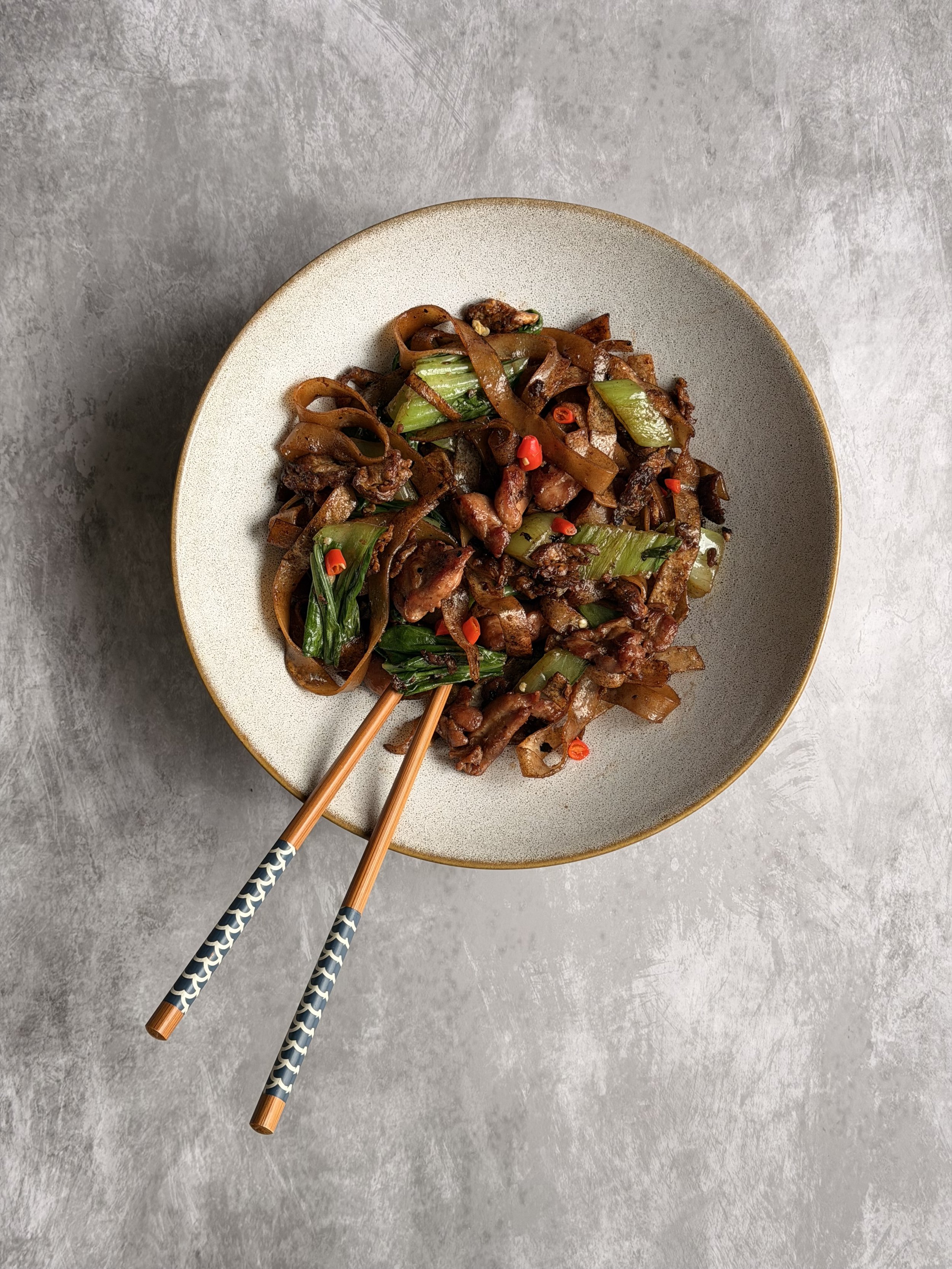
Pad See Ew is one of Thailand's classic street-food noodle dishes. Wide rice noodles are stir-fried over high heat with chicken, eggs, greens and a combination of light and dark soy sauces. The characteristic flavour comes from the caramelised soy sauce, slightly charred noodles and the smoky aroma of the wok.
Ingredients
Chicken and noodles
250 g boneless chicken thigh, thinly sliced (or protein of your choice)
400 g fresh wide rice noodles (sen yai)
200 g Chinese broccoli (gai lan)
5 cloves garlic, roughly chopped
2 eggs
2–3 tbsp neutral oil, or as required
¼ tsp ground white pepper
Substitutions: Fresh sen yai can be substituted with dried wide rice noodles, flat Pad Thai noodles or fresh Vietnamese pho noodles. If using dried rice noodles, use approximately 180–200 g dry weight. Chinese broccoli can be substituted with bok choy or Chinese cabbage.
Chicken marinade
1 tsp light soy sauce
1 tsp oyster sauce
1 tsp cornflour
1 tsp neutral oil
A pinch of ground white pepper
Pad See Ew sauce
1 tbsp Thai light soy sauce
2 tsp Thai sweet dark soy sauce
1 tbsp oyster sauce
1 tbsp Golden Mountain seasoning sauce
1 tsp fish sauce
½ tsp sugar
1 tsp ground white pepper
3 tbsp water or unsalted chicken stock
Prik Nam Som (Thai chilli vinegar)
3 tbsp white vinegar
2–3 Thai bird's eye chillies, thinly sliced
A pinch of sugar
Preparation
Marinate the chicken
Combine the sliced chicken with the light soy sauce, oyster sauce, cornflour, neutral oil and white pepper. Mix thoroughly and leave to marinate for 15–20 minutes.
The cornflour helps retain moisture and gives the chicken a slightly silky texture when stir-fried.
Prepare the vegetables
Cut the Chinese broccoli into 3–4 cm pieces, separating the thicker stems from the leaves. If the stems are particularly thick, slice them lengthwise.
If using bok choy or Chinese cabbage, similarly separate the thicker stalks from the tender leaves.
Roughly chop the garlic and set aside. Keep the vegetables relatively chunky so they retain some texture and crunch after cooking.
Prepare the noodles
If using fresh rice noodles, gently separate the strands by hand. If they have been refrigerated and are stiff, warm them briefly until soft and pliable.
If using dried rice noodles, soak or cook them according to the packet instructions until just tender but still firm enough to withstand stir-frying. Drain thoroughly.
Avoid overcooking the noodles at this stage, as they will continue cooking in the wok and can easily break apart.
Prepare the sauce
Combine the light soy sauce, sweet dark soy sauce, oyster sauce, Golden Mountain seasoning sauce, fish sauce, sugar, and water or stock in a bowl.
Stir until the sugar dissolves. The sauce should be intensely savoury with a noticeable but restrained sweetness.
Prepare the Prik Nam Som
Combine the sliced bird's eye chillies, white vinegar and sugar in a small bowl. Stir well and allow to sit for at least 15 minutes while you prepare the noodles.
Cooking
For proper caramelisation and charring, cook the noodles in individual portions. The chicken and veggies can be cooked together in one batch, but divide the remaining ingredients, including the sauce, into two portions and complete each serving separately. Overcrowding the wok will cause the noodles to steam rather than fry.
Sear the chicken
Heat a wok over high heat until very hot. Add 1 tablespoon of neutral oil, followed by the marinated chicken.
Spread the chicken into a single layer and allow it to sear undisturbed for 45–60 seconds to develop some colour.
Stir-fry for another 2–3 minutes, or until the chicken is fully cooked. Remove from the wok and set aside.
Stir-fry the vegetables
Reheat the wok over high heat and add a little neutral oil.
Add the chopped garlic and stir-fry for 10–15 seconds until fragrant, taking care not to burn it.
Add the Chinese broccoli stems and stir-fry for approximately 45–60 seconds. Add the leaves and toss briefly until they begin to wilt.
Remove the vegetables from the wok and keep it with the chicken.
Scramble the egg
Add a little more oil to the hot wok if necessary.
Crack one egg directly into the wok and break the yolk. Allow the egg to set slightly before scrambling it into large, soft pieces.
Push the egg to one side of the wok.
Char the noodles
Add a little oil to the exposed surface of the wok, followed by half the prepared rice noodles.
Spread the noodles across the hot surface and leave them undisturbed for 30–45 seconds. Gently toss or flip the noodles and allow them to develop some colour on the other side.
The objective is to achieve scattered caramelised patches and lightly charred edges rather than uniformly browned noodles. Avoid excessive stirring, as this can break the delicate rice noodles.
Add the sauce
Stir the prepared sauce and pour half of it around the hot sides of the wok rather than directly over the noodles.
Allow the sauce to sizzle briefly before gently tossing it with the noodles and egg. Continue frying over high heat until the sauce caramelises slightly and coats the noodles with a glossy, dark finish.
If the noodles appear too dry, add a small splash of water or stock. Avoid adding too much liquid, as the noodles should fry rather than steam.
Bring everything together
Return half the cooked chicken and the stir-fried vegetables to the wok.
Toss everything together over high heat for another 30–60 seconds, until evenly coated, piping hot and fragrant.
Taste and adjust the seasoning if necessary. Finish with a little ground white pepper.
Transfer to a serving plate and repeat the process with the remaining ingredients.
Serving
Serve Pad See Ew immediately, while the noodles are hot, glossy and fragrant from the wok.
Accompany it with Prik Nam Som on the side. The sharp acidity of the chilli vinegar cuts through the richness and sweetness of the caramelised soy sauces, bringing balance to the dish.
You can also serve it with dried chilli flakes, fish sauce and sugar on the side, as is customary at many Thai noodle stalls, allowing everyone to adjust the seasoning to their preference.
Cooking notes
High heat is essential: Allow the wok to regain its temperature between batches.
Avoid overcrowding: Cooking individual portions is particularly important on domestic gas burners, which lack the intense heat of commercial Thai wok burners.
Handle the noodles gently: Use a broad spatula to lift and fold the noodles rather than constantly stirring them.
Sweet dark soy sauce: Thai sweet dark soy sauce contributes both colour and sweetness. It is not quite the same as regular Chinese dark soy sauce.
Keep it relatively dry: Pad See Ew is not a saucy noodle dish. The finished noodles should be glossy and well-coated, with little to no residual liquid on the plate.