
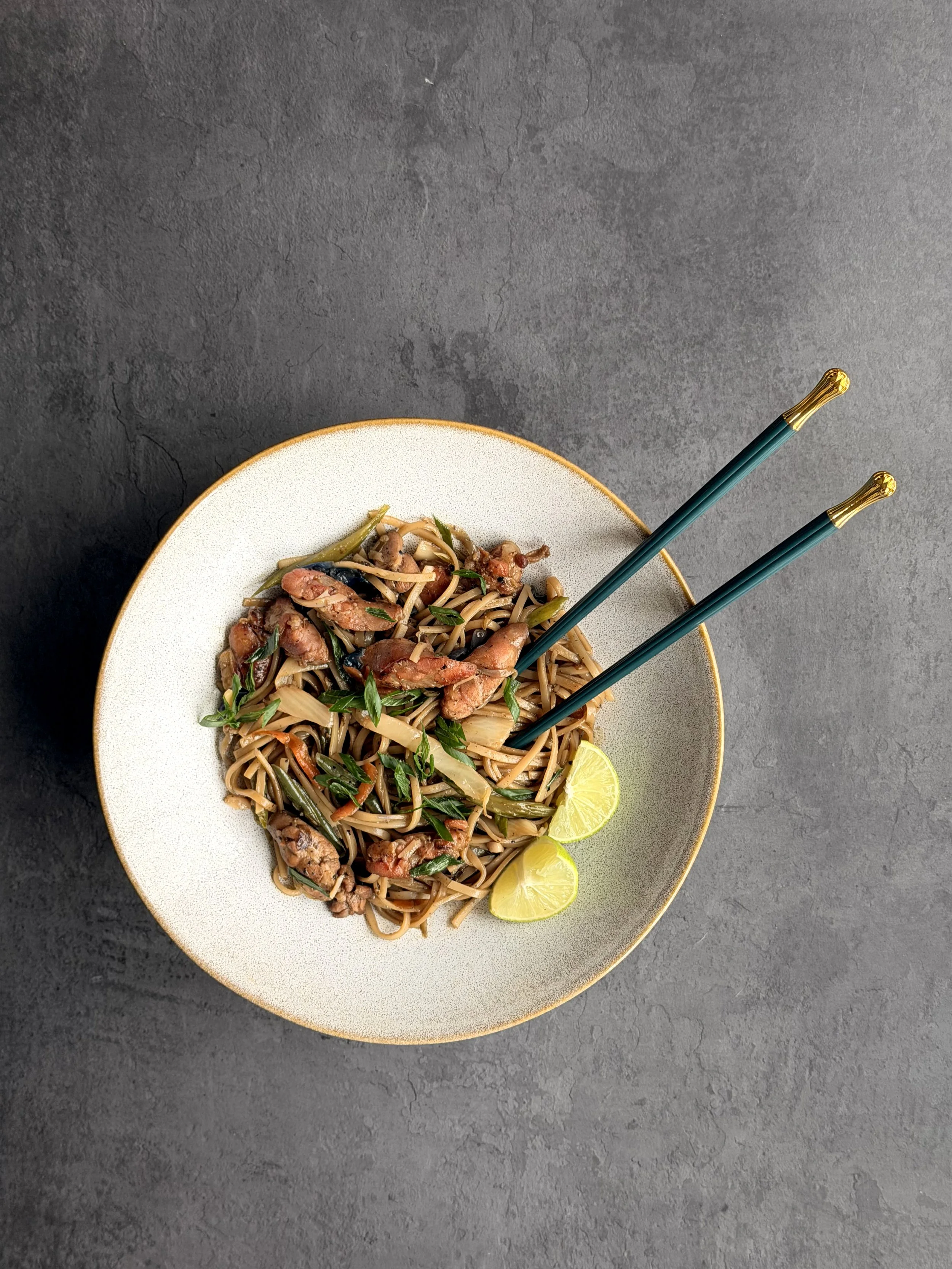
Pancit Canton is a classic Filipino noodle dish with roots in Chinese immigrant cooking. Despite its name referencing Canton, it has evolved into a distinctly Filipino preparation, combining wheat noodles, meat, vegetables and a savoury blend of soy sauce, oyster sauce and stock.
Unlike many Chinese stir-fried noodle preparations, the dried noodles in Pancit Canton are cooked directly in seasoned stock, absorbing the flavours as the liquid reduces. Chinese sausage (chorizo chino) adds little pockets of sweetness and richness, balanced by a generous squeeze of calamansi just before eating.
Ingredients
Noodles and meat
250 g dried Pancit Canton wheat noodles
200 g Chinese sausages (lap cheong)
200 g boneless chicken thigh, thinly sliced
2 tbsp neutral oil, or as required
You can use any combination of chicken thigh, Chinese sausage, pork belly, Chinese liver sausage, prawns or squid. Aim for approximately 400 g of combined meat and seafood.
Vegetables and aromatics
6 cloves garlic, finely chopped
1 medium onion, thinly sliced
150 g Chinese cabbage or regular cabbage
75 g carrot, julienned
75 g French beans or snow peas
3 spring onions
1 stalk celery, thinly sliced
The choice of vegetables is flexible. Mushrooms, bamboo shoots, bok choy, baby corn and bell peppers all work well. Use a combination that provides contrasting flavours, colours and textures.
Sauce and cooking liquid
500–600 ml unsalted or low-sodium chicken or pork stock
2 tbsp light soy sauce
2 tbsp oyster sauce
1 tsp dark soy sauce
2 tsp fish sauce (patis)
½ tsp ground black pepper
½ tsp sugar, optional
¼ tsp MSG, optional
To serve
Calamansi or lime wedges
Sliced spring onion greens
Crispy fried garlic, optional
Choosing the noodles
Traditional Pancit Canton noodles are dried, yellowish wheat noodles, generally slightly wavy and relatively thin. They soften as they absorb the seasoned cooking liquid.
If Filipino Pancit Canton noodles are unavailable, you can substitute them with:
Dried Chinese egg noodles
Dried chow mein noodles
Medium-thickness dried wheat noodles
Hakka noodles
Choose noodles that can withstand cooking directly in stock without becoming excessively soft or starchy. If using substitute noodles, adjust the quantity of stock and cooking time according to their thickness and packet instructions.
Method
Prepare the ingredients
Slice the Chinese sausages diagonally into 3–4 mm thick pieces.
Cut the chicken into thin, bite-sized pieces. Season with 1 teaspoon of light soy sauce taken from the measured quantity and a pinch of black pepper. Set aside while preparing the remaining ingredients.
If using Chinese cabbage or bok choy, separate the thicker stems from the leafy portions. Cut the stems into strips and roughly chop the leaves.
Julienne the carrots, trim and cut the French beans, and thinly slice the celery. Separate the spring onion whites from the greens.
Combine the stock, remaining light soy sauce, dark soy sauce, oyster sauce, fish sauce, black pepper, sugar and MSG in a bowl. Stir well and set aside.
Render the Chinese sausage
Heat a wok over medium heat and add a teaspoon of neutral oil.
Add the sliced Chinese sausages and fry for 2–3 minutes, until they release some of their fat and the edges begin to caramelise.
Remove the sausages from the wok, leaving the rendered fat behind.
Avoid frying the sausages until completely crisp. They should retain their characteristic slightly chewy texture.
Cook the chicken
Increase the heat to high and add a little more oil if necessary.
Add the chicken and spread it across the hot surface of the wok. Allow it to sear briefly before stir-frying for another 3–4 minutes, or until fully cooked.
Remove the chicken and set aside.
If using other meats or seafood, cook them separately according to their required cooking times. Thinly sliced pork belly can be rendered and browned, while prawns and squid should be cooked briefly to prevent them from becoming rubbery.
Stir-fry the vegetables
Add the remaining oil to the wok and heat over a high flame.
Add the garlic and sliced onions and stir-fry until fragrant and the onions begin to soften.
Add the vegetables in order of their required cooking times:
Carrots and French beans
Mushrooms, bamboo shoots and celery, if using
Chinese cabbage or bok choy stems
Leafy vegetables and spring onion whites
Stir-fry over high heat for 2–3 minutes, or until the vegetables are just tender but still retain some crunch.
Remove the vegetables from the wok and set aside. This prevents them from overcooking while the noodles absorb the stock.
Cook the noodles in the seasoned stock
Pour approximately 500 ml of the prepared seasoned stock into the wok and bring it to a rolling boil.
Add the dried Pancit Canton noodles directly to the boiling stock. Allow them to soften for a minute before gently separating them with a pair of tongs or chopsticks.
Continue cooking over medium-high heat, gently turning and tossing the noodles so they absorb the liquid evenly.
Cook for approximately 4–7 minutes, depending on the thickness and type of noodles. If the liquid evaporates before the noodles are sufficiently cooked, add the remaining stock in small increments.
This is one of the characteristic techniques of Pancit Canton. Rather than simply coating pre-cooked noodles with sauce, the noodles absorb the seasoned stock as they cook, developing flavour throughout.
Bring everything together
Once the noodles are almost cooked and only a small amount of liquid remains at the bottom of the wok, return the Chinese sausage, chicken and stir-fried vegetables, along with any other cooked meat or seafood.
Increase the heat and gently toss everything together for another 1–2 minutes, allowing the remaining liquid to reduce and coat the ingredients.
Taste and adjust the seasoning with fish sauce, oyster sauce or freshly ground black pepper, if necessary.
The finished noodles should be glossy, moist and thoroughly seasoned, without being excessively wet or sitting in a pool of sauce.
Garnish and serve
Transfer the noodles to a large serving platter.
Arrange some of the Chinese sausage slices and vegetables on top. Garnish with sliced spring onion greens and crispy fried garlic, if using.
Serve hot with calamansi or lime wedges on the side. Squeeze the citrus over the noodles just before eating. Its acidity balances the richness of the meat, the sweetness of the Chinese sausage and the savoury depth of the seasoned stock.