
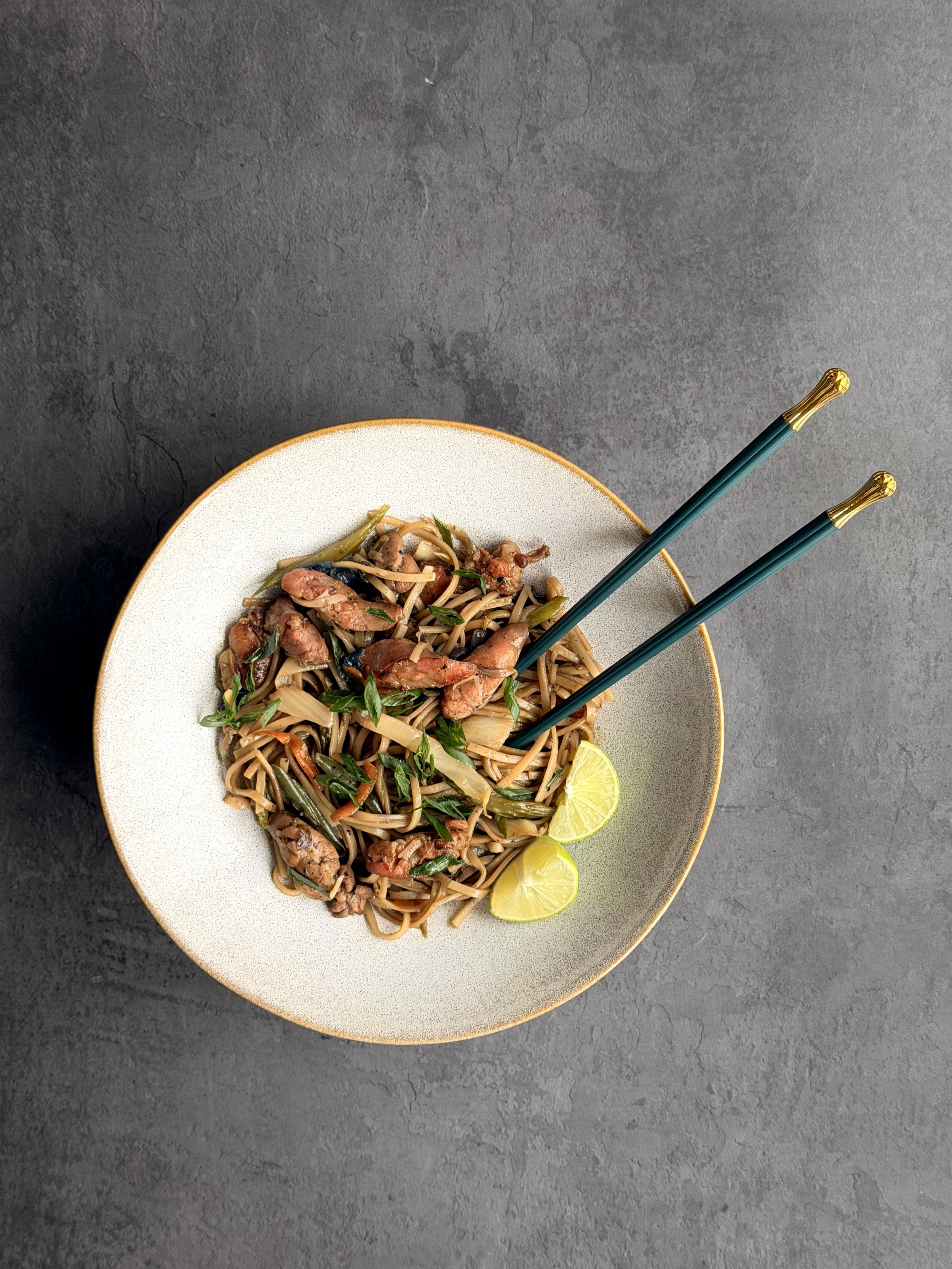
Pancit Canton
Few dishes illustrate the Chinese influence on Filipino cuisine as beautifully as pancit. Introduced by Chinese immigrants, noodles gradually became an integral part of the Filipino culinary landscape, evolving into numerous regional variations. Pancit Canton, despite its name referencing the Chinese city of Canton (present-day Guangzhou), is very much a Filipino creation, reflecting generations of cultural exchange and adaptation.
In the Philippines, noodles carry a significance that extends beyond everyday eating. Associated with longevity and good fortune, pancit is almost obligatory at birthdays, family gatherings and festive celebrations. Pancit Canton is particularly suited to communal dining, with its generous assortment of meat, seafood and vegetables making it a wonderfully adaptable dish that varies from household to household.
What I find particularly interesting is how the Filipinos have developed their own identity around a Chinese culinary inheritance. The use of patis (Filipino fish sauce), the technique of cooking noodles directly in seasoned stock and the finishing squeeze of calamansi give the dish a character distinctly its own. It's a lovely example of how migration shapes food, and how an imported culinary tradition can eventually become inseparable from a country's cultural identity.