
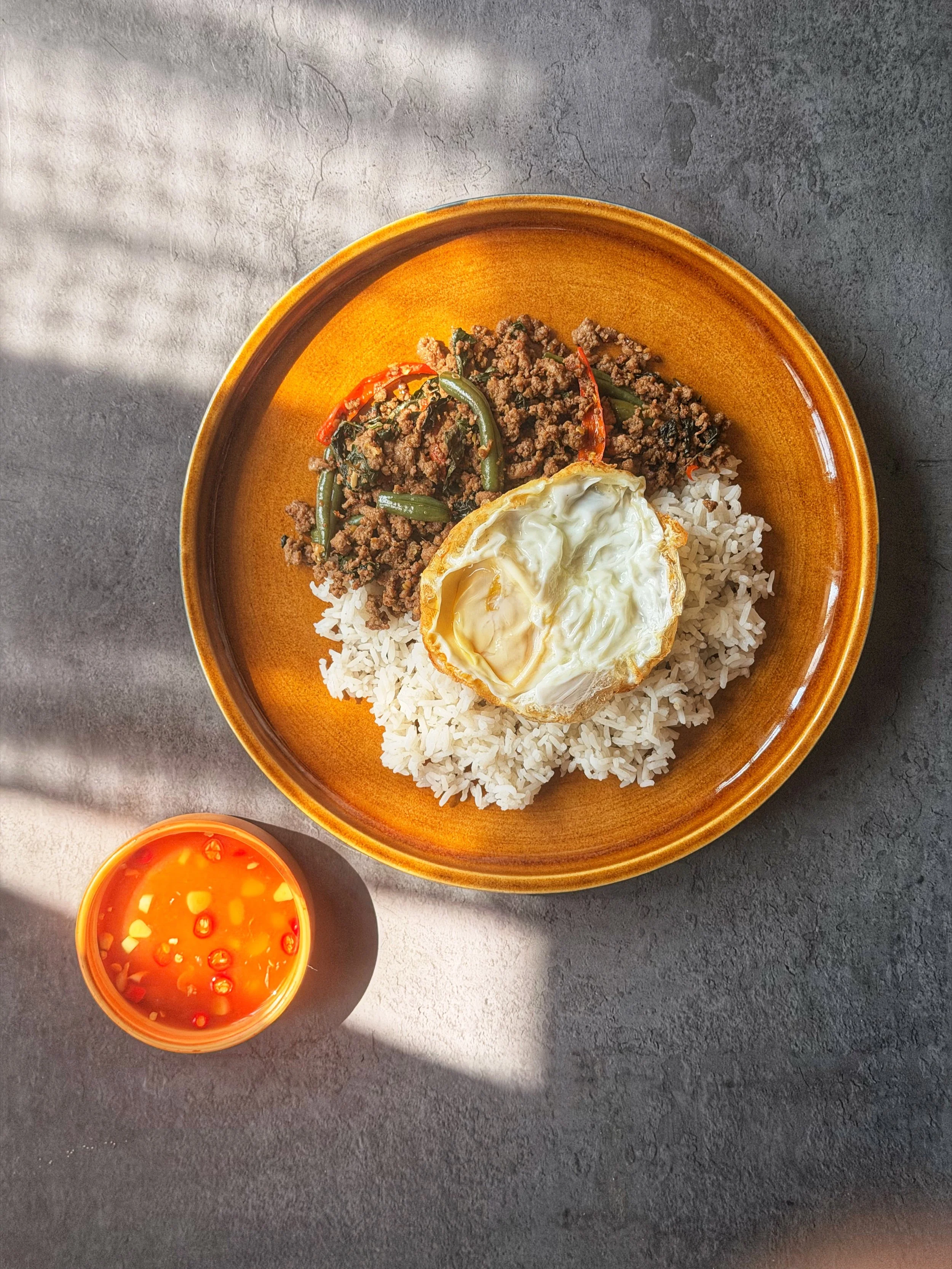
Pad Kra Pao Beef
Pad Kra Pao is more than just one of Thailand's most popular dishes. It's practically a national institution, found everywhere from roadside stalls and small neighbourhood eateries to bustling food courts. In Thailand, it's often associated with the expression ahan sin khit, loosely meaning “food for when you can't think of what to eat.” It's the dependable everyday meal people turn to when they're hungry, in a hurry or simply don't want to make another decision.
Much of its popularity comes from Thailand's ahan tam sang culture, where inexpensive meals are freshly prepared to order. Pad Kra Pao fits perfectly into this world. It's quick, affordable and endlessly adaptable, made with everything from pork and chicken to beef and seafood. Yet, for such a seemingly simple dish, it inspires surprisingly passionate debates about ingredients, particularly the use of holy basil, which gives the dish its name and distinctive peppery aroma.
What makes Pad Kra Pao special is precisely how ordinary it is. It isn't ceremonial food or something reserved for celebrations. It's the food of working days, lunch breaks and late-night hunger. A reminder that some of a country's most important culinary traditions aren't found at elaborate feasts, but in the everyday meals people return to again and again.
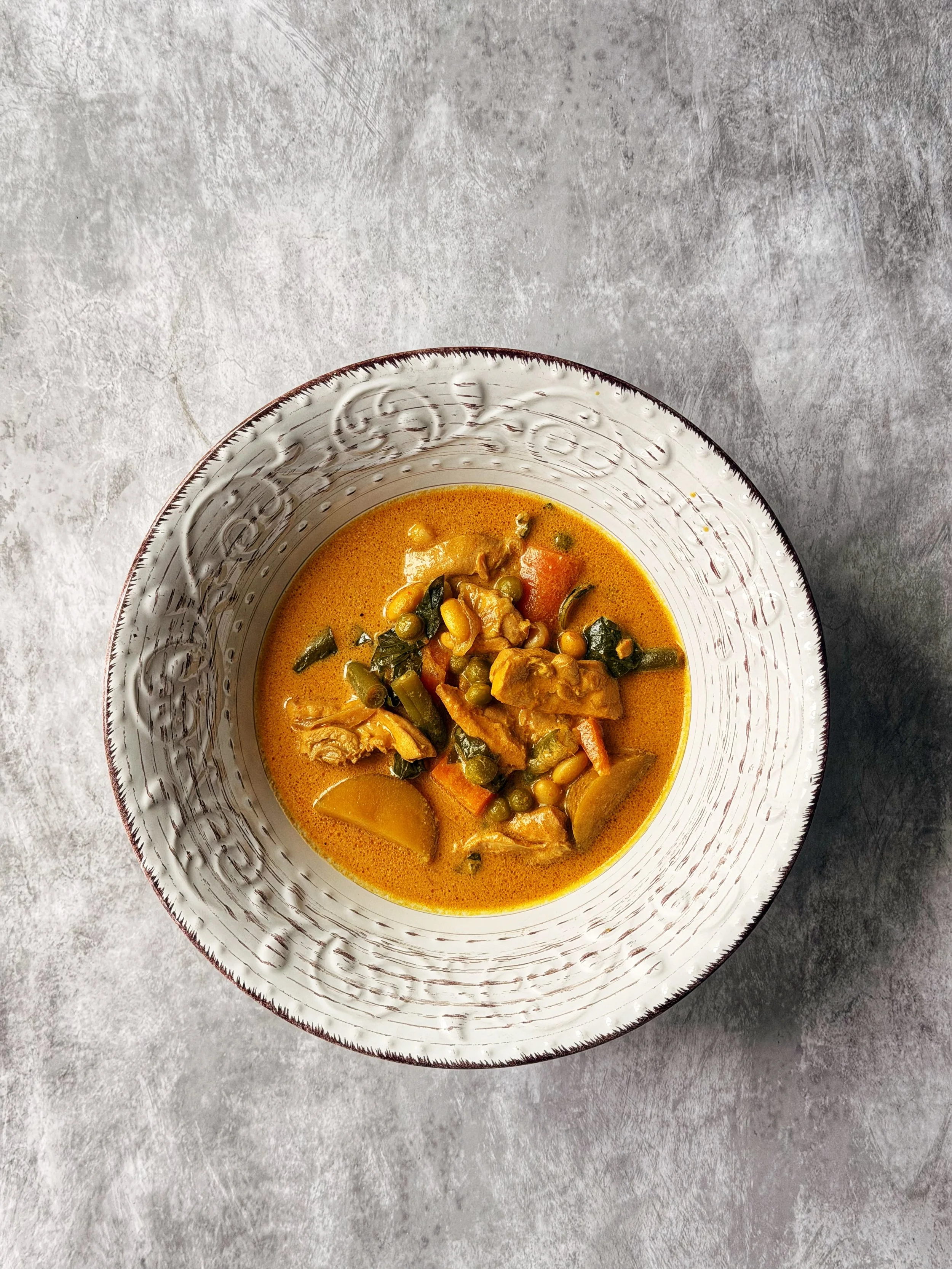
Thai Yellow Chicken Curry
Thai yellow curry, or Gaeng Kari, is a wonderful example of how different culinary traditions have influenced Thai cooking. While green and red curries are known for their fresh, fiery aromatics, yellow curry takes a slightly different approach, incorporating spices more commonly associated with Indian cooking, such as cumin, coriander, cardamom and fenugreek. The result is a fragrant, gently spiced curry with a rich golden colour and a beautifully rounded flavour.
The heart of the dish is its curry paste, made from dried and fresh chillies, lemongrass, galangal, fresh turmeric, shallots, garlic and fermented shrimp paste. These ingredients are ground together and fried until aromatic before being combined with coconut milk, stock, fish sauce, palm sugar and tamarind. The combination creates a wonderful balance of sweetness, saltiness, acidity and gentle heat, with the coconut milk bringing everything together.
For this version, I've used boneless chicken thighs along with a mixture of potatoes, carrots, green beans and bamboo shoots. The vegetables are added in stages so that everything cooks properly without losing its texture. I also reserve some of the coconut milk until the very end, which gives the finished curry a fresher coconut aroma and a lovely creamy consistency.
Although making the curry paste from scratch takes a little effort, the actual cooking is surprisingly straightforward. It's also a versatile preparation that works beautifully with seafood, beef or tofu. Finished with Thai basil, fresh chillies and crispy fried shallots, it's a comforting, aromatic curry that needs little more than a bowl of steamed jasmine rice to make a complete meal.