
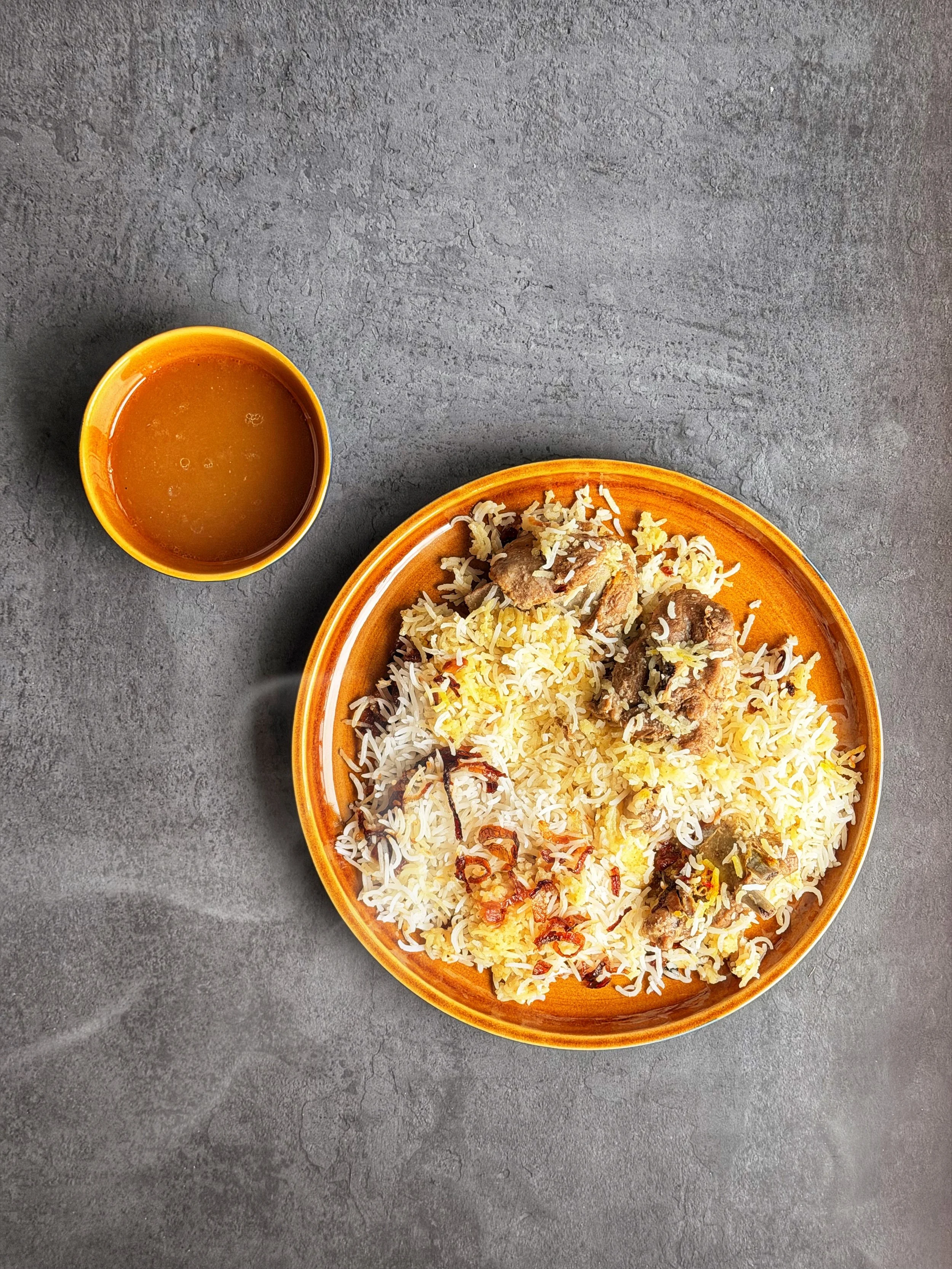
Awadhi Mutton Pulao
This is the sort of pulao that makes the word pulao sound far too casual.
The mutton is first cooked into a proper yakhni with curd and a coarse spice mixture, then removed so the broth can be strained completely clean. That yakhni is rebuilt with milk, cream, saffron, rose and kewra, while a second, much finer masala brings in fennel, mace, kebab chini and pipli. The meat goes back, partially cooked rice is layered over it with birista, and the whole thing disappears under a tightly sealed lid for dum.
It sounds elaborate, and it is. But every bit of fuss has a purpose: deeply flavoured meat, perfumed yakhni, long separate grains of rice and absolutely no whole spice ambush waiting halfway through dinner.
A pulao with the administrative complexity of a small government department.
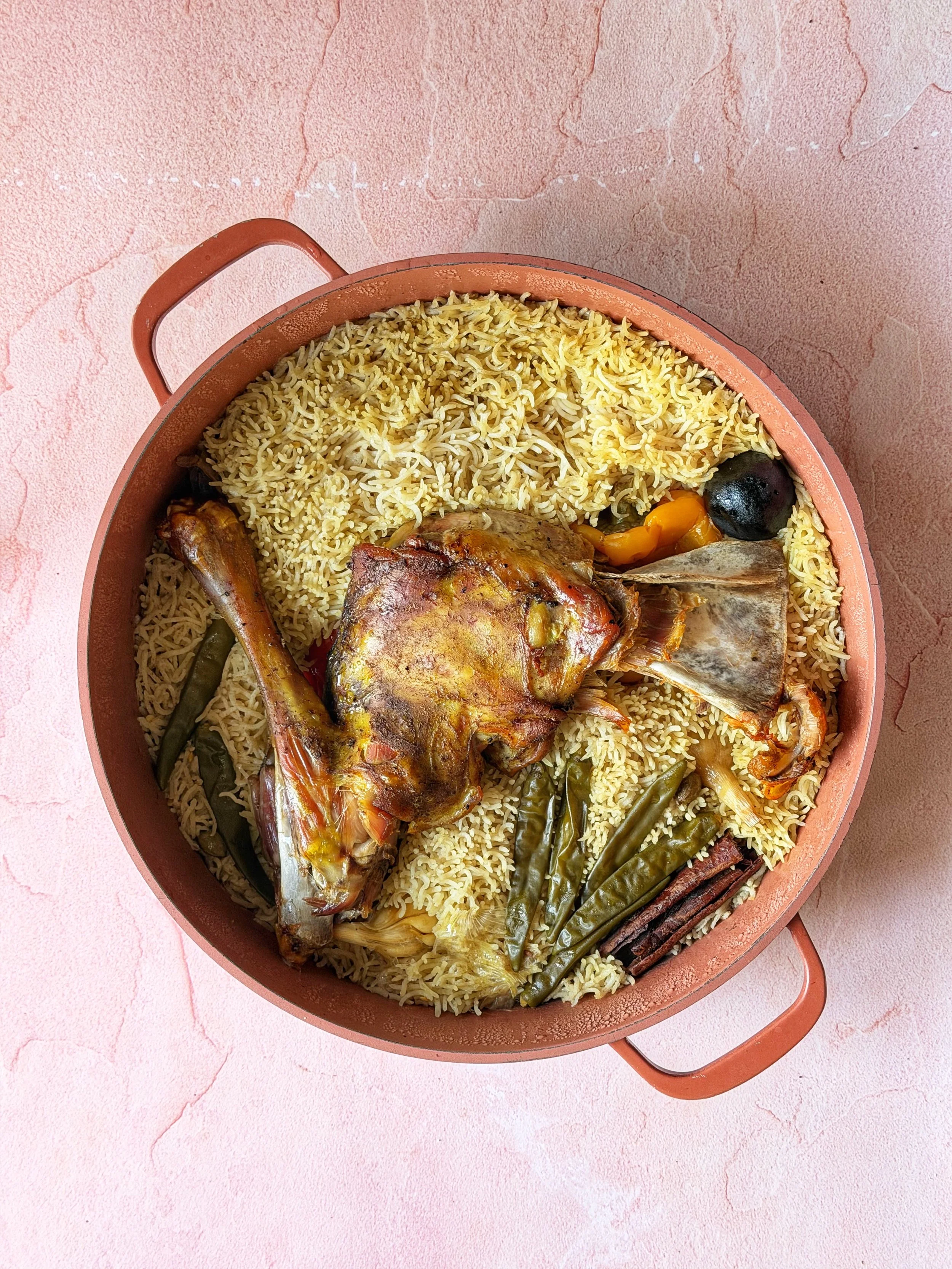
Yemeni Mutton Mandi
Mandi is traditionally associated with Yemen’s Hadhramaut region, where meat is cooked slowly with heat and smoke while its juices flavour the rice below. Reproducing that setup in a home kitchen requires a little architectural improvisation.
Here, a whole goat leg sits on a rack above a pot of water scented with black lime, whole spices, chillies, peppers and garlic. Three hours in the oven turns the liquid underneath into a broth enriched by everything dripping down from the goat. Then the rack disappears, rice goes into that broth, the leg comes back on top, and the whole arrangement returns to the oven to finish together.
A final blast of charcoal smoke does its best impression of the traditional cooking environment.
It is essentially a three-hour exercise in making gravity season your rice, followed by the extremely satisfying act of putting an entire goat leg on the table.
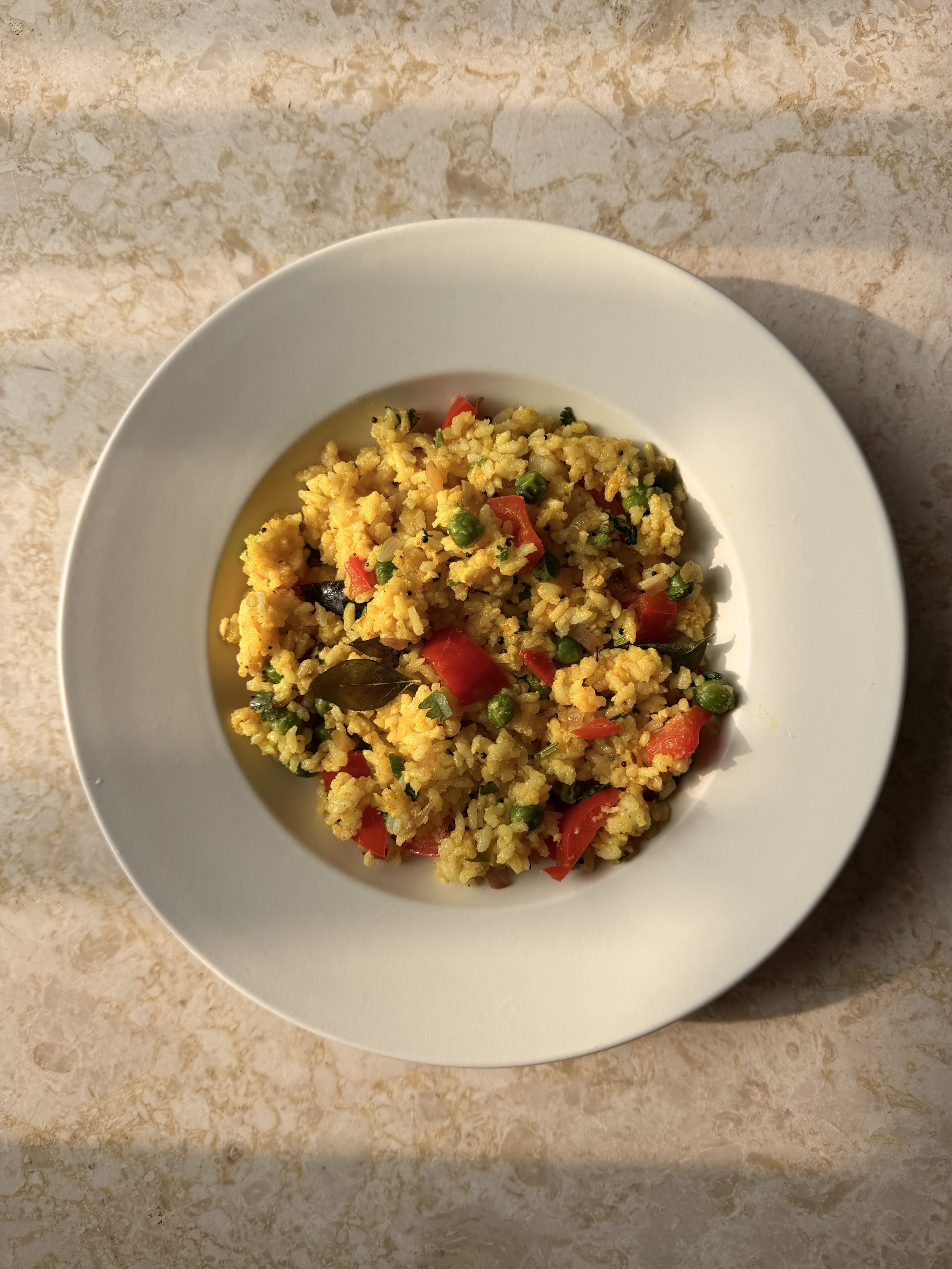
Phodnicha Bhat
There are few things more satisfying than turning yesterday's rice into today's breakfast. Phodnicha Bhat is the Maharashtrian answer to fried rice. Tossed in a hot tempering of mustard, cumin and curry leaves, with chillies, turmeric and whatever vegetables happen to be hanging around. The magic is in the phodni, or tempering, where a handful of seeds and spices hit hot oil and suddenly make leftovers taste like a plan. Simple, frugal and ridiculously comforting.