
Yemeni Mutton Mandi
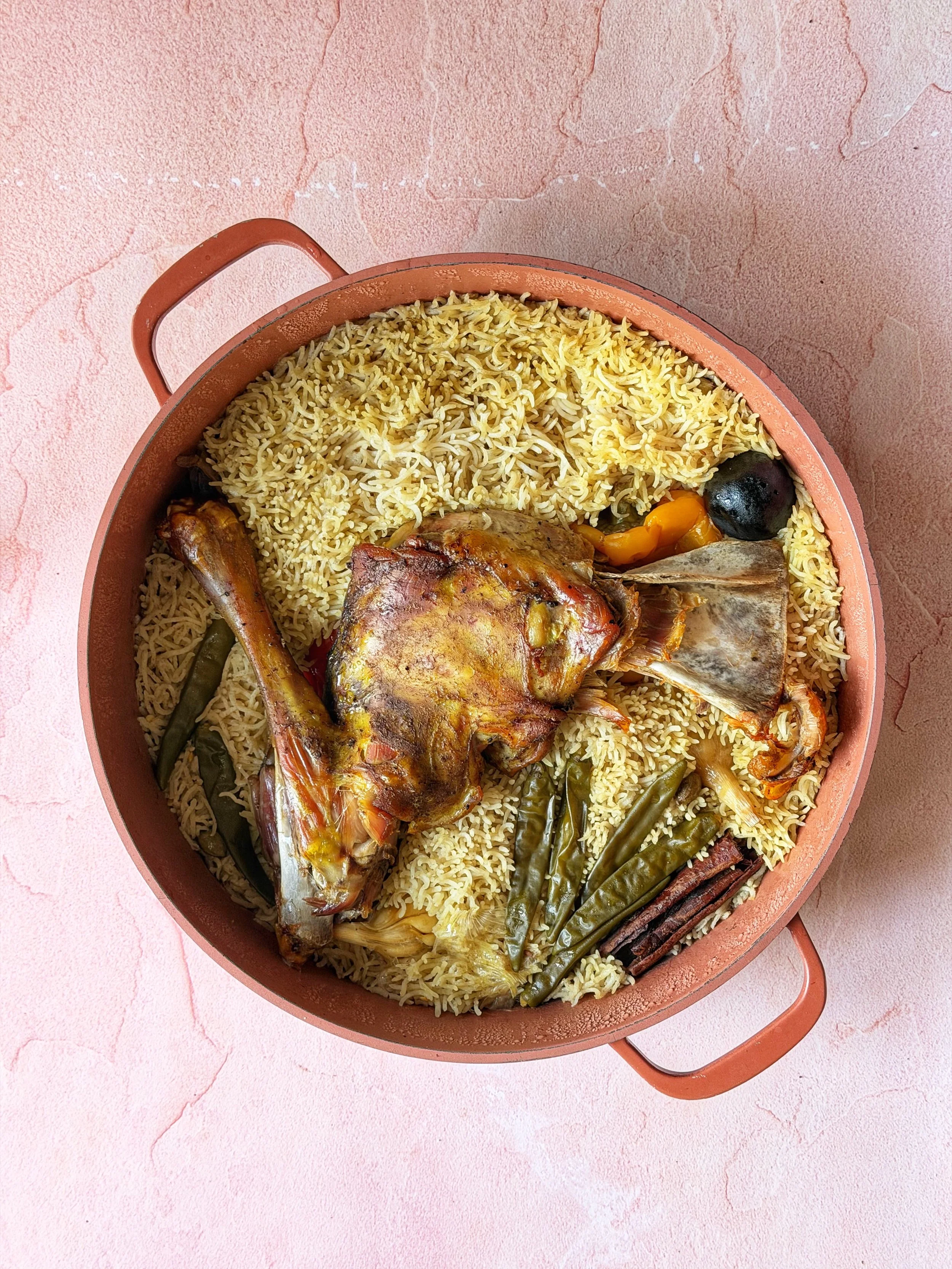
This is less complicated than balancing an entire goat leg over a pot makes it look, but make sure your equipment works before you begin. You need a deep ovenproof pot or roasting tray large enough to hold the rice and cooking liquid, plus a sturdy rack that can suspend the goat above the water during the first cook. Seal the vessel very tightly with parchment and foil, because the trapped steam is doing much of the work. Also keep an eye on the liquid before adding the rice. The goat will have contributed plenty of fat and juices during its three hours upstairs, so measure what remains and top it up rather than blindly adding another five cups of water. A quick equipment check before you start will save you from having to rearrange a very hot goat leg halfway through.
Ingredients
For the goat
1 whole goat leg, about 1–1.5 kg
1 tsp saffron
1 tsp turmeric powder
½ tsp black pepper powder
¼ cup hot water
Salt, generously, for seasoning
For the mandi rice
600 g long-grain basmati rice, about 3 cups
5 cups water, plus additional water as required
2 cinnamon sticks, about 5 cm each
2 bay leaves
1 tsp cumin seeds
6 green cardamom pods
1 tsp cloves
5–7 green chillies
2 bell peppers
1 whole bulb garlic
1 dried black lime, punctured with a fork
1½ tsp salt, or to taste
For the fresh tomato sauce
1 ripe tomato
1 handful coriander leaves
5 garlic cloves
1 green chilli
1 tbsp lemon juice
Salt, to taste
For smoking
1 small piece of charcoal
A little oil or ghee
Method
Marinate the goat
Pound the saffron in a mortar and pestle until finely powdered.
Combine it with the turmeric and black pepper. Pour in ¼ cup hot water, mix well and allow the mixture to cool completely.
Season the goat leg generously with salt. Brush the saffron mixture thoroughly over the entire leg, working it into any cuts and crevices.
Cover tightly with cling film and refrigerate overnight.
Remove the goat from the refrigerator while you prepare the pot and preheat the oven to 180°C.
Build the aromatic broth
Choose a large, deep ovenproof pot that can comfortably accommodate the goat leg on a rack above it.
Add the cinnamon, bay leaves, dried black lime, cardamom, cumin seeds, cloves, green chillies and bell peppers.
Slice the top off the whole garlic bulb, just enough to expose the cloves, and add it to the pot.
Pour in 5 cups water.
Position a sturdy rack over or inside the pot and place the marinated goat leg on it. At this stage, the meat should sit above the liquid rather than touching it.
Steam-roast the goat
Cover the entire pot tightly, first with parchment paper and then with aluminium foil. You want to trap as much steam as possible.
Transfer to the 180°C oven and cook for 3 hours.
During this time, the aromatic liquid below produces steam that gently cooks the goat while the fat and juices from the leg drip back into the broth. That broth will eventually become the cooking liquid for the rice, so don't discard any of it.
Prepare the rice
About 30 minutes before the goat finishes its first cook, wash the basmati rice thoroughly until the water runs mostly clear.
Soak for 20 minutes, then drain well.
After 3 hours, carefully remove the pot from the oven and uncover it. There will be a considerable amount of very hot steam, so open it away from your face.
Lift out the goat leg and set it aside temporarily.
Measure the liquid remaining in the pot. Top it up with hot water until you have 5–6 cups liquid in total.
Add the drained rice and 1½ tsp salt. Stir gently to distribute the rice through the broth and aromatics.
Cook the mandi
This time, place the goat leg directly on top of the rice.
Cover tightly again with parchment and foil and return the pot to the oven at 180°C for 35 minutes, or until the rice is cooked and has absorbed the aromatic broth.
Make the sauce
While the mandi cooks, combine the tomato, coriander, garlic, green chilli and lemon juice in a blender.
Blend to a fresh, slightly textured sauce and season with salt to taste.
Transfer to a bowl and refrigerate until serving.
Give it the smoke
Once the rice is cooked, remove the mandi from the oven.
Heat a small piece of charcoal over a flame until red hot throughout.
Make a small well in the rice or place a heatproof metal bowl inside the pot. Put the hot charcoal in it and drizzle over a little oil or ghee.
Immediately cover the pot tightly and leave it to smoke for 5 minutes.
Remove and safely extinguish the charcoal.
Rest and serve
Leave the mandi covered for another 15 minutes.
Gently fluff the rice around the goat without excessively disturbing the meat, which should now be extremely tender.
Bring the whole thing to the table with the chilled tomato-chilli sauce alongside.
A couple of important cues
The first three-hour cook is effectively doing two jobs at once: cooking the goat in aromatic steam and creating the broth for the rice underneath. Don't let the leg touch the water during this stage.
During the second cook, the arrangement changes deliberately. The goat sits directly over the rice so the two finish together.
And don't skip the final smoke. The oven can reproduce the slow, enclosed cooking reasonably well, but the dhungar is what brings smoke back into a mandi made without a traditional underground oven.