
Yen Kangsoi
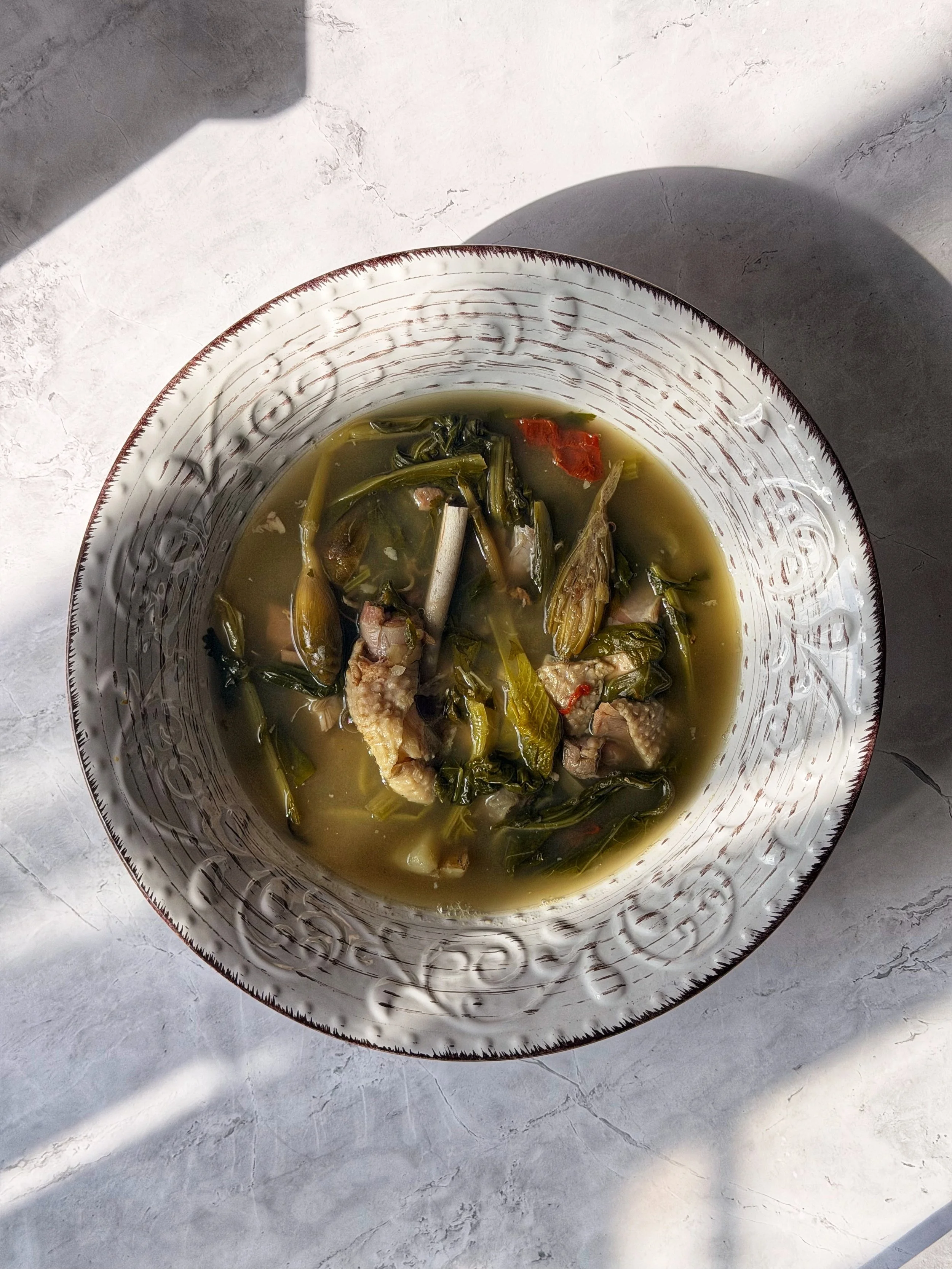
Kangsoi, also written kangshoi, is a simple water-based stew associated with the Meitei community of Manipur. There is no oil, no turmeric and no powdered masala. Instead, the broth gets its character from ginger, garlic, chilli and, most importantly, ngari, the intensely aromatic fermented fish used throughout Meitei cooking.
Kangsoi is highly adaptable, with the vegetables changing according to season and household. This version turns it into Yen Kangsoi, using country chicken, mustard greens, potato and fresh ginger flowers. The country chicken makes a particularly flavourful broth, while the ngari supplies a deep fermented savouriness that makes the absence of oil and conventional spices feel entirely beside the point.
The ginger flowers are optional, but if you can find them, use them generously. Here they aren't just perfume. They are treated almost like another vegetable, bringing a fresh, floral ginger fragrance to the broth.
Ingredients
800 g bone-in chicken, cut into small curry pieces (I have used country chicken)
250–300 g mustard greens
1 large potato, peeled and cut into chunks
8–10 fresh ginger flowers, optional
20 g fresh ginger, roughly crushed
5–6 garlic cloves, crushed
10–15 g ngari
1 fresh or dried bhut jolokia
1 small onion, sliced
1–1½ tsp salt, or to taste
1–1.5 litres water, as required
A handful of coriander leaves or chopped spring onions, to finish
No oil, turmeric or powdered masala is required.
You can replace or supplement the potato with seasonal vegetables such as carrots, tomatoes or bamboo shoots. Just stagger their addition according to how long they need to cook.
Preparation
Prepare the Ngari
Place the ngari in a dry pan and lightly roast over low heat until warmed through and fragrant. It only needs roasting, not frying or browning.
Transfer to a small bowl and mash with a couple of tablespoons of warm water.
If your ngari contains any particularly large or hard bones, remove them. Small bones that have softened sufficiently can simply be mashed into the mixture.
Cook the Chicken
Place the country chicken in a large pot along with the sliced onion, crushed ginger, garlic, mashed ngari and salt.
Pour in 5 cups of water and bring to a boil.
Skim off any excessive foam that rises to the surface, then reduce the heat to maintain a gentle simmer. Cover and cook until the chicken is well on its way to becoming tender.
Country chicken can vary considerably in cooking time, so judge this by the meat rather than the clock.
About halfway through cooking, add the potato.
Prepare the Mustard Greens
Meanwhile, wash the mustard greens thoroughly.
Separate any particularly thick stalks from the leaves. Cut the stalks into roughly 3 cm pieces and roughly chop the leaves.
Once the chicken is nearly tender, add the mustard stalks to the pot and simmer for 5 minutes.
Prepare the Ginger Flowers
Remove only the genuinely tough or damaged outer portions of the ginger flowers.
If the flower heads are large, cut them lengthwise into halves or quarters.
Don't mince them. The ginger flowers are meant to remain identifiable in the finished Kangsoi, functioning almost as a vegetable rather than simply disappearing into the broth as an aromatic.
Add the Ginger Flowers and Bhut Jolokia
Add the prepared ginger flowers and 1 whole bhut jolokia to the pot.
Simmer for another 5 minutes.
Keeping the bhut jolokia whole allows its aroma to infuse the broth without immediately releasing all of its heat. If you're using a dried chilli, handle it similarly and avoid accidentally breaking it unless you want a significantly hotter Kangsoi.
Add the Mustard Leaves
Add the chopped mustard leaves and gently push them down into the broth.
Simmer for another 7–10 minutes, or until the greens are tender and the chicken is completely cooked.
If the chicken still needs more time, continue simmering. Ideally, however, country chicken should be almost completely tender before the mustard leaves and ginger flowers go in so the vegetables aren't overcooked while you wait for the meat.
Finish the Kangsoi
Check the consistency. Kangsoi should remain generously brothy, rather than reducing into a thick chicken gravy. Add a little hot water if necessary.
Taste and adjust the salt.
You now have a decision to make about the bhut jolokia. Remove it and serve it separately for anyone who wants more heat, or carefully break a small piece into the broth and taste before adding any more.
Finish with plenty of chopped coriander leaves or spring onions.
Serve hot, with steamed rice and plenty of the broth spooned over it.