
Awadhi Mutton Pulao
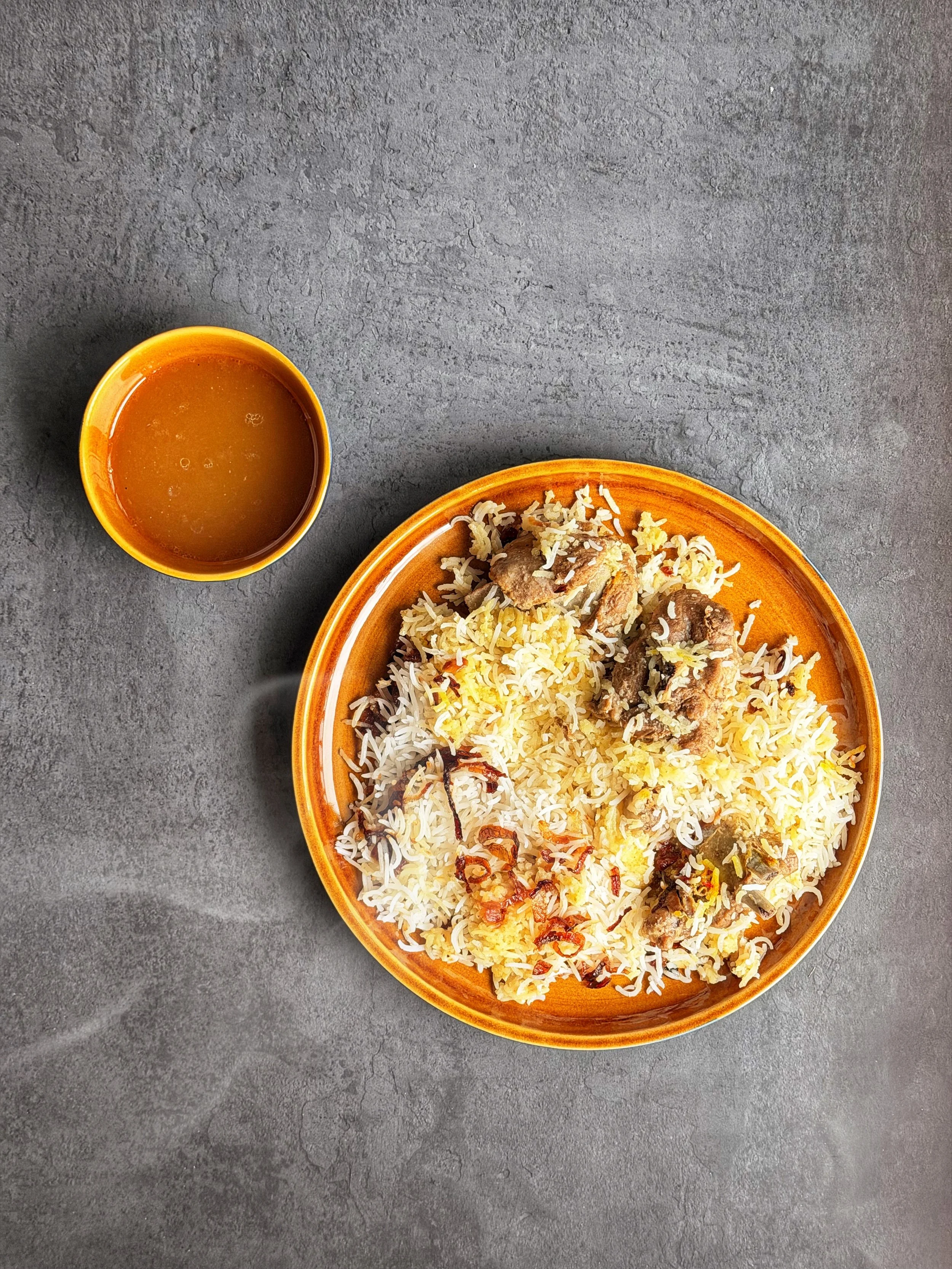
This is a rich, yakhni-based mutton pulao built in several distinct stages. The mutton is first cooked with curd and a coarse spice mixture to produce a deeply flavoured stock. That yakhni is strained until completely clean, then combined with milk, cream, saffron and floral aromatics to form the base in which the meat and partially cooked rice finish together on dum.
Two separate spice mixtures are important here. The first is deliberately coarse and does its work while the mutton cooks. The second is ground extremely fine, sieved and added to the milk base, bringing in the more perfumed notes of kebab chini, pipli, mace and cardamom without leaving visible spices in the finished pulao.
The final dish should be aromatic and rich but surprisingly delicate, with long separate grains of rice, tender pieces of mutton and no whole spices interrupting either.
Ingredients
Mutton and Yakhni
1.5 kg mutton, preferably a mixture of shoulder, chest and neck, cut into large pieces
¾ cup ghee
3 tbsp coarsely crushed ginger and garlic
1½ tbsp red chilli powder
1½ cups curd, whisked
1.25 litres hot water
Salt, to taste
Spice Mix No. 1
8 green cardamom pods
2 tbsp fennel seeds
2 tbsp black peppercorns
8 cloves
2 black cardamom pods
3 small pieces cinnamon
1 small piece nutmeg
1 blade mace
2 tbsp poppy seeds
Spice Mix No. 2
1 tbsp cumin seeds
1 tbsp fennel seeds
5 green cardamom pods
1 small piece mace
2 small pieces cinnamon
1 black cardamom pod
5 kebab chini
2 pipli
You will need 1½ tbsp of the finished powder for the pulao. Reserve the remainder for another use.
For the Birista
2-3 large onions, finely sliced
Neutral oil, as needed for frying
A pinch of salt
A pinch of sugar
Milk and Yakhni Base
500 ml whole milk
½ cup cream
1 tbsp sugar
A generous pinch of good-quality saffron
1½ tbsp rose water
1½ tbsp kewra water
1½ tbsp Spice Mix No. 2
400 ml strained mutton yakhni
The rose water and kewra water can be replaced with a few drops of mitha ittar, if available.
Rice
750 g aged long-grain basmati rice
Plenty of water, for boiling
2–3 tbsp salt, or as needed
3 bay leaves
Method
Prepare the spice mixtures
Combine all the ingredients for Spice Mix No. 1 and crush them coarsely. Do not turn them into a fine powder.
Separately combine the ingredients for Spice Mix No. 2 and grind to a very fine powder. Pass the powder through a fine mesh sieve. Set aside.
Make the yakhni
Heat the ghee in a large, heavy-bottomed pot over medium heat.
Add the crushed ginger and garlic and fry until aromatic.
Add the mutton and fry well until the pieces lose their raw colour and begin to brown.
Add the red chilli powder and salt. Continue frying until the raw aroma of the chilli powder has completely disappeared. Don't rush this stage, as inadequately cooked chilli powder will leave a raw flavour in the finished yakhni.
Add the whisked curd and fry briefly, then add all of Spice Mix No. 1. Continue frying until everything is well combined and fragrant.
Pour in 1.25 litres hot water and bring to a boil. Cover, reduce the heat and simmer gently until the mutton is approximately 90% cooked. It should be tender but still capable of withstanding the final dum without falling apart.
Remove the pieces of mutton from the pot.
Strain the yakhni through cheesecloth into a clean vessel. Shake or gently wipe away any pieces of spice clinging to the mutton. The finished pulao should contain no visible whole spices.
Reserve both the meat and strained yakhni separately.
Soak the rice
Wash the basmati gently until the water runs relatively clear.
Soak in plenty of fresh water for 20 minutes, then drain.
Make the birista
While the mutton cooks, heat a generous layer of neutral oil in a wide frying pan. You need enough oil for the onions to fry evenly, but they do not need to be completely submerged.
Once the oil is properly hot, add the sliced onions in a single layer. Work in two batches if necessary rather than overcrowding the pan.
Leave the onions undisturbed for about 2 minutes, then sprinkle over a small pinch each of salt and sugar.
Stir, then continue frying, allowing the onions to sit undisturbed between turns so they colour evenly.
As soon as they begin taking on colour, reduce the heat. Continue cooking slowly until the moisture has been driven out and the onions are evenly golden to deep brown, depending on your preference.
Remove them slightly before they reach the colour you want. They will continue darkening considerably from residual heat.
Spread immediately over a plate lined with kitchen paper. Do not pile them on top of one another while hot or they will steam and become soggy.
Reserve the birista and some of the onion-flavoured frying oil separately.
Build the milk and yakhni base
Choose a large, heavy-bottomed vessel that can comfortably hold both the mutton and 750 g rice. This will also be the vessel used for the final dum.
Pour in the milk and heat gently, stirring constantly.
Once the milk is thoroughly heated and has developed a cooked aroma, add the sugar and 1½ tbsp Spice Mix No. 2. Cook gently, stirring, until the spices become fragrant.
Add the saffron, rose water and kewra water.
Remove ½ cup of this seasoned milk mixture and reserve it for the final layering.
Add the cream to the remaining milk and mix thoroughly. Continue cooking over low heat for another 5–10 minutes, stirring constantly so the dairy does not catch.
Add 400 ml of the strained yakhni and mix well.
Return the mutton to the pot and allow everything to heat through. Keep this mixture warm over very low heat while you finish the rice.
Reserve the remaining yakhni for serving alongside the pulao.
Parboil the rice
Ideally, begin heating the rice water while you are preparing the milk and yakhni base so both components are ready at roughly the same time.
Bring a large pot of water to a vigorous rolling boil. Use a generously sized vessel so the grains have plenty of room to move freely and elongate without being crowded.
Season the water generously with salt, approximately 2–3 tbsp, and add the bay leaves.
Once the water is at a full rolling boil, add the drained rice. The temperature will drop immediately, so beginning with vigorously boiling water helps it return to the boil quickly.
Cook until the rice reaches 3 kanni, approximately 75% cooked.
To test, take a grain between your fingers and press it. When it breaks into approximately three distinct sections, it is ready.
Meanwhile, line a large vessel or tray with a clean, absorbent kitchen towel.
Drain the rice extremely well and transfer it onto the towel so any remaining excess water is absorbed. Discard the bay leaves.
Assemble the pulao
Taste the mutton and gravy before layering.
At this point, the liquid should taste completely saturated with salt without being unpleasantly salty. Remember that it still needs to season 750 g of relatively bland rice.
Scatter half the birista over the mutton.
Carefully spread the parboiled rice over the meat in an even layer, taking care not to crush or break the grains.
Drizzle the reserved ½ cup seasoned saffron milk evenly over the rice.
Spoon over a little of the reserved birista frying oil.
Finish with the remaining birista.
Dum
Cover the mouth of the pot with a damp, clean kitchen towel, then fit a tight lid over it. The aim is to trap as much steam as possible.
Increase the heat for 5 minutes to bring the entire pot back up to temperature.
Reduce the heat to its lowest possible setting. If your burner cannot maintain a sufficiently low flame, place a heavy tawa underneath the pot to diffuse the heat.
Cook undisturbed on dum for 25 minutes.
Check for doneness
Insert a clean chopstick vertically through the rice until it touches the bottom of the pot.
Remove it and inspect the tip. If you can see specks or traces of milk, the pulao needs a little longer on dum.
If the chopstick comes out showing only ghee and no milky liquid, the dairy has been absorbed and the pulao is ready.
Switch off the heat, keep the pot covered and allow it to rest for 20 minutes, or until the trapped steam has settled.
Open the pot and gently lift the rice and mutton together from one side, without aggressively mixing the grains.
Serve the pulao hot with a bowl of the reserved mutton yakhni alongside.