
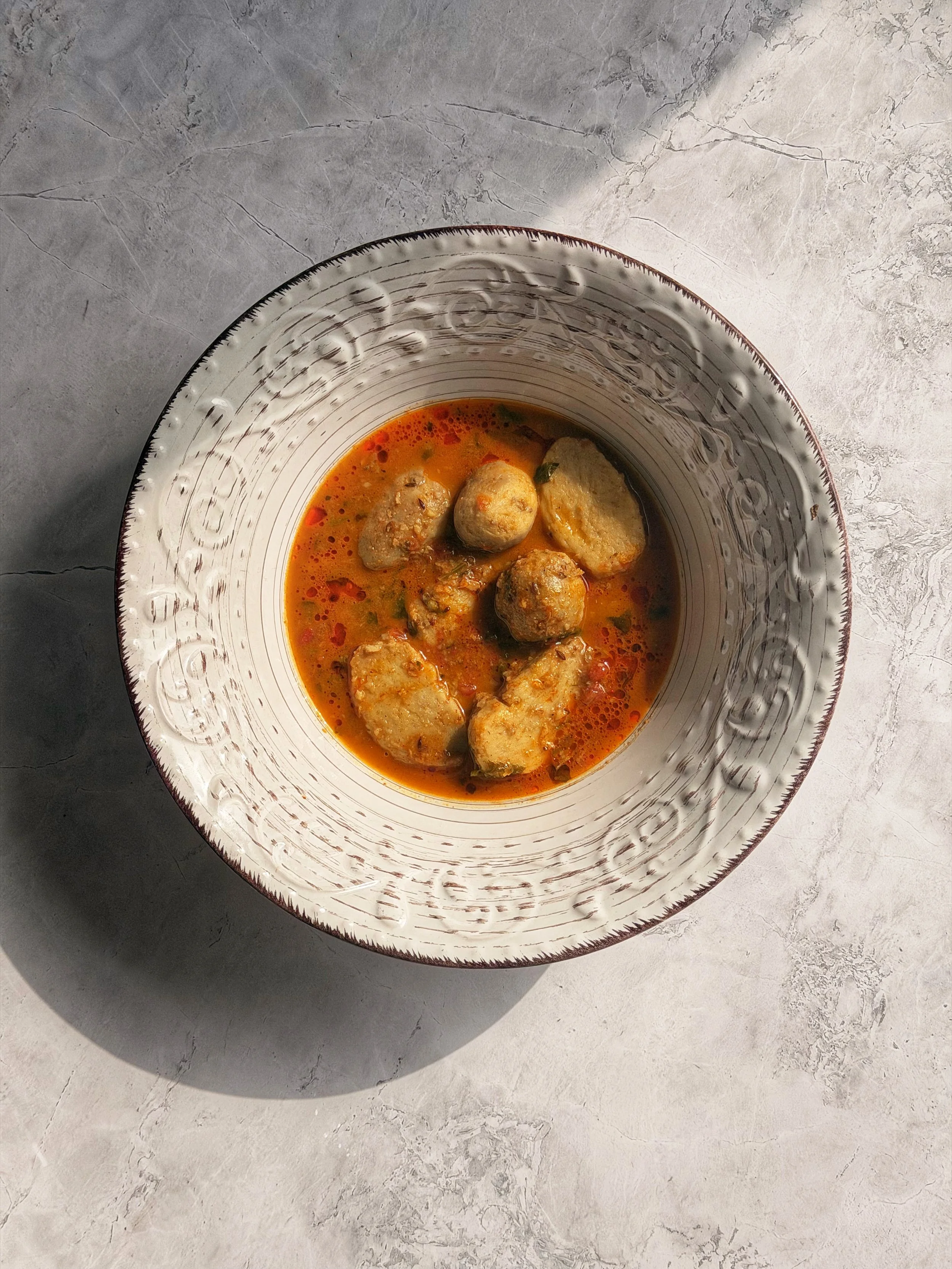
Arbi Rasedar
Arbi is one of those vegetables that rarely gets the attention it deserves. Often relegated to a dry sabzi, this humble taro root takes on a rather different personality in Banarasi Arbi Rasedar, a tangy, lightly spiced curry inspired by the homestyle cooking of Banaras and eastern Uttar Pradesh.
This no-onion, no-garlic preparation relies on a handful of ingredients to do some surprisingly heavy lifting. Ajwain, hing, ginger and mustard oil provide the aromatic backbone, while tomato and amchur bring a lively sourness that cuts through the earthy, starchy character of the arbi. The taro is first boiled, then lightly fried before being simmered in a thin gravy. A few pieces are deliberately mashed into the liquid, thickening it naturally without any flour or besan.
It's simple, economical cooking with a clever understanding of ingredients and texture. The kind of dish that makes a strong argument for keeping a stack of hot pooris nearby.
And perhaps giving the humble arbi a little more respect.

Awadhi Mutton Pulao
This is the sort of pulao that makes the word pulao sound far too casual.
The mutton is first cooked into a proper yakhni with curd and a coarse spice mixture, then removed so the broth can be strained completely clean. That yakhni is rebuilt with milk, cream, saffron, rose and kewra, while a second, much finer masala brings in fennel, mace, kebab chini and pipli. The meat goes back, partially cooked rice is layered over it with birista, and the whole thing disappears under a tightly sealed lid for dum.
It sounds elaborate, and it is. But every bit of fuss has a purpose: deeply flavoured meat, perfumed yakhni, long separate grains of rice and absolutely no whole spice ambush waiting halfway through dinner.
A pulao with the administrative complexity of a small government department.