
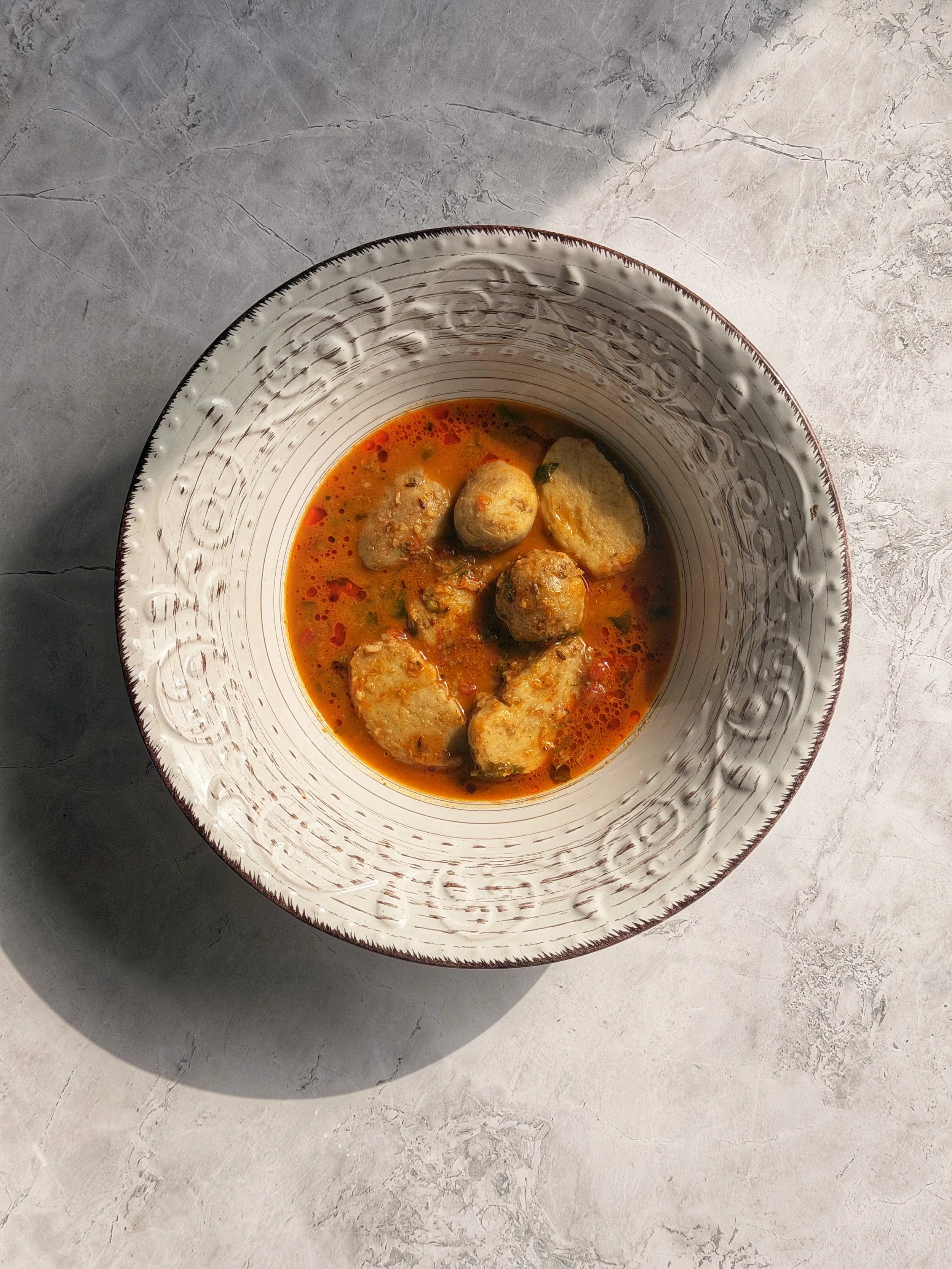
Banarasi Arbi Rasedar is a homestyle preparation of taro root cooked in a thin, tangy and aromatic gravy. Unlike the thick, onion-based curries commonly found in restaurants, this version relies on mustard oil, ajwain, hing, ginger and a handful of ground spices for its flavour.
The arbi is first boiled until just tender, then lightly fried to develop a golden exterior before being simmered in a spiced gravy. A little tomato contributes acidity and body, while amchur provides the characteristic sourness. The gravy is thickened naturally by crushing a few pieces of arbi, releasing their starch into the cooking liquid.
This is a no-onion, no-garlic interpretation inspired by the simple, satvik-style curries of Banaras and eastern Uttar Pradesh, traditionally enjoyed with poori, kachori or chapati.
Ingredients
For the arbi and gravy
500 g arbi (taro root)
3 tbsp mustard oil
½ tsp ajwain (carom seeds)
1 tsp cumin seeds
½ tsp fennel seeds, lightly crushed
1 generous pinch hing (asafoetida)
2 tsp ginger, finely grated
2 green chillies, slit lengthwise
1 medium tomato, finely chopped
½ tsp turmeric powder
1 tsp Kashmiri red chilli powder
2 tsp coriander powder
½ tsp roasted cumin powder
1–1½ tsp amchur (dry mango powder)
Salt, to taste
500–600 ml hot water
A handful of fresh coriander leaves, chopped
Method
Boil the arbi
Wash the arbi thoroughly under running water, scrubbing away any dirt while leaving the skins intact.
Place the arbi in a saucepan and add enough water to cover it completely. Add a little salt and bring to a boil.
Reduce the heat and simmer for approximately 12–18 minutes, depending on the size of the arbi.
The arbi should be just tender, with a knife entering the flesh with slight resistance.
Avoid cooking it until completely soft, as it will undergo further cooking in the gravy.
Drain the arbi and allow it to cool until comfortable to handle.
Peel away the skins and cut the larger pieces into halves lengthwise. Smaller pieces can be left whole.
Set aside.
Lightly fry the arbi
Heat 2 tbsp mustard oil in a heavy-bottomed kadai over medium-high heat until it just begins to smoke.
Reduce the heat to medium and allow the oil to cool slightly.
Carefully add the boiled arbi, arranging the pieces in a single layer.
Fry for approximately 4–5 minutes, turning occasionally, until the surfaces develop a light golden colour.
The objective is not to make the arbi crisp, but to develop a thin exterior crust that helps it retain its shape during simmering.
Remove the fried arbi using a slotted spoon and set aside.
Prepare the tempering
Add the remaining 1 tbsp mustard oil to the same kadai, if required.
Reduce the heat to medium-low.
Add the cumin seeds and ajwain, allowing them to crackle for a few seconds and release their aroma.
Add the hing, followed immediately by the grated ginger and slit green chillies.
Sauté for approximately 20–30 seconds, stirring continuously, until the ginger becomes fragrant.
Take care not to brown the ginger excessively.
Fry the spices and tomato
Reduce the heat to low.
Add the turmeric powder, Kashmiri red chilli powder and coriander powder.
Immediately add 2–3 tbsp water to prevent the powdered spices from scorching.
Stir continuously and cook the spices for approximately 1 minute, allowing them to bloom in the oil.
Add the finely chopped tomato and mix thoroughly.
Increase the heat slightly and cook for approximately 4–6 minutes, stirring frequently, until the tomato softens and breaks down into the masala.
Continue frying until the mixture thickens and a little oil begins to separate around the edges.
The tomato should contribute a gentle acidity and some body to the gravy without becoming its dominant flavour.
Prepare the rasedar gravy
Pour 500 ml hot water into the kadai and stir thoroughly, scraping up any masala stuck to the bottom.
Add salt to taste and bring the mixture to a gentle boil.
Carefully add the fried arbi and stir to coat the pieces with the gravy.
Reduce the heat to medium-low and simmer uncovered for approximately 8–10 minutes.
During this time, the arbi will absorb some of the spices while releasing a little starch into the cooking liquid.
Using the back of a spoon, gently crush one or two small pieces of arbi against the side of the kadai.
Stir the mashed arbi back into the gravy.
This will thicken the liquid naturally, giving it a slightly silky consistency without the addition of flour or besan.
The finished gravy should remain relatively thin and flowing, with just enough body to coat the arbi lightly.
If it becomes too thick, add a little additional hot water.
Finish with amchur and roasted spices
Add 1 tsp amchur, the lightly crushed fennel seeds and roasted cumin powder.
Stir gently and simmer for another 1–2 minutes.
Taste the gravy and adjust the salt and sourness.
If you prefer a more pronounced tang, add the remaining ½ tsp amchur.
The sourness should be noticeable but balanced, complementing the earthy flavour of the arbi rather than overpowering it.
Rest and serve
Turn off the heat and sprinkle the freshly chopped coriander over the curry.
Cover the kadai and allow the arbi to rest for approximately 5 minutes before serving.
This allows the flavours to settle and the gravy to thicken slightly.
Serve hot with freshly fried pooris, kachoris, chapatis or plain parathas.