
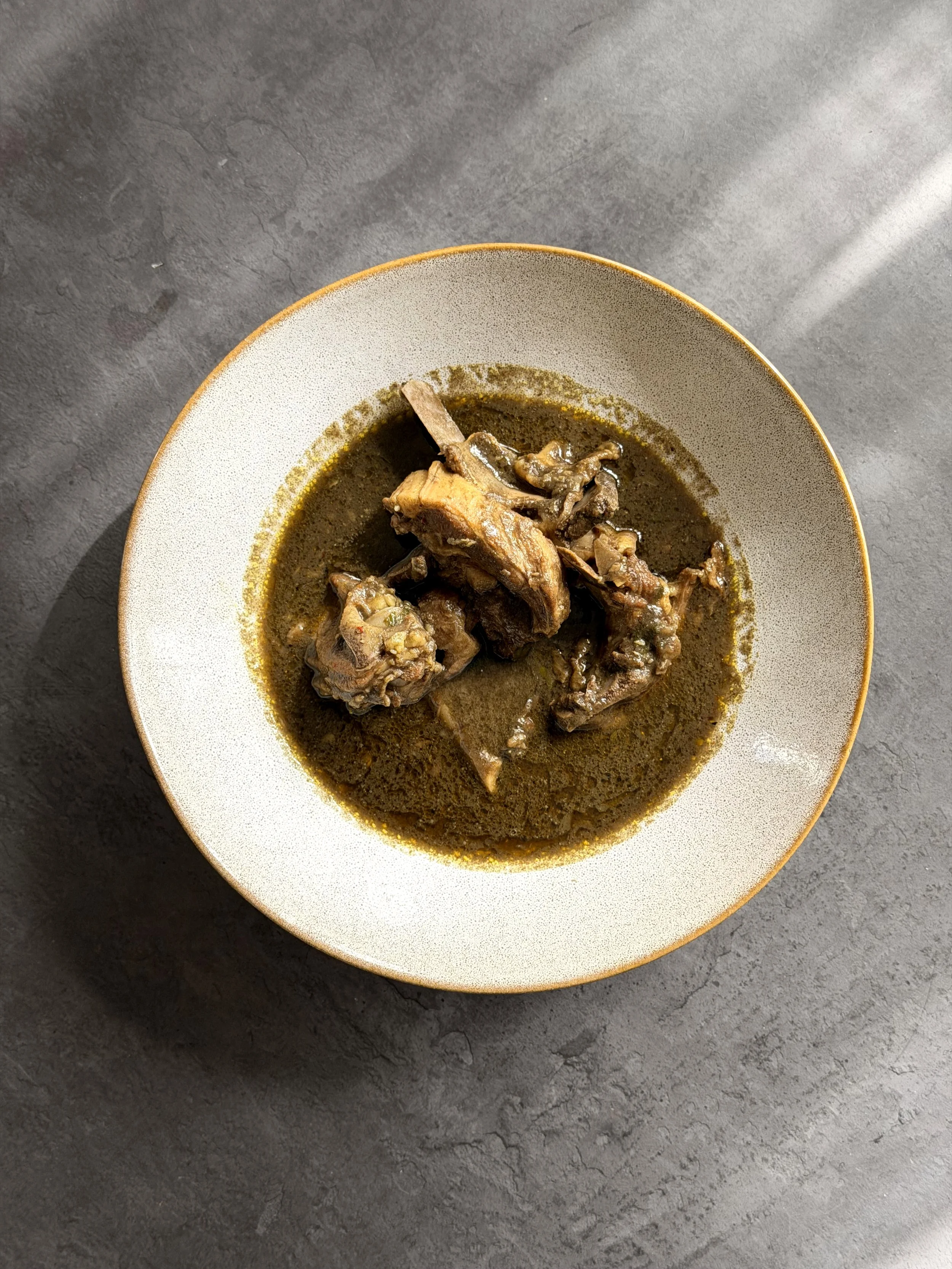
A deeply aromatic, dark mutton curry inspired by the kanduri cooking traditions of Maharashtra's Marathwada region. This preparation uses a distinctive two-stage technique: the mutton is first cooked separately to produce a flavourful stock, while a masala of flame-roasted onions, dry coconut, garlic, ginger and coriander is slowly fried until almost black-brown.
The reserved mutton stock is then used to develop the masala through repeated frying and reduction, producing the characteristic dark kala rassa. A final addition of yesur, a roasted grain-based thickening mixture, gives the gravy a little body without making it excessively thick.
Unlike conventional mutton curries, the meat is added back to the finished gravy towards the end of cooking.
Ingredients
For the mutton (Ukad)
1 kg bone-in goat mutton, preferably a mixture of shoulder, neck, ribs and leg
1 medium-large onion, finely chopped (approximately 150 g)
2 tbsp ginger-garlic paste
1 tsp turmeric powder
1½ tsp salt, or to taste
2 tbsp groundnut oil
Approximately 1 litre hot water
For the flame-roasted vatan
2 medium-large onions, whole and unpeeled (approximately 250 g)
70 g dry coconut (copra), cut into pieces
12 garlic cloves
1½-inch piece ginger
½ cup fresh coriander leaves and tender stems, loosely packed
50–80 ml water, or as required for grinding
For the kala rassa
4 tbsp groundnut oil
2 tbsp kala masala
1–2 tsp hot red chilli powder, adjusted to taste
Approximately 2 tbsp yesur (substitute with bajra flour if not available)
5 tbsp (75 ml) water, for the yesur slurry
All the reserved mutton stock
Additional hot water, if required
Salt, to taste
Fresh coriander, chopped, for finishing
Method
Marinate the mutton
Place the mutton in a large mixing bowl.
Add the turmeric powder, ginger-garlic paste and 1½ tsp salt.
Rub the seasonings thoroughly into the meat, ensuring that every piece is evenly coated.
Cover and rest for approximately 30 minutes.
Prepare the mutton ukad
Heat 2 tbsp groundnut oil in a large, heavy-bottomed kadai over medium heat.
Add the finely chopped onion and sauté until it softens and turns lightly golden.
Add the marinated mutton and increase the heat to medium-high.
Fry for approximately 8–10 minutes, stirring frequently, until the meat changes colour and begins releasing moisture.
Reduce the heat, cover the kadai and allow the mutton to cook in its own juices for another 8–10 minutes.
This initial frying helps develop the flavour of the meat before the addition of water.
Pour in approximately 1 litre of hot water and bring to a gentle boil.
Reduce the heat to low, cover and simmer for 60–90 minutes, or until the mutton is tender.
The exact cooking time will depend on the age of the animal and the cuts being used.
Once cooked, strain the contents of the kadai, collecting all the cooking liquid in a separate bowl.
Reserve every drop of the mutton stock. It will form the base of the kala rassa and will also be used during the frying of the masala.
Keep the cooked mutton pieces separate and set aside.
Flame-roast the onions
Place the whole, unpeeled onions directly over a medium gas flame, using a wire rack or metal skewer to support them.
Rotate frequently so that the onions roast evenly on all sides.
Continue roasting for approximately 10–15 minutes, until the outer skins are thoroughly blackened and the flesh beneath has softened.
Remove from the flame and allow the onions to cool enough to handle.
Peel away the loose, burnt outer skins.
Retain the deeply browned flesh, which contributes sweetness, smokiness and colour to the masala. Discard any excessively charred portions that taste bitter.
Roast the dry coconut
Cut the dry coconut into manageable pieces.
Using a metal skewer or suitable wire rack, roast the pieces directly over a low gas flame.
Turn them frequently until the coconut develops dark brown patches with some blackened areas.
The aim is to toast the coconut deeply, developing a smoky, nutty flavour without burning it completely.
Remove from the heat and allow it to cool.
The combination of flame-roasted onions and coconut is one of the defining characteristics of this preparation. Both ingredients contribute to the unusually dark colour of the finished gravy.
Prepare the vatan
Transfer the roasted onions and coconut to a mixer-grinder.
Add the garlic cloves, ginger and fresh coriander.
Grind to a thick, reasonably smooth paste, adding approximately 50–80 ml water as required to help the ingredients blend.
The finished vatan should be dark brown, with visible flecks of roasted coconut and coriander.
Avoid adding excessive water. A thick paste will be easier to fry and reduce in the next stage.
Bhunao the vatan
Heat 4 tbsp groundnut oil in a heavy iron kadai over medium heat.
Add the prepared vatan carefully, as the moisture in the paste may cause the oil to splutter.
Fry for approximately 8–10 minutes, stirring frequently, until the raw aroma of garlic disappears and the mixture begins to darken.
Add the kala masala and red chilli powder.
Stir continuously for approximately 30–45 seconds, allowing the spices to bloom in the hot oil without burning.
Pour in approximately 50 ml of the reserved mutton stock.
Stir thoroughly, scraping the bottom of the kadai to release any browned masala.
Allow the liquid to evaporate until the mixture begins frying in the oil again.
Add another small splash of stock and repeat the process.
Continue this cycle of adding stock, reducing and frying approximately 3–4 times over the next 10–15 minutes.
As the masala cooks, it will gradually change from a wet brown paste to a glossy, intensely dark brown mixture.
You should also notice small amounts of oil beginning to separate around the edges.
Do not rush this stage. The repeated frying and reduction are central to developing the deep, roasted flavour and dark colour of the kala rassa.
Keep the heat moderate and stir frequently to prevent the masala from scorching.
Develop the kala rassa
Once the vatan has been thoroughly fried, pour in the remaining reserved mutton stock.
Stir well, scraping up any caramelised masala stuck to the bottom and sides of the kadai.
Add a little additional hot water if necessary.
At this stage, the gravy should be relatively thin, as it will thicken slightly during the remaining cooking stages.
Bring the mixture to a gentle boil, then reduce the heat.
Simmer uncovered for approximately 12–15 minutes, stirring occasionally.
The gravy should develop a very dark brown colour and a pronounced roasted aroma.
Taste the rassa at this stage. The flavours should be concentrated, with the roasted onion, coconut and kala masala providing most of its character.
Add the yesur
In a small bowl, combine approximately 2 tbsp yesur with 5 tbsp (75 ml) room-temperature water.
Mix thoroughly to form a smooth slurry without lumps.
While the rassa is gently simmering, pour in the yesur slurry in a thin stream, stirring continuously.
Continue simmering for approximately 6–8 minutes, allowing the yesur to cook and the gravy to thicken slightly.
The finished consistency should be lightly thickened but still fluid enough to flow freely from a ladle.
Kanduri rassa is not intended to have the thick, clingy consistency of a conventional restaurant-style mutton curry.
If the gravy becomes too thick, add a little hot water to loosen it.
Return the mutton to the rassa
Add the previously cooked mutton pieces to the finished kala rassa.
Stir gently to coat the meat evenly with the gravy.
Simmer over low heat for another 8–10 minutes, allowing the mutton to absorb the flavours of the roasted masala.
Avoid vigorous stirring, particularly if the meat is already very tender.
Taste and adjust the salt.
If required, add a little additional kala masala, although the flavour should already be well developed from the earlier frying.
Rest and serve
Turn off the heat and cover the kadai.
Allow the kanduri mutton to rest for approximately 15–20 minutes before serving.
This resting period allows the flavours to settle and the gravy to develop a more cohesive consistency.
Finish with a little freshly chopped coriander, if desired.
Serve hot with jowar bhakri, bajra bhakri or chapati.