
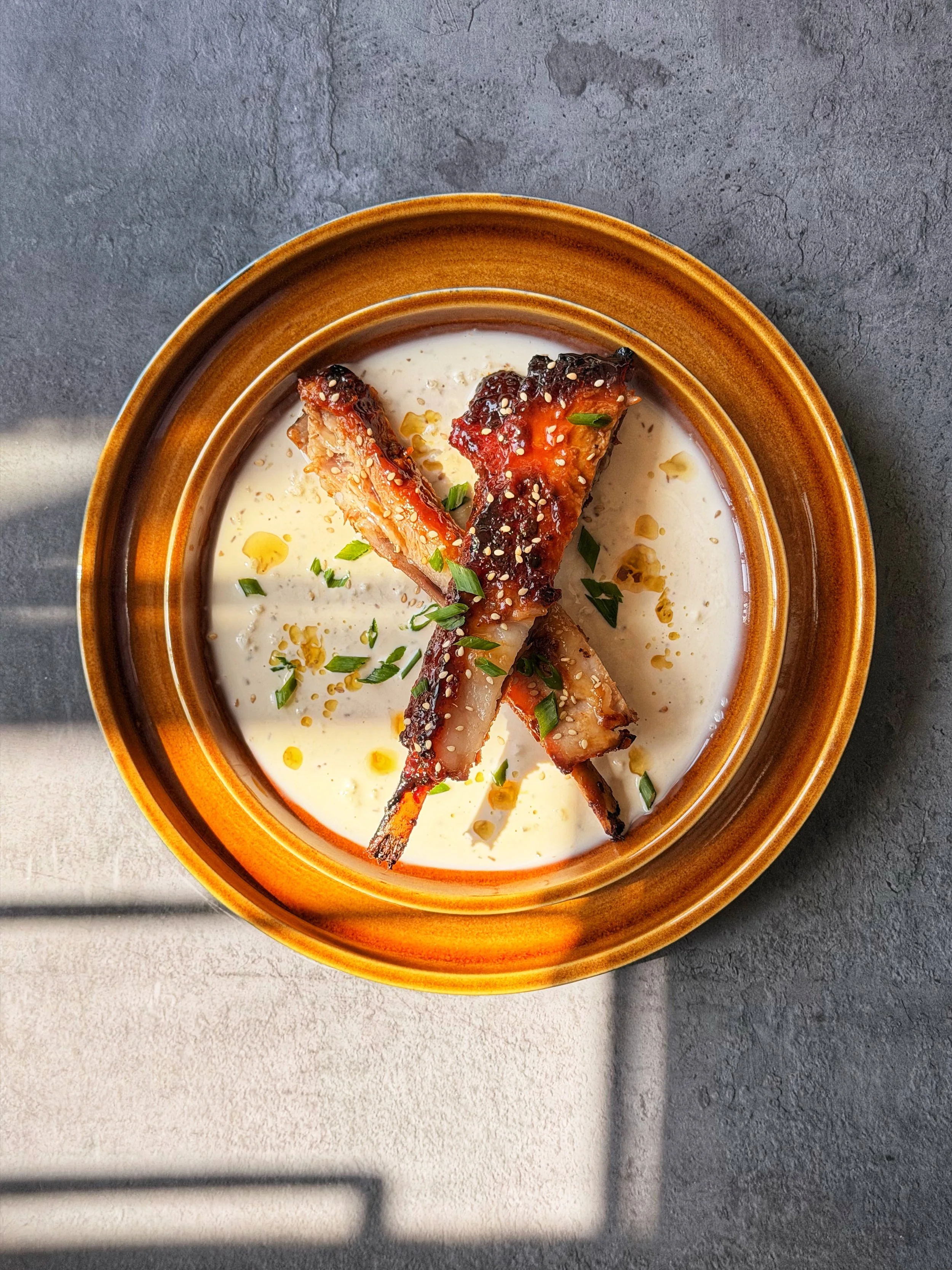
Korean BBQ Pork Ribs
Korean fermented pastes are particularly good at making pork taste like considerably more effort went into it than actually did. Ssamjang brings the deep, savoury funk of fermented soybeans, while gochujang contributes chilli, sweetness and a rather enthusiastic shade of red.
The trick here is keeping the two stages separate. The ribs are first marinated with ssamjang, ginger and garlic, then slowly roasted under foil until tender. Only then does the gochujang and honey glaze go on, followed by a blast of high heat to turn everything sticky, glossy and lightly charred. A little perilla seed oil adds its distinctive nutty aroma at the end.
It's Korean-inspired rather than a traditional Korean barbecue preparation, but the flavour combination makes a very convincing argument for keeping both pastes in your fridge.
Low and slow for the meat. Hot and fast for the sticky business.

Pork Jjajangmyeon
Jjajangmyeon is Chinese by ancestry, Korean by upbringing. It evolved from Chinese zhajiangmian, brought by Chinese migrants to Korea, and eventually became so thoroughly Korean that it now has its own place in the country's comfort-food culture.
The star is chunjang, a nearly black fermented black bean paste with a salty, earthy and slightly bitter personality. Fry it in pork fat, though, and it mellows beautifully. Add pork belly, onions, cabbage, potato and zucchini, then thicken everything into that characteristic dark, glossy sauce.
It even has its own unofficial occasion: Black Day, when single people traditionally eat jjajangmyeon on April 14. Nothing says romantic independence quite like aggressively mixing a bowl of black noodles.