
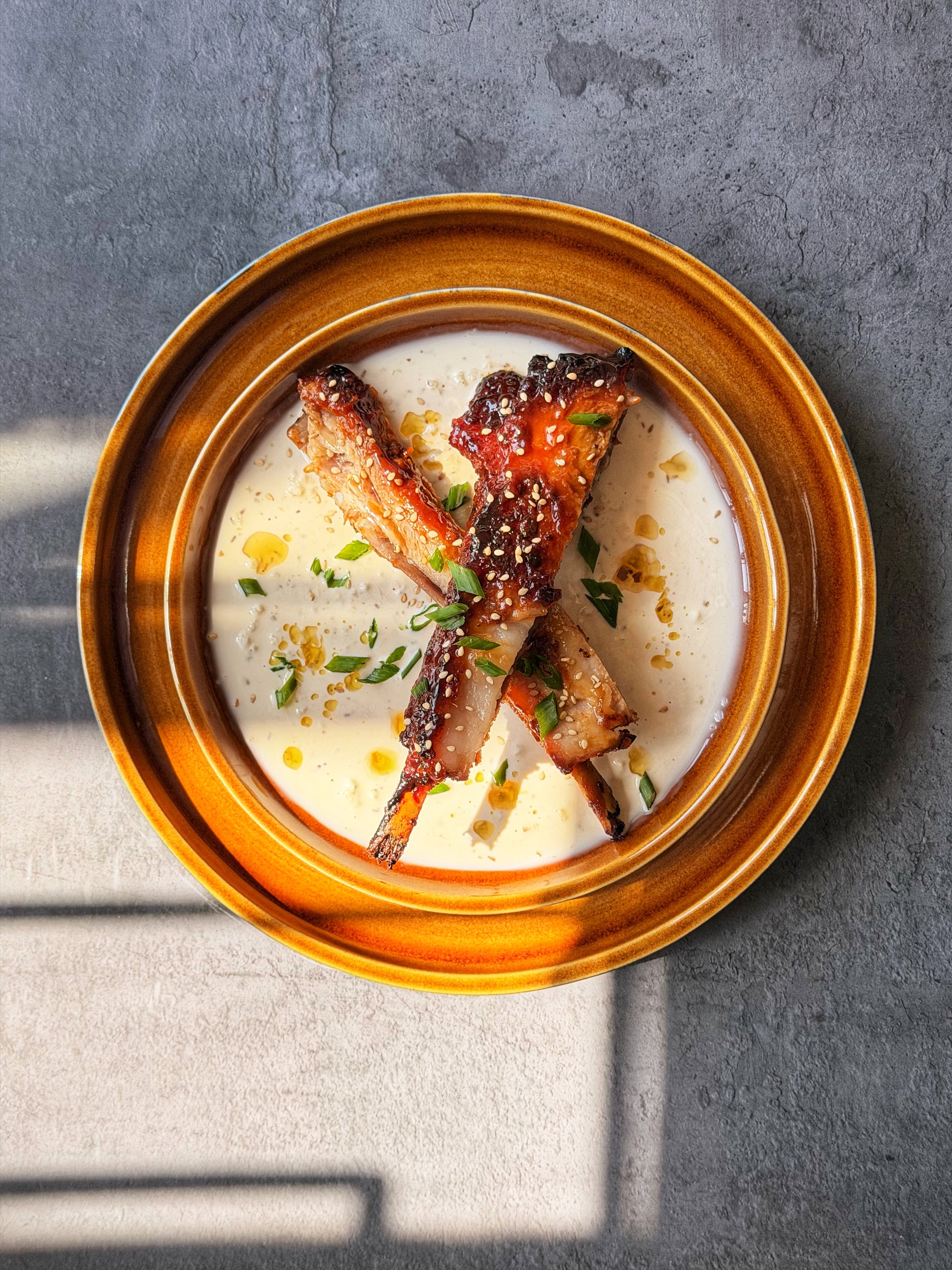
These Korean-inspired pork ribs are cooked in two stages. First, a slow, covered roast gently tenderises the meat while the ssamjang, garlic and ginger work their way into the pork. Then comes a sticky gochujang glaze, brushed on and caramelised in a hot oven.
The combination of ssamjang's fermented savouriness, gochujang's sweet heat and honey's caramelisation produces a glaze that is spicy, salty, sweet and deeply savoury. A little perilla seed oil at the end adds a distinctive nutty aroma.
Ingredients
For the initial seasoning
1 tbsp ssamjang
1 tbsp neutral oil
1 tbsp ginger, finely grated
5 garlic cloves, finely grated
½ tsp freshly ground black pepper
1 tbsp rice vinegar
For the finishing glaze
2 tbsp gochujang
1 tbsp ssamjang
1½ tbsp honey
1 tbsp rice vinegar
1 tbsp mirin, or water
1 tsp perilla seed oil
2–3 tbsp water, as needed
For roasting and finishing
60 ml water
Toasted sesame seeds
Spring onions, finely sliced
A few drops of perilla seed oil, optional
Method
Prepare the ribs
Pat the ribs dry with kitchen paper.
If the thin membrane on the underside of the rack is still attached, loosen it with a butter knife and pull it away using a piece of kitchen paper for grip.
Combine the ssamjang, neutral oil, grated ginger, garlic, black pepper and rice vinegar in a bowl.
Rub the mixture thoroughly over both sides of the ribs, working it into the meat.
Cover and refrigerate for 2–4 hours.
Slow-roast the ribs
Preheat the oven to 150°C.
Place the marinated ribs in a roasting tray, preferably in a single layer. Add 60 ml water to the bottom of the tray, taking care not to wash the seasoning off the meat.
Cover the tray tightly with aluminium foil to trap the steam.
Roast for approximately 2½–3 hours, checking from the 2-hour mark if the rack is particularly thin.
The meat should be tender enough for a skewer to slide in with little resistance, but still hold together on the bones. You don't want the ribs completely falling apart, as they still need to withstand glazing and a final hot roast.
Prepare the glaze
While the ribs are finishing their slow roast, combine the gochujang, ssamjang, honey, rice vinegar and mirin in a small saucepan.
Add 2 tablespoons of water and warm over low heat, stirring until everything combines into a smooth glaze.
Simmer gently for 2–3 minutes, adding a little more water if necessary to achieve a thick but brushable consistency.
Remove from the heat and stir in the perilla seed oil.
The glaze should be concentrated enough to cling to the ribs without running straight off.
Glaze and caramelise
Remove the ribs from the oven and carefully discard the foil.
Increase the oven temperature to 220°C.
If there is a lot of liquid in the roasting tray, pour most of it off so the ribs roast rather than steam during the finishing stage.
Brush the ribs generously with the prepared glaze.
Return them to the hot oven, uncovered, for 8–12 minutes.
Halfway through, brush on another layer of glaze.
Watch carefully during the final few minutes. The honey and fermented chilli paste can darken quickly, and you want a sticky, lightly charred coating rather than burnt sugar.
Rest and serve
Remove the ribs from the oven and allow them to rest for 10 minutes.
Slice between the bones and arrange on a serving platter.
Finish with toasted sesame seeds, finely sliced spring onions and, if desired, a few drops of perilla seed oil.
Serve immediately.
A few notes
Ssamjang versus gochujang: Ssamjang is a seasoned Korean dipping paste, generally made with doenjang (fermented soybean paste), gochujang and aromatics. It contributes fermented depth and savouriness. Gochujang supplies much of the glaze's chilli flavour, sweetness and colour.
Why glaze at the end? Both gochujang and honey contain sugars that can burn during prolonged roasting. Keeping the glaze separate until the final high-temperature stage allows the pork to tenderise without scorching its coating.
Perilla seed oil: This has a distinctive toasted, nutty aroma and works particularly well as a finishing ingredient. Adding it after the glaze comes off the heat helps preserve its flavour.
Adjusting the heat: The spiciness will depend considerably on the gochujang and ssamjang you use. Taste the glaze before brushing it onto the ribs and adjust the honey or water if necessary.
Getting the texture right: The goal is tender pork that comes away cleanly when bitten but doesn't immediately fall off the bone. Check the meat rather than relying exclusively on the clock, particularly if your rack is smaller or thinner than average.