
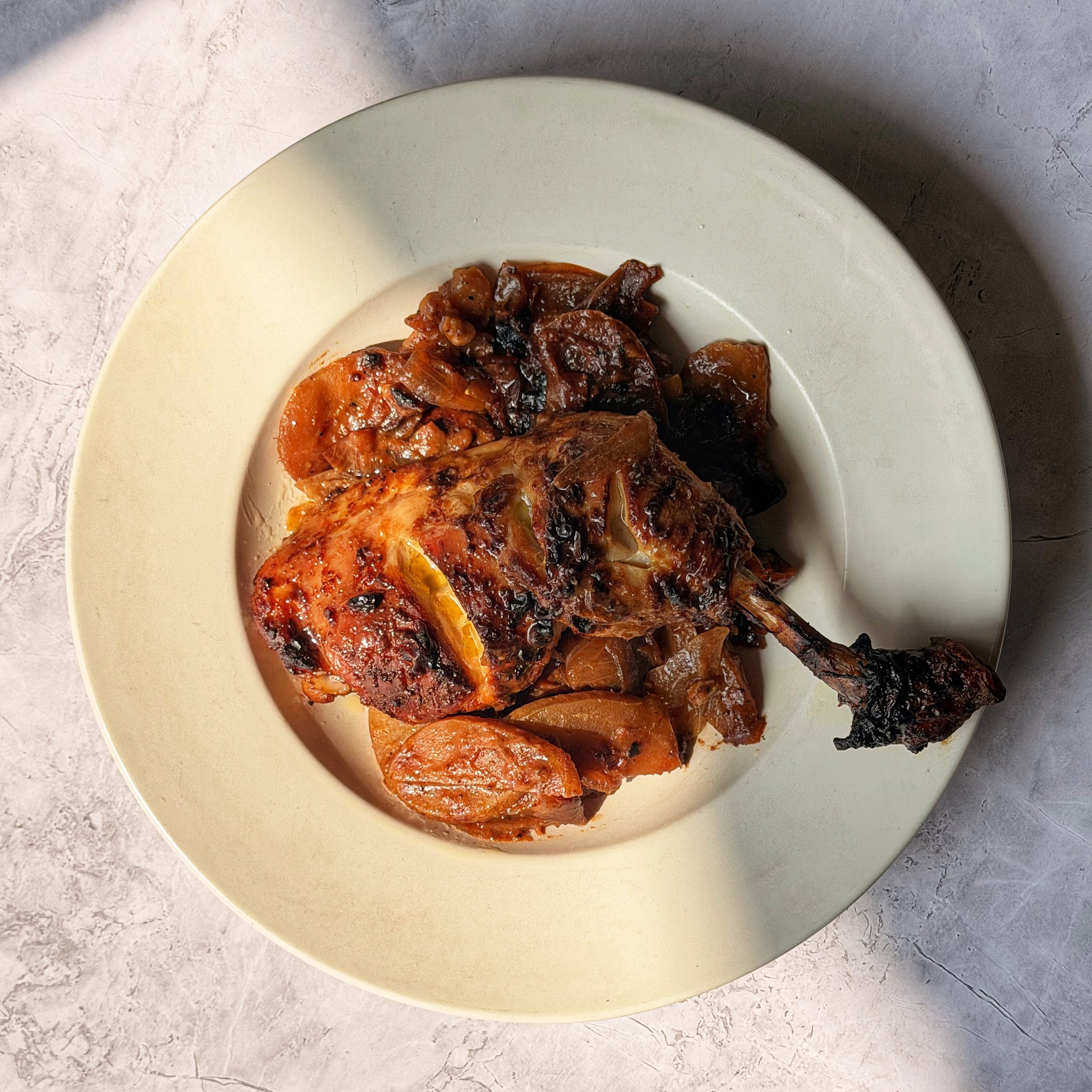
A one-tray roast chicken built around a rather unusual combination of white miso, maple syrup and mayonnaise. The miso brings fermented savouriness, the maple syrup provides sweetness and helps develop a sticky glaze, while the mayonnaise carries the seasoning and helps everything brown beautifully.
The chicken roasts over a bed of potatoes and onions, which absorb the rendered fat, cooking juices and miso-maple marinade. Very little preparation, one roasting tray and considerably more flavour than the amount of work suggests.
Ingredients
1 kg chicken, approximately 4 whole legs (thigh and drumstick attached)
2 large onions, cut into 1.25 cm thick wedges
2 large potatoes, halved lengthwise and sliced into 6 mm thick half-moons
½ cup mayonnaise, approximately 120 g
½ cup white miso paste, approximately 120–130 g
½ cup maple syrup, approximately 160 g
4 tsp sweet paprika
3 garlic cloves, finely grated
1 standard chicken or vegetable bouillon cube, crumbled
Salt, only if needed
Method
Preheat the oven
Preheat the oven to 215°C.
Position a rack in the upper third of the oven, relatively close to the top heating element, but with enough clearance for the roasting tray and chicken.
Use a large, shallow roasting tray that can accommodate the chicken and vegetables without excessive crowding.
Prepare the miso-maple marinade
In a large mixing bowl, combine the mayonnaise, white miso and maple syrup.
Whisk until smooth and evenly incorporated.
Add the sweet paprika, grated garlic and crumbled bouillon cube. Whisk again until the mixture is completely combined.
The marinade will be thick, creamy and quite sweet, with a pronounced savoury character from the miso and bouillon.
Coat the chicken and vegetables
Gash the chicken legs in a few places so the marinade is absorbed better by the meat.
Add the sliced potatoes, onion wedges and chicken legs to the bowl.
Mix thoroughly, making sure the marinade coats the chicken on all sides and gets between the layers of onion and potato.
There is no need for a long marination. The dish can go straight into the oven once everything is coated.
Arrange the roasting tray
Transfer the potatoes and onions to the roasting tray, spreading them into a relatively even layer.
Arrange the chicken legs, resting them on top of the vegetables.
Scrape any remaining marinade from the mixing bowl over the chicken and vegetables.
Season the chicken with a very light sprinkle of salt only if necessary. Both miso and bouillon are already salty, so avoid adding too much at this stage.
Roast the chicken
Place the tray in the preheated oven and roast for 45–55 minutes.
The chicken should develop a deep golden-brown, sticky glaze, while the potatoes become tender and the onions soften into the roasting juices.
Check the tray after approximately 25–30 minutes. If the surface is browning too quickly, loosely cover it with aluminium foil and continue roasting.
The maple syrup and miso contain sugars that can darken rapidly, particularly with the tray positioned high in the oven.
The chicken is safely cooked when its thickest part reaches 74°C, without the thermometer touching bone. For whole legs, allowing the temperature to rise to around 80–85°C generally produces more tender dark meat.
Check that the potatoes are completely tender before removing the tray from the oven.
Rest and serve
Remove the tray from the oven and allow the chicken to rest for 5–10 minutes.
Spoon some of the sticky roasting juices over the chicken before serving.
Serve the legs with the roasted potatoes and onions, making sure to scrape up the caramelised bits from the bottom of the tray.
A few notes
Why mayonnaise? Mayonnaise is an emulsion of oil, egg and acid. Here, it helps distribute the miso and seasonings evenly across the chicken and vegetables, while contributing fat for roasting and browning. The finished dish won't taste noticeably of mayonnaise.
Why white miso? White miso, or shiro miso, is generally milder and sweeter than darker, longer-fermented misos. Its fermented savouriness works particularly well with maple syrup. Red miso would produce a stronger, saltier result and may require adjusting the proportions.
Don't overcrowd the tray: If the vegetables are piled too deeply, they will steam rather than roast. Use a wide tray so the potatoes and onions have enough room to cook evenly beneath the chicken.
Getting the glaze right: The finished chicken should be deeply caramelised and sticky, with a few dark edges. If the chicken is cooked but the surface needs more colour, remove any foil and give it another 2–3 minutes under the top heat, watching closely to prevent the maple syrup from burning.