
Duck Mappas
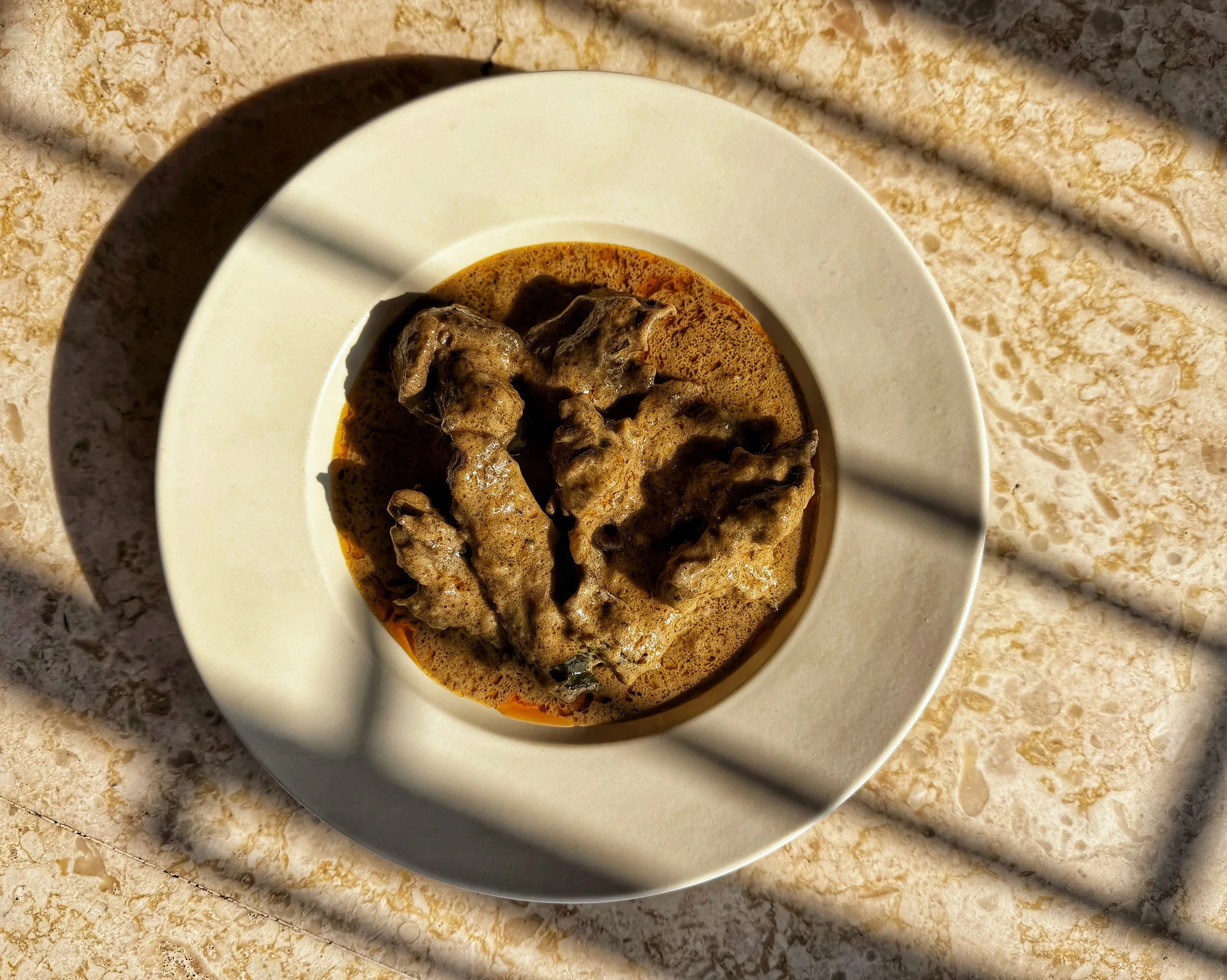
Duck and Kerala have a rather serious relationship. In the backwaters, especially around Kuttanad, duck finds its way into rich, peppery preparations that are built for eating with appam, rice or idiyappam. This version takes that idea towards a roast, letting the duck slowly cook with black pepper, whole spices, curry leaves and coconut oil before the meat is browned and returned to its reduced gravy. It is deeply savoury, warming and gloriously unapologetic about the amount of duck fat involved.
Ingredients
For the duck
1 kg duck, cut into medium bone-in pieces
2 tsp salt, or to taste
½ tsp turmeric powder
2 tbsp freshly ground black pepper
1 tbsp vinegar
Aromatics
300 g onions or shallots, thinly sliced
2 tbsp finely chopped ginger
2 tbsp finely chopped garlic
2–3 green chillies, slit
2 tomatoes, sliced, optional
3–4 sprigs curry leaves
Spice mixture
4–5 cloves
6 green cardamom pods
1-inch cinnamon stick
1 tbsp coriander powder
1–1½ tbsp Kashmiri chilli powder
½ tsp fennel powder, optional
1 tsp garam masala
Other
2–3 tbsp coconut oil, plus extra for frying
8–12 cups water, as required
½ cup coconut milk, optional
Method
Marinate the duck
Place the duck pieces in a large bowl.
Add the salt, turmeric, freshly ground black pepper and vinegar.
Mix thoroughly, making sure the duck is evenly coated.
Cover and marinate for about 30 minutes.
Prepare the whole spices
Lightly dry-roast the cloves, cardamom and cinnamon in a small pan over low heat until fragrant.
Allow them to cool slightly, then crush or grind them into a coarse powder.
You don't need a perfectly fine powder. A little texture from the spices is perfectly fine.
Build the masala
Heat the coconut oil in a large, heavy-bottomed pot or urali-style vessel over medium heat.
Add the sliced onions or shallots, green chillies and curry leaves.
Cook until the onions soften and begin to turn lightly golden.
Add the ginger and garlic and sauté until fragrant and the raw aroma disappears.
Add the crushed whole spices, coriander powder, Kashmiri chilli powder, fennel powder if using, and garam masala.
Stir well and cook for 1–2 minutes, taking care not to burn the powdered spices.
If using tomatoes, add them now and cook until they soften.
Cook the duck
Add the marinated duck and toss well, coating the pieces in the masala.
Add enough water to allow the duck to simmer comfortably. Start with about 8 cups and add more if required during cooking.
Bring to a boil, then reduce the heat to low.
Cover partially and simmer for 60–90 minutes, or until the duck is tender.
Stir occasionally and skim off any excess foam. Don't remove all the fat. Duck fat is part of what makes this dish work.
Reduce the gravy
Once the duck is tender, carefully remove the pieces from the pot and set them aside.
Increase the heat and reduce the cooking liquid until it becomes thick, glossy and intensely flavoured.
If using coconut milk, add it now and simmer gently for 3–5 minutes. Keep the coconut milk optional. The dish works beautifully without it, especially if you want a more pepper-forward, toddy-shop-style preparation.
Roast the duck
Heat a little coconut oil in a separate wide pan.
Add the cooked duck pieces and fry over medium-high heat until the skin and edges become browned and slightly crisp.
Don't fry them until dry. The idea is to develop a little colour and roasted flavour while keeping the meat juicy.
For an extra-rich finish, slice a little additional onion and fry it in the same pan until deeply golden and crisp.
Bring everything together
Return the fried duck to the reduced gravy.
Add the fried onions, if using.
Gently turn the pieces through the gravy and cook over low heat for another 5–10 minutes.
The duck should be well coated, with some of its roasted edges still visible.
Taste and adjust the salt and pepper.
Rest
Turn off the heat, cover and let the duck rest for 20–30 minutes before serving.
This gives the reduced gravy time to settle and allows the duck to absorb more of the masala.
What you're looking for
The finished dish should be somewhere between a curry and a roast.
The duck should be tender, with some browned, slightly crisp edges. The gravy should be thick and glossy, carrying the flavour of duck fat, black pepper, roasted spices and coconut oil.
It shouldn't taste like a generic coconut-based curry. The black pepper and whole spices should remain prominent.
Serving
Serve hot with:
Appam
Idiyappam
Kerala parotta
Plain steamed rice
A little fresh curry leaf and a drizzle of coconut oil just before serving wouldn't hurt either.