
Smoked Pork with Anishi and Mustard Greens
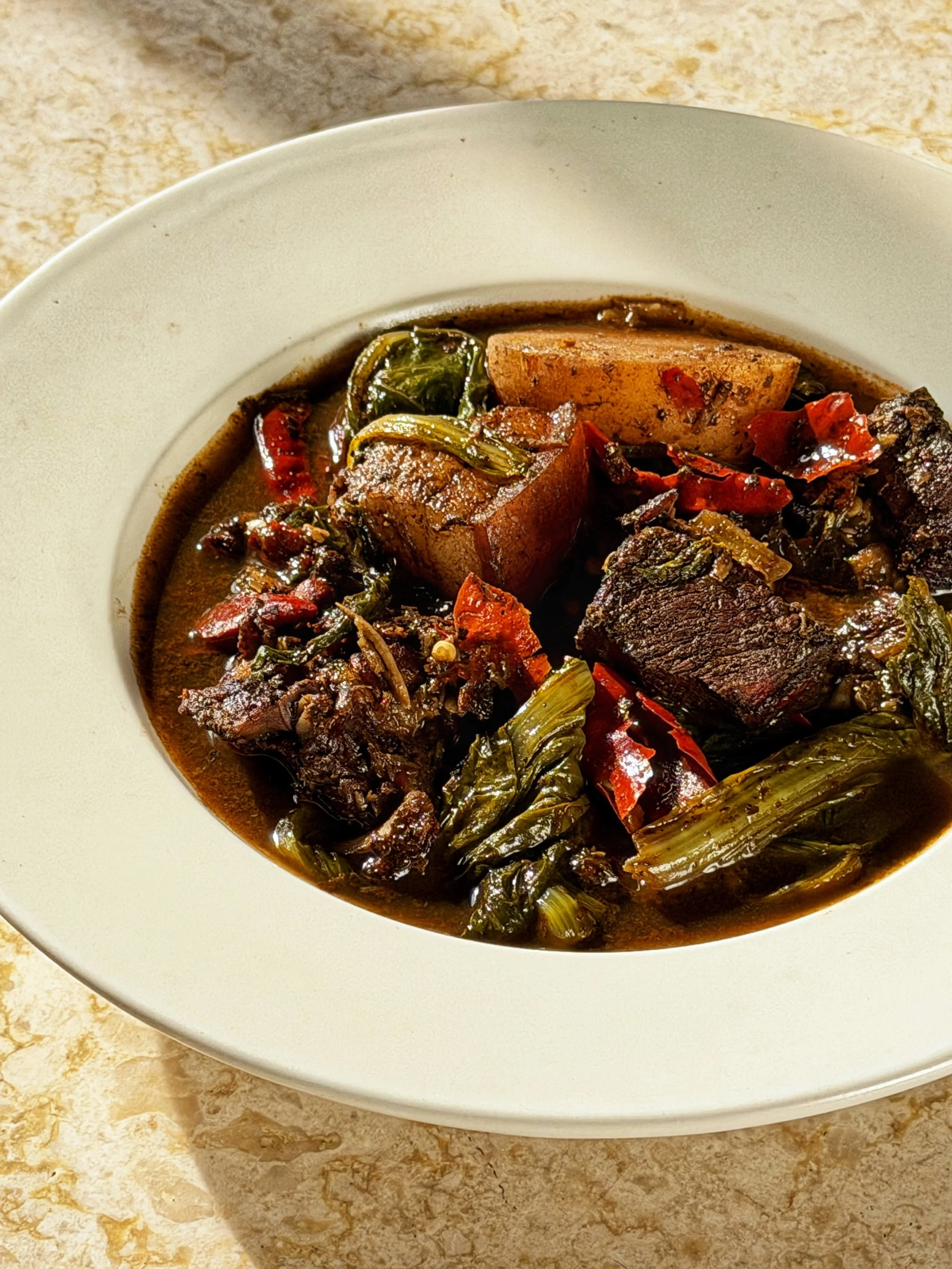
This is one of those dishes where fermentation, smoking and chillies do most of the heavy lifting. Anishi, made from fermented and dried colocasia leaves, brings an earthy, slightly funky depth to the broth, while smoked pork contributes the fat and that wonderfully campfire-like savouriness. Add mustard greens for a little bitterness and roasted Sichuan pepper for its citrusy, numbing kick, and you have a dish that is less about a complicated masala and more about a handful of ingredients being very good at their jobs. It is an Ao Naga preparation, traditionally eaten with hot rice and simple boiled vegetables. Simple on paper, rather spectacular in the bowl.
Ingredients
500 g smoked pork
2 anishi cakes
1 bunch mustard greens, roughly torn
1 Naga King chilli (raja mircha)
8–10 dried red chillies
2 large tomatoes
2 inches ginger
8-10 cloves garlic
1 tbsp Sichuan peppercorns (Mongmong Chang)
Salt, to taste
Water, as required
Method
Prepare the anishi
Warm anishi cakes directly over a flame for a few seconds on each side.
Rinse the cakes briefly with water, then pound them in a mortar and pestle until softened and slightly broken down.
Cook the pork
Wash the smoked pork thoroughly with warm water, and cut it into big chunks.
Place the smoked pork in a heavy-bottomed pot.
Add the Naga King chilli, anishi, red chillies, tomatoes, salt and enough water to just cover the ingredients.
Bring to a boil, then reduce the heat, cover and simmer until the pork is tender and the fat has rendered into the cooking liquid.
Depending on the smoked pork, this can take 60–90 minutes or longer.
Prepare the aromatics
While the pork cooks, roughly pound the ginger and garlic together in a mortar and pestle. Keep the mixture coarse rather than turning it into a smooth paste.
Dry-roast the Sichuan peppercorns in a small pan or on a griddle over low heat until fragrant.
Allow them to cool slightly, then crush them coarsely and set aside.
Mash the cooked ingredients
Once the pork is tender, carefully remove the anishi, tomatoes and chillies from the pot.
Transfer them to a mortar and pestle and pound them into a coarse paste. You can also do this in a blender but be careful not to make it into a smooth paste.
Return the paste to the pot and mix well.
This step is important. It breaks down the cooked tomatoes, chillies and anishi and distributes their flavour throughout the broth.
Add the mustard greens
Add the roughly torn mustard greens to the pot.
Cook until the greens are just wilted and tender. They should retain some of their texture rather than completely disappearing into the broth.
Add the pounded ginger and garlic and cook for another 5 minutes.
Taste and adjust the salt.
Finish with Sichuan pepper
Turn off the heat and add the crushed roasted Sichuan peppercorns.
Mix gently and allow the dish to rest for a few minutes before serving.
The pepper should remain aromatic and slightly numbing rather than becoming bitter from prolonged cooking.
Serving
Serve piping hot with:
Plain steamed rice
Boiled seasonal vegetables
Naga-style chutney
The finished dish should be rustic and brothy, with tender smoky pork, wilted mustard greens and a distinct roasted, numbing aroma from the Sichuan pepper. There is no need to make it polished. This is very much a pot-of-food kind of dish.