
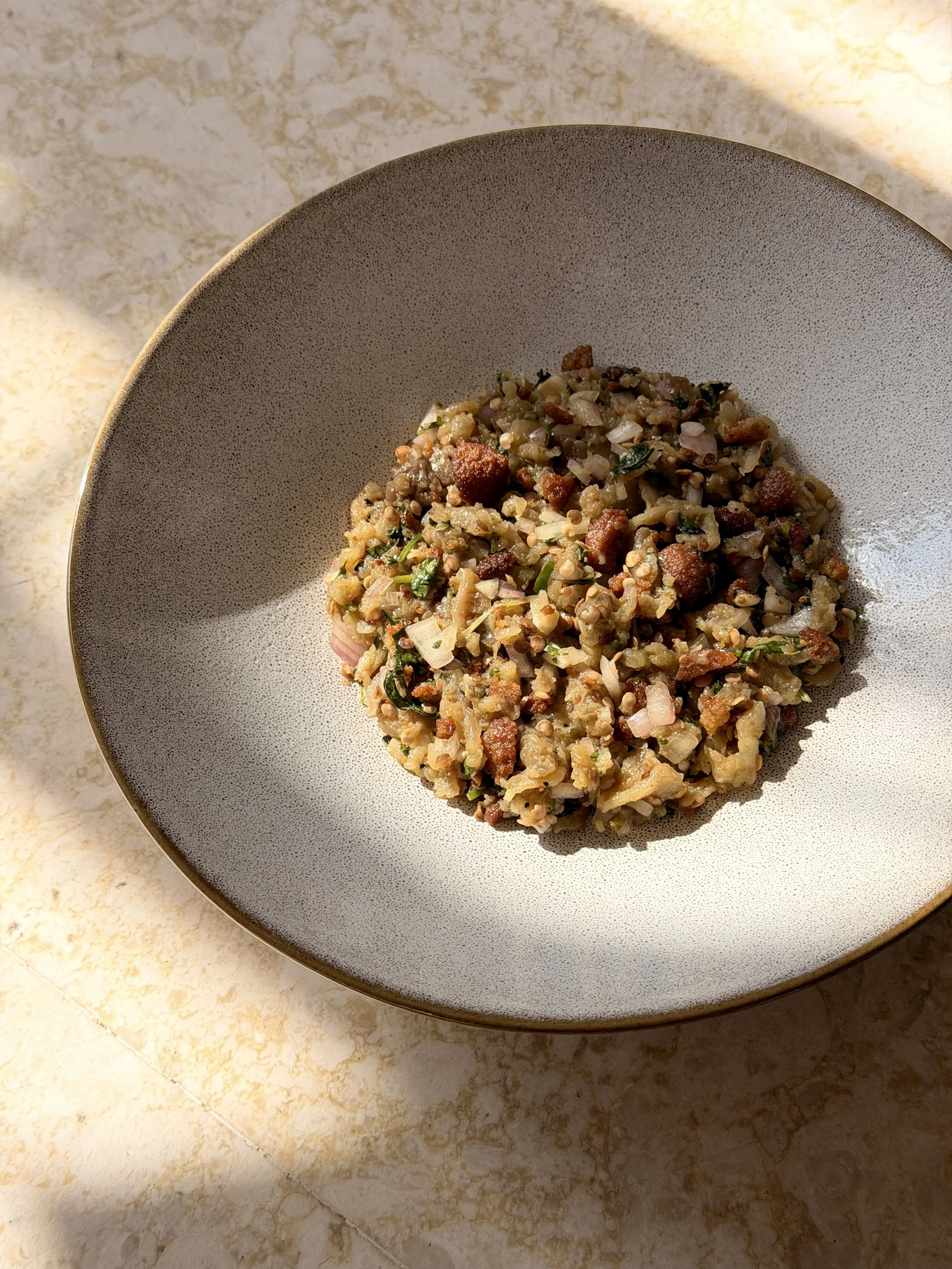
Baigana Poda is a rustic Odia preparation of fire-roasted brinjal, mashed with raw onions, garlic, green chillies and pungent mustard oil. Although it shares similarities with North Indian baingan bharta, the important difference is that the roasted brinjal is not cooked again after mashing. Instead, the fresh aromatics and raw mustard oil are mixed directly into the smoky flesh, creating a dish that is sharp, earthy and intensely flavourful.
The name poda refers to roasting or charring, a technique widely used in Odia cooking. The brinjal is roasted directly over an open flame until its skin blackens and the flesh becomes completely soft. Once peeled, it is mashed by hand and combined with a few simple ingredients.
This version is finished with crushed, crispy bori, small sun-dried lentil dumplings that are fried until golden. They add a contrasting crunch to the soft, smoky brinjal.
Ingredients
For the Baigana Poda
1 large bharta brinjal (approximately 400–500 g)
1 medium onion, finely chopped
4–5 garlic cloves, peeled
1–2 green chillies, finely chopped
1–2 tsp raw mustard oil, or to taste
2 tbsp fresh coriander leaves, finely chopped
Salt, to taste
A few drops of oil, for rubbing over the brinjal
For the crispy bori topping (optional)
1 small handful bori (sun-dried lentil dumplings)
1–2 tbsp mustard oil, for shallow-frying
Method
Prepare the brinjal
Wash the brinjal thoroughly and pat it completely dry.
Choose a large, round brinjal that feels relatively light for its size, as these generally have more flesh and fewer developed seeds.
Rub a few drops of oil over the skin.
Using a small knife, make 4–5 shallow slits around the brinjal.
Insert the peeled garlic cloves into some of the slits. If desired, tuck a few pieces of green chilli into the remaining slits.
Roasting the garlic inside the brinjal allows it to soften and develop a milder, slightly smoky flavour. Alternatively, the garlic can be added raw after roasting for a sharper taste.
Roast the brinjal over an open flame
Place a sturdy metal wire rack over a gas burner and position the brinjal directly above the flame.
Roast over medium-high heat, turning frequently with metal tongs.
The skin will gradually blister, wrinkle and blacken as the flesh inside begins to soften.
Continue roasting until the entire surface is deeply charred and the brinjal has collapsed considerably.
The flesh should feel completely soft when pressed gently with the tongs, and a knife inserted into the thickest part should meet almost no resistance.
Depending on the size of the brinjal, this may take approximately 10–20 minutes.
Do not rush this stage. The flesh must be thoroughly cooked, and the charring is essential for developing the characteristic smoky flavour.
If using a charcoal grill, place the brinjal directly over the hot coals and turn it regularly until evenly roasted.
Cool and peel the brinjal
Transfer the roasted brinjal to a plate and allow it to cool until comfortable to handle.
Carefully peel away the blackened skin using your fingers or a small knife.
Discard the stem and any tough or excessively burnt pieces of skin.
Transfer the soft flesh to a mixing bowl, along with any juices released during peeling.
If garlic cloves were inserted into the brinjal before roasting, remove them and add them to the bowl.
Mash the roasted brinjal
Using a fork, wooden spoon or your fingers, mash the roasted brinjal until the flesh breaks down into a soft, rustic mixture.
Crush the roasted garlic into the brinjal as you mash.
The texture should be relatively coarse, with some visible strands of brinjal remaining.
The finished mash should retain the natural texture of the roasted vegetable.
Add the raw aromatics
Add the finely chopped onion, green chillies and fresh coriander leaves to the mashed brinjal.
If you did not roast the garlic inside the brinjal, crush the raw garlic cloves and add them at this stage.
Season with salt.
Drizzle 1 tsp raw mustard oil over the mixture.
Mix thoroughly using a spoon or your fingers, making sure the aromatics are evenly distributed.
Taste and add the remaining mustard oil if you prefer a more pronounced pungency.
The mustard oil should provide a sharp, distinctive aroma without completely overwhelming the smoky brinjal.
Do not cook the mixture after adding the onions, chillies and mustard oil. Their fresh, pungent character is an essential part of this preparation.
Fry the bori
Heat 1–2 tbsp mustard oil in a small frying pan over medium heat.
Add the bori and shallow-fry, turning frequently, until they become golden-brown and crisp.
The exact cooking time will depend on their size and composition, but small bori generally cook quite quickly.
Avoid frying over excessively high heat, as they can brown on the outside before becoming crisp throughout.
Remove the fried bori and transfer them to a plate lined with kitchen paper.
Allow them to cool slightly.
Once cool, crush them roughly with your fingers or the back of a spoon.
The pieces should remain irregular and crunchy rather than being reduced to a fine powder.
Finish and serve
Transfer the prepared Baigana Poda to a serving bowl.
Sprinkle the crushed, fried bori generously over the surface.
If desired, finish with a few additional drops of raw mustard oil and some freshly chopped coriander.
Serve at room temperature with steamed rice and dal, or as part of a traditional Odia meal.