
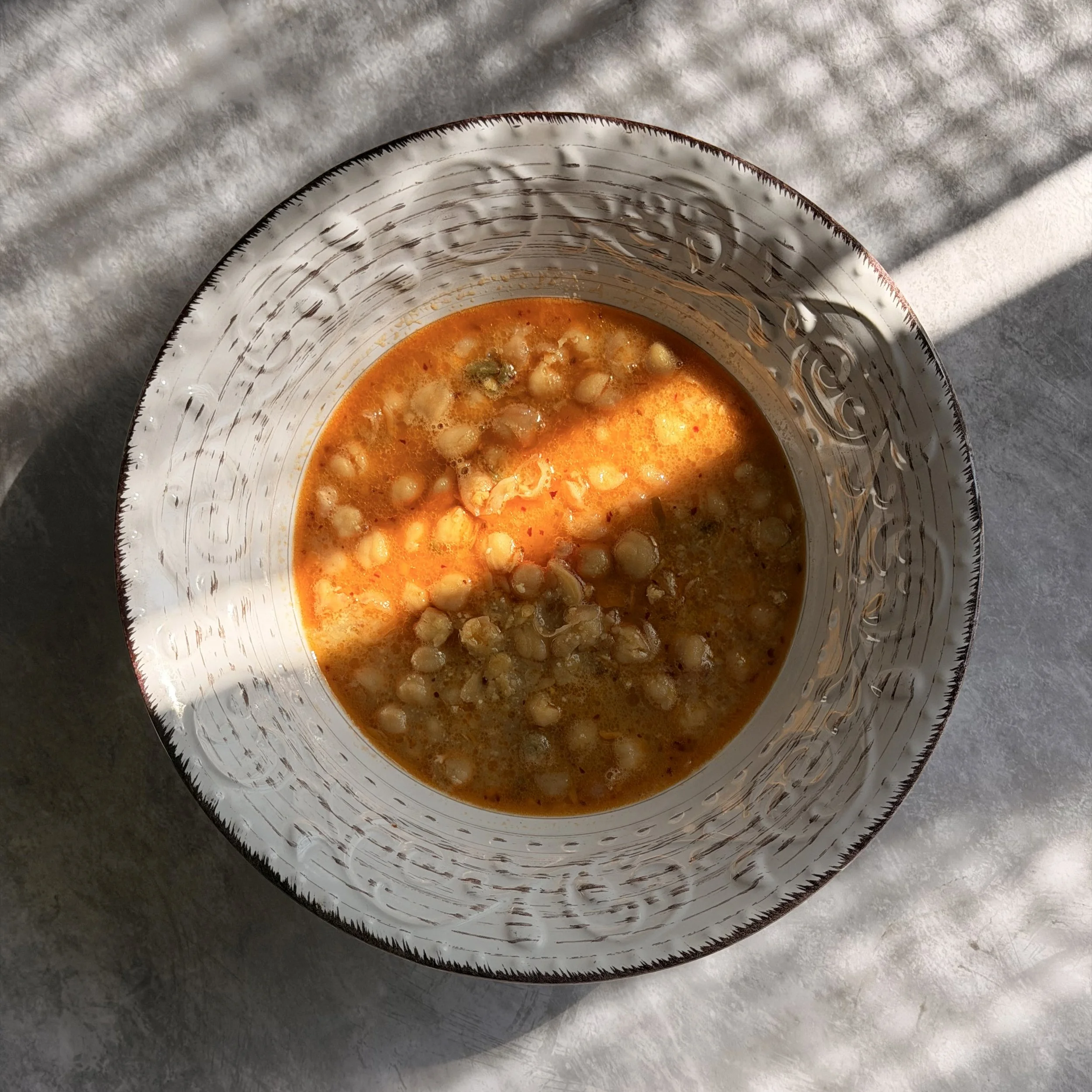
A simple, lightly spiced chickpea curry traditionally served as part of a halwa puri breakfast. Unlike the thick, dark masala of Punjabi chole, these chanay have a relatively thin, gently thickened gravy flavoured with garlic, ginger, green chillies, yogurt and a handful of spices.
The key is to cook the chickpeas until tender but still intact, then simmer them in their own cooking liquid so that the starch gradually thickens the gravy. A final addition of lightly roasted cumin and garam masala gives the dish its characteristic aroma.
Ingredients
For cooking the chickpeas
1 cup (approximately 180–200 g) dried chickpeas, preferably the smaller variety
A pinch of baking soda (optional, for soaking)
½ tsp salt
1 litre water, plus more for soaking
For the masala
1–2 tbsp ghee
7–8 garlic cloves
½-inch piece ginger
5–6 green chillies, adjusted to taste
½ tsp ajwain (carom seeds)
½ tsp ground cumin
½ tsp ground coriander
½ tbsp red chilli powder (1½ tsp)
⅓ cup (approximately 80 g) plain curd (yogurt), whisked until smooth
½ tsp salt, or to taste
To finish
½ tsp cumin seeds
¼ tsp garam masala
Method
Soak the chickpeas
Rinse the dried chickpeas thoroughly under running water.
Transfer them to a large bowl and cover with plenty of fresh water, allowing enough room for the chickpeas to expand as they soak.
Add a pinch of baking soda, if using, and mix well.
Leave to soak overnight, preferably for 8–12 hours.
The following morning, drain the soaking water completely and rinse the chickpeas thoroughly to remove any residual baking soda.
Pressure-cook the chickpeas
Transfer the soaked chickpeas to a pressure cooker.
Add 1 litre of fresh water and ½ tsp salt.
Close the cooker and cook for approximately 5–6 whistles, or until the chickpeas are thoroughly tender but still retain their shape.
The exact cooking time will depend on the size, age and variety of chickpeas, as well as the pressure cooker being used.
Allow the pressure to release naturally before opening the cooker.
Check the chickpeas by pressing one between your fingers. It should mash easily without having disintegrated during cooking.
Do not discard the cooking liquid. It contains dissolved starch from the chickpeas and will form the base of the gravy.
Prepare the ginger, garlic and chilli paste
Add the garlic cloves, ginger and green chillies to a mortar or small grinder.
Pound or grind them into a coarse paste.
Avoid making the mixture completely smooth. A slightly coarse texture gives the finished curry a more rustic character.
Set aside.
Fry the aromatics
Heat 1–2 tbsp ghee in a heavy-bottomed kadai over medium heat.
Add the prepared ginger, garlic and green chilli paste.
Sauté gently for approximately 2–3 minutes, stirring continuously, until the raw aroma disappears and the mixture becomes fragrant.
Take care not to brown the garlic. The aim is to soften and cook the aromatics while retaining their fresh, pungent character.
Add the spices
Reduce the heat to low.
Add the ajwain, ground cumin, ground coriander, red chilli powder and ½ tsp salt.
Stir continuously for approximately 30–45 seconds, allowing the spices to bloom in the ghee.
Be careful not to burn the powdered spices. If the mixture becomes too dry, add a tablespoon of water.
Remember that the chickpeas have already been salted during pressure cooking, so the final seasoning should be adjusted accordingly.
Cook the yogurt masala
Whisk the curd until completely smooth.
Keeping the heat low, add the curd to the kadai and stir immediately to combine it with the spice mixture.
Continue cooking over low to medium-low heat, stirring frequently, until the curd loses its raw aroma and the masala begins to thicken.
Cook until the ghee starts to separate around the edges.
This may take approximately 4–6 minutes.
Add the chickpeas and cooking liquid
Add the cooked chickpeas to the kadai along with their reserved cooking liquid.
Stir thoroughly to incorporate the yogurt masala.
Bring the mixture to a gentle boil, then reduce the heat and simmer uncovered for approximately 15–20 minutes.
Stir occasionally to prevent the chickpeas from sticking to the bottom.
As the gravy simmers, the flavours will combine and the liquid will gradually thicken.
Adjust the consistency
Using the back of a wooden spoon or ladle, gently mash a small handful of chickpeas against the side of the kadai.
Stir the mashed chickpeas back into the gravy.
This releases additional starch and gives the curry a little body without requiring flour or other thickening agents.
Continue simmering until the gravy reaches the desired consistency.
The finished curry should have a fairly runny, lightly thickened gravy rather than the dense, clingy masala associated with Punjabi chhole.
If the gravy becomes too thick, add a little hot water.
Taste and adjust the salt.
Finish with roasted cumin and garam masala
Heat a small, dry frying pan over low heat.
Add ½ tsp cumin seeds and roast gently until fragrant, taking care not to burn them.
Remove from the heat and allow them to cool slightly.
Crush the roasted cumin seeds coarsely between your palms or using a mortar and pestle.
Sprinkle the crushed cumin over the chickpea curry, followed by ¼ tsp garam masala.
Stir gently to combine.
Rest and serve
Turn off the heat and cover the kadai with a lid.
Allow the curry to rest for approximately 15 minutes before serving.
This resting period gives the roasted cumin and garam masala time to infuse the gravy and allows the flavours to settle.
Serve warm alongside freshly fried puris and suji halwa for a traditional halwa puri breakfast.
The chanay are equally good with roti, naan or paratha.