
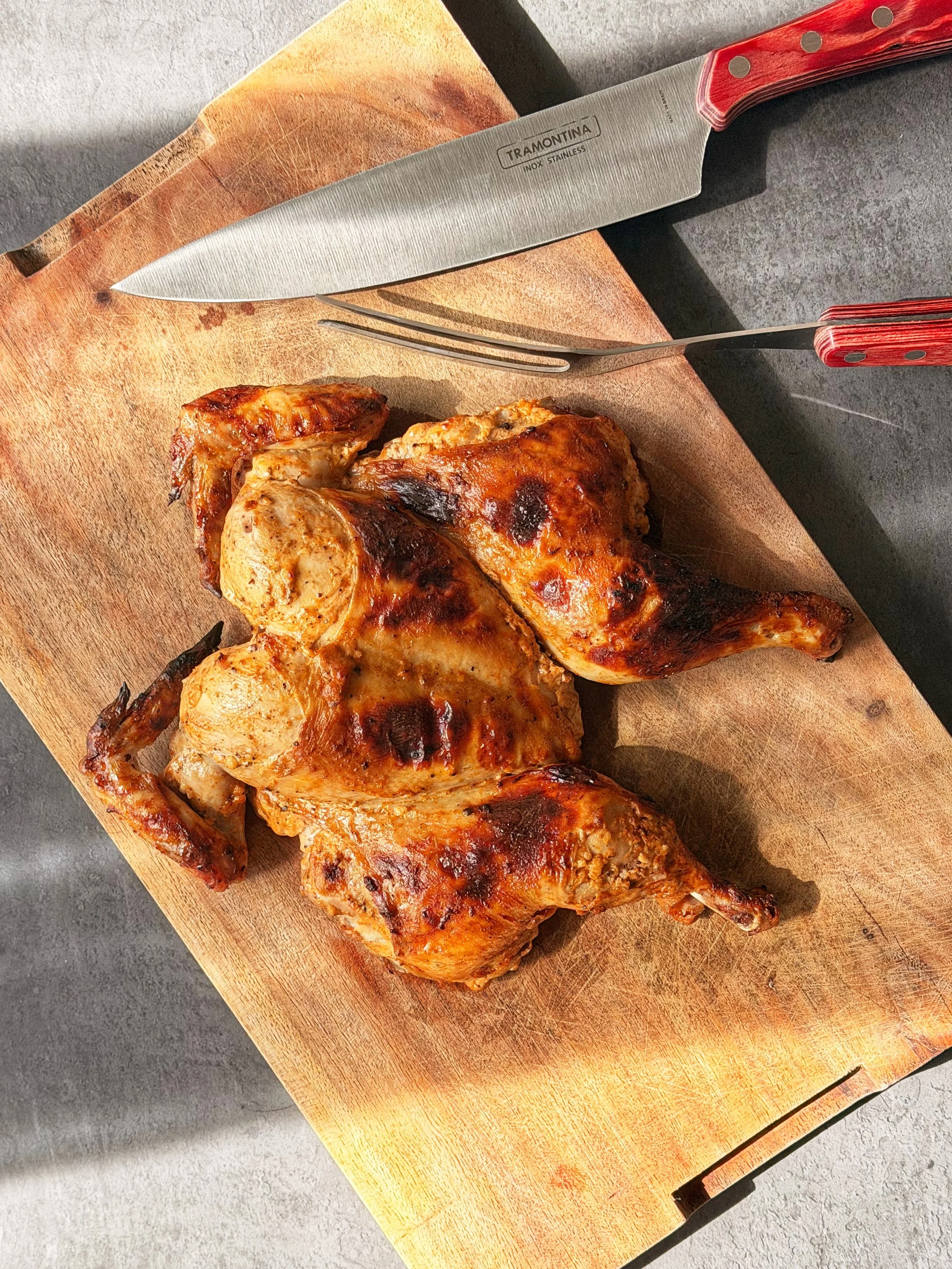
Shish tawook is traditionally made with skewered pieces of chicken marinated in a mixture of yogurt, garlic, lemon and spices before being grilled over charcoal. This version borrows those familiar flavours but applies them to a whole, spatchcocked chicken.
Removing the backbone and flattening the bird allows it to roast more evenly, while the yogurt marinade helps keep the meat tender and moist. Garlic, lemon, paprika and a little tomato paste give the chicken its characteristic tangy, savoury flavour and a beautifully browned exterior.
The result is a mildly spiced, aromatic roast chicken that works equally well straight from the oven or served cold the following day.
Ingredients
For the chicken and marinade
1 whole chicken (1.3–1.5 kg), skin on
120 g thick Greek yogurt
5–6 garlic cloves, finely crushed
Juice of 1 lemon (approximately 30 ml)
1 tsp finely grated lemon zest
1 heaped tbsp tomato paste
30 ml (2 tbsp) olive oil
1½ tsp sweet paprika
¼ tsp ground allspice
¼ tsp ground white pepper
¼ tsp freshly ground black pepper
½ tsp cayenne pepper
A small pinch of ground cinnamon
12 g fine salt (approximately 2 tsp)
1 tsp sugar
For roasting
A little additional olive oil, for brushing
Method
Spatchcock the chicken
Place the chicken breast-side down on a sturdy chopping board, with the backbone facing upwards.
Using sharp poultry shears, cut along both sides of the backbone and remove it completely. Reserve the backbone for making stock.
Turn the chicken over so that the breasts face upwards. Press firmly on the centre of the breastbone with the heel of your hand until the chicken flattens.
Tuck the wing tips behind the breasts to prevent them from burning during roasting.
Pat the chicken thoroughly dry with kitchen towels, paying particular attention to the skin.
Prepare the marinade
In a large mixing bowl, combine the Greek yogurt, crushed garlic, lemon juice, lemon zest, tomato paste and olive oil.
Add the sweet paprika, allspice, white pepper, black pepper, cayenne pepper, cinnamon, salt and sugar.
Mix thoroughly until the ingredients form a smooth, evenly coloured marinade.
The consistency should be thick enough to coat the chicken without running off.
Marinate the chicken
Using your fingers, carefully loosen the skin over the breasts and thighs, taking care not to tear it.
Spoon some of the marinade beneath the loosened skin and massage it directly onto the meat. This helps season the thicker portions of the chicken rather than relying entirely on the surface coating.
Rub the remaining marinade over the entire chicken, including the legs, wings and underside.
Transfer the chicken to a shallow tray or non-reactive container. Cover and refrigerate for 12–18 hours.
The extended marination allows the garlic, lemon and spices to flavour the chicken while the yogurt helps tenderise the surface of the meat.
Prepare the chicken for roasting
Preheat the oven to 210°C conventional or 190°C fan.
Place a wire rack over a roasting tray.
Remove the chicken from the refrigerator shortly before roasting and arrange it skin-side up on the rack, with the legs spread outwards.
Using a spoon or spatula, gently scrape away any excessively thick deposits of marinade, leaving a thin, even coating over the skin. This is important because thick layers of yogurt and tomato paste can scorch before the chicken has finished cooking.
Brush the surface lightly with olive oil to encourage browning.
Roast the chicken
Transfer the tray to the preheated oven and roast for approximately 35–45 minutes.
The exact cooking time will depend on the size of the bird, its thickness and the performance of the oven.
After approximately 30 minutes, begin checking the internal temperature using a probe thermometer inserted into the thickest part of the breast, avoiding the bone.
When the chicken is approaching its final temperature, increase the oven temperature to 230°C or switch to the upper grill for a few minutes to develop a deeper golden-brown colour.
Watch carefully during this final stage. The yogurt, tomato paste and sugar in the marinade can brown rapidly under intense heat.
Continue cooking until the internal temperature is at least 74°C.
The total roasting time may be approximately 45–60 minutes, but the internal temperature should determine when the chicken is ready.
Rest and serve
Remove the chicken from the oven and transfer it to a clean platter or carving board.
Allow it to rest for 10–15 minutes before carving. This gives the juices time to redistribute through the meat.
Carve into breasts, thighs, drumsticks and wings, or serve the chicken whole and allow everyone to help themselves.
Serve with warm pita bread, toum (Lebanese garlic sauce), pickled vegetables and a simple salad.
Notes
Why spatchcock the chicken? Flattening the bird exposes more of its surface to the oven's heat, allowing the breasts and legs to cook more evenly. It also shortens the roasting time compared with cooking the chicken whole.
The role of yogurt: Yogurt contributes acidity, moisture and body to the marinade. Its proteins also help create a lightly browned coating during roasting. However, a thick layer of marinade can burn, so remove any excess before cooking.
Adjusting the heat: The ½ tsp cayenne provides a moderate level of heat. For a milder chicken, reduce it to ¼ tsp or omit it entirely. The paprika will still contribute colour and flavour.
Salt measurement: The recipe uses 12 g of salt, which is approximately 2 tsp of fine table salt. Because different salts have different densities, weighing the salt is more accurate.