
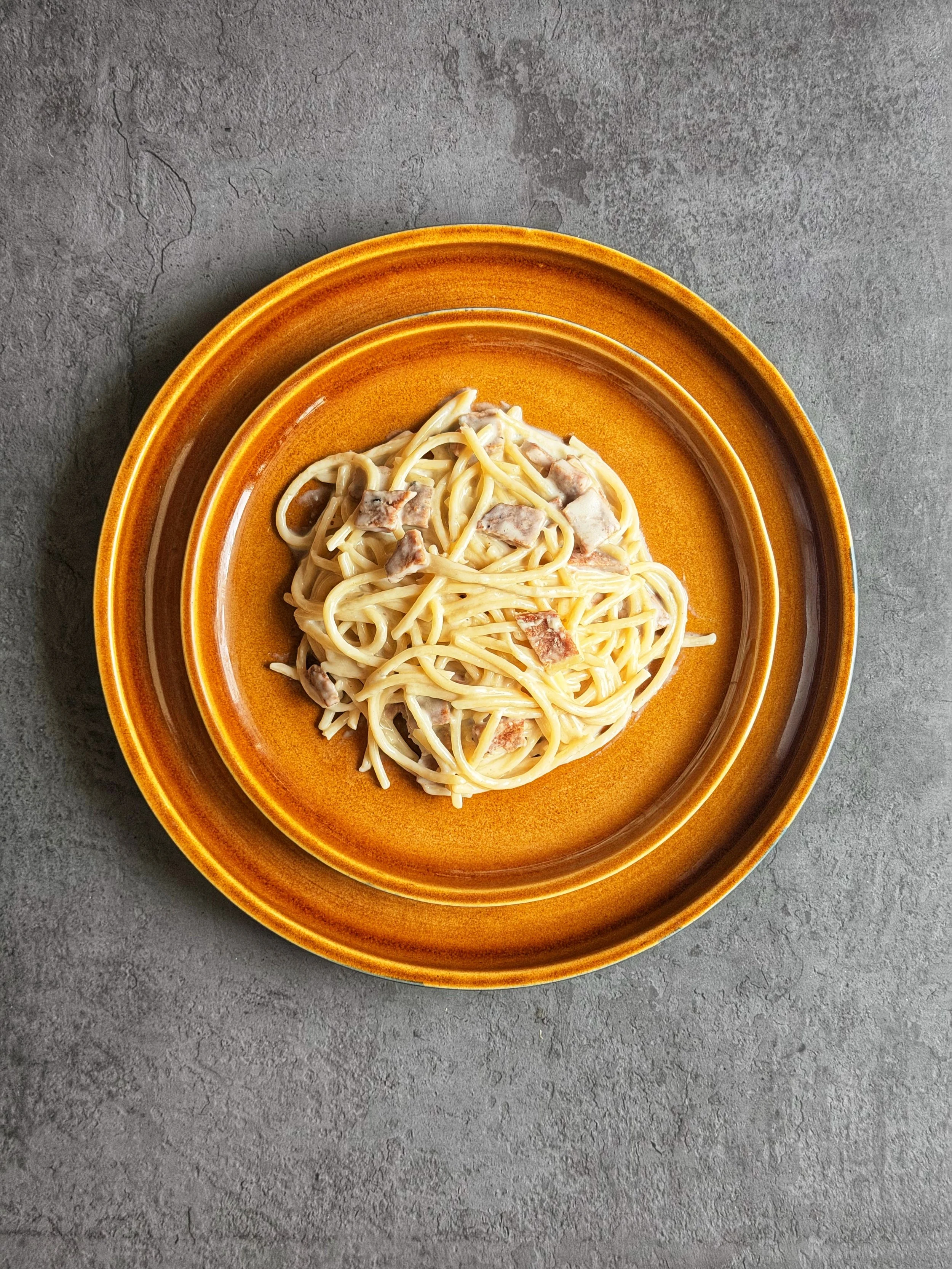
Spaghetti with Roquefort Mornay
Trust the French to take a perfectly respectable white sauce, introduce a rather opinionated blue cheese, and turn the whole thing into an exercise in controlled indulgence.
The starting point is béchamel, one of the classic French mother sauces. Add cheese and it becomes Mornay. This particular variation goes a little further, incorporating an egg for additional richness and using Roquefort, the famously pungent sheep's milk blue cheese, instead of the more conventional Gruyère or Emmental.
The technique is reassuringly old-school: cook a pale roux, gradually whisk in hot milk, temper the egg, then gently melt in the cheese. The result is a velvety sauce with enough salty, tangy, blue-cheese character to make even plain spaghetti feel rather extravagant.
Essentially, French sauce-making applied to Italian pasta, with Roquefort making absolutely sure it gets top billing.
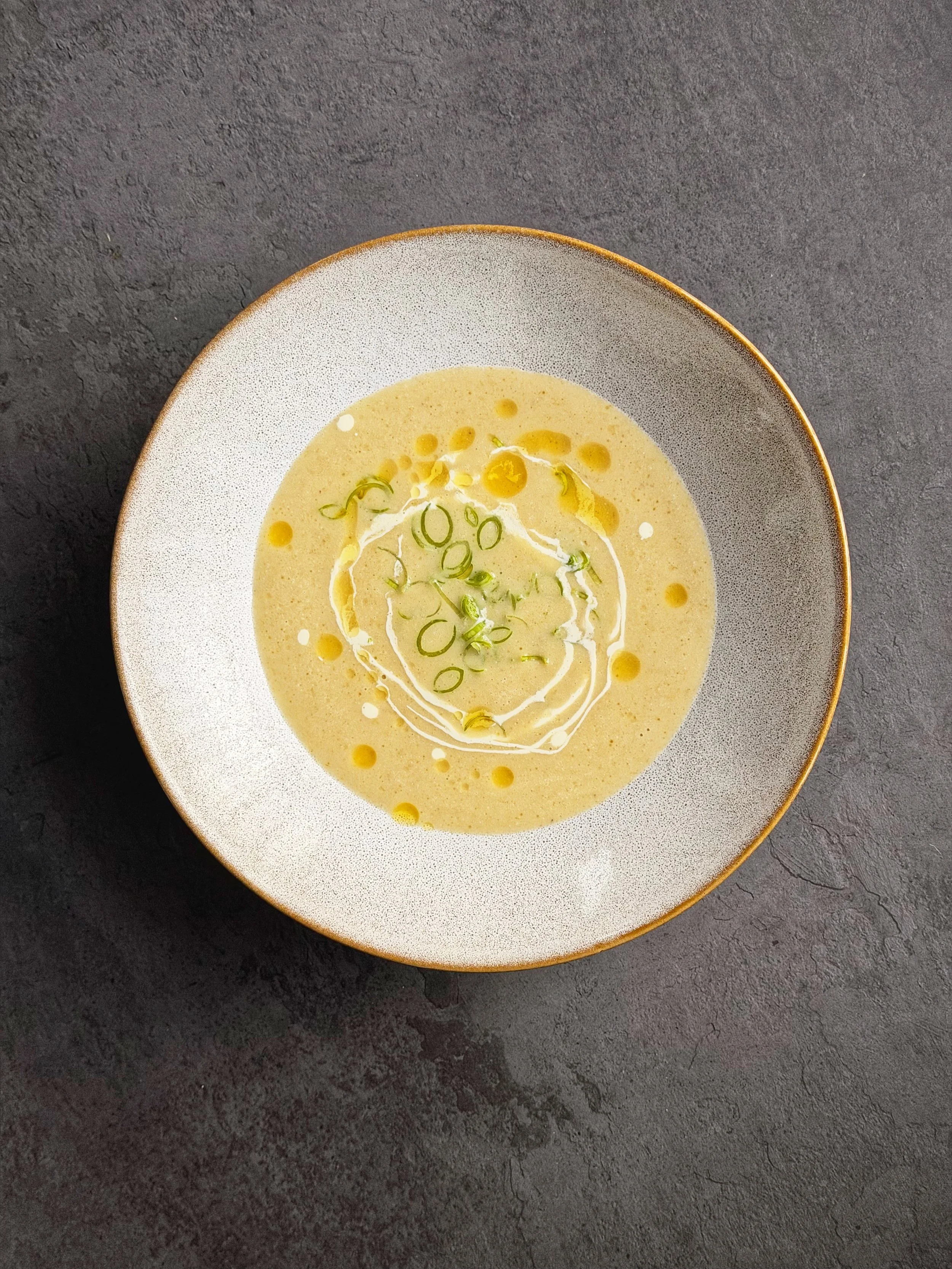
Potato & Leek Soup
Antoine-Augustin Parmentier spent a considerable part of the 18th century trying to convince the French that potatoes were food.
Having encountered potatoes while a prisoner of war in Prussia, the French pharmacist and agronomist became one of their great champions back home, promoting a crop that was still regarded with considerable suspicion in France. His name eventually became culinary shorthand for dishes involving potatoes, including potage Parmentier, the classic French combination of potatoes and leeks.
It's difficult to imagine anything less controversial today. Leeks are slowly softened in butter, potatoes simmered until tender, then everything is blended and enriched with milk and cream. The trick is mostly restraint: don't brown the leeks and don't overwork the potatoes in the blender.
Two vegetables that once needed a public-relations campaign, now requiring little more than butter and a saucepan.

Custardy Scrambled Eggs
Scrambled eggs are one of those things where technique matters far more than the ingredient list. Eggs, butter, salt. Nothing particularly complicated. But change the pan, the heat and the way you stir them, and you end up with something completely different.
This version is cooked slowly in a small saucepan, stirring constantly and repeatedly interrupting the heat whenever the eggs threaten to set too quickly. Butter becomes both ingredient and temperature control, while crème fraîche or cream provides one final brake at the end. Instead of fluffy curds, the eggs gradually thicken into something glossy, rich and almost custard-like.
It requires considerably more attention than regular scrambled eggs, but once you understand how to control the temperature, you barely need a recipe at all.