
Duck Moile
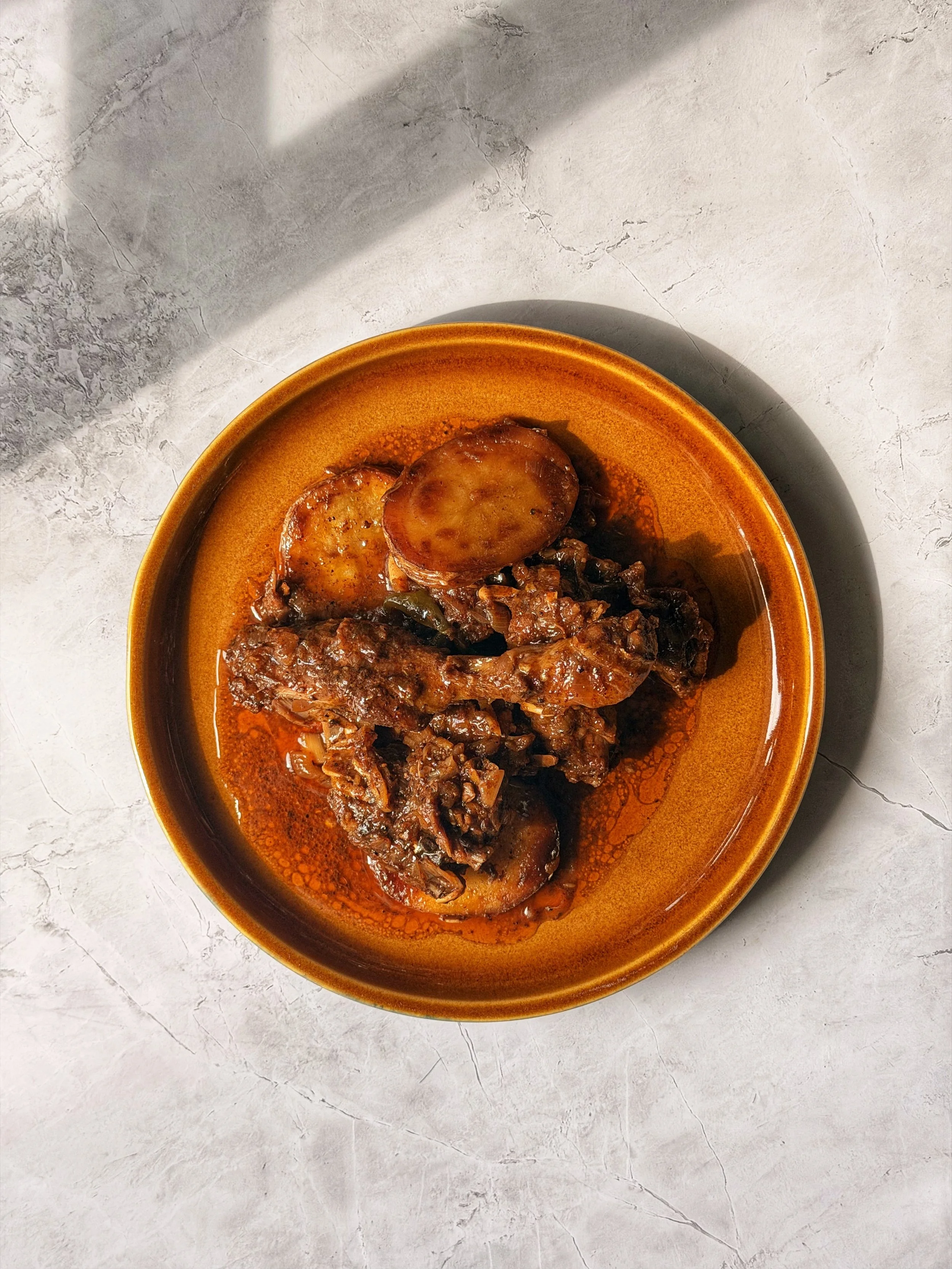
Duck Moile is an East Indian sweet-sour preparation where the duck is allowed to contribute quite heavily to its own cooking medium. It starts in a dry kadai, first releasing water, then its fat, before a little ghee joins proceedings and everything gets properly browned.
From there things get increasingly interesting. Sugar is caramelised around the duck, bottle masala goes into the rendered fat, and a full cup of red wine deglazes all the good bits stuck to the pan. Ginger, garlic, onion and green chilli are deliberately left as strips and rings, rather than disappearing into a paste. Coconut vinegar arrives towards the end with enough acidity to make itself very clearly known.
And don't go looking for gravy. Moile cooks down until the wine, duck fat, caramel and spices become a dark, sticky coating around the meat, with fried potato roundels folded through at the end.
Sweet, sharply tart, savoury and gloriously ducky. A dish that understands the value of reducing things until they become slightly unreasonable.
Ingredients
For brining the duck
600 g duck, bone-in, cut into curry-sized pieces
1 litre water
2 tbsp vinegar
For the Moile
1 large onion
1 inch ginger
7–8 garlic cloves
2 green chillies
1 heaped tbsp East Indian bottle masala
1 cup red wine
1 tsp sugar
Scant ½ tbsp ghee, plus more if required
2 tbsp coconut vinegar
½ tsp garam masala
Freshly ground black pepper, to taste
Salt, to taste
A little water, only if required
For the potato
1 large potato
Ghee, for shallow-frying
Preparation
Brine the Duck
Wash the duck thoroughly.
Combine 1 litre water and 2 tbsp vinegar in a bowl. Add the duck and leave it to brine for 20 minutes.
Drain, rinse the duck again and pat reasonably dry. Season generously with salt and freshly ground black pepper. Set aside while you prepare the aromatics.
Cut the Aromatics
The way the aromatics are cut is characteristic of this preparation, so resist the temptation to turn everything into a paste.
Slice the onion into thin rings. Julienne the ginger into fine strips. Slice the garlic lengthwise and cut the green chillies into thin strips.
Keep everything separate and ready to go.
Render and Brown the Duck
Place a heavy-bottomed kadai over medium heat.
Add the seasoned duck directly to the dry pan without any oil.
The duck will first release moisture. Continue cooking until this liquid evaporates and the fat begins to render from the meat.
Once you have some rendered duck fat in the pan, add a scant ½ tbsp ghee and continue frying until the duck is well browned on all sides.
If your duck is particularly lean and hasn't rendered enough fat, add a little more ghee as necessary.
Caramelise the Duck
Sprinkle 1 tsp sugar over the browned duck.
Continue frying until the sugar caramelises around the meat, giving the pieces a deeper colour and a slightly sticky exterior.
Remove the duck from the kadai and set aside, leaving the rendered fat and ghee behind.
Build the Moile
Add the sliced onion rings to the same pan and fry until translucent.
Add the green chilli strips, sliced garlic and julienned ginger. Fry until fragrant, keeping the aromatics distinct rather than cooking them down completely.
Add the bottle masala and fry briefly in the fat, taking care not to burn it.
Deglaze with Wine
Pour in 1 cup red wine.
Scrape the bottom of the kadai to release all the browned and caramelised bits stuck to it.
Bring the wine to a lively simmer and cook until the raw alcoholic aroma has dissipated and the liquid has begun to reduce.
Braise the Duck
Return the browned duck and any accumulated juices to the kadai.
Bring everything back to a boil, then reduce the heat to low and cover.
Cook gently until the duck is completely tender.
This is not meant to become a loose, gravy-heavy curry, so don't add water routinely. If the pan becomes too dry before the duck is tender, add just a splash of hot water, cover and continue cooking. Repeat only when necessary.
The aim is to gradually concentrate the wine, duck juices, bottle masala and rendered fat around the meat.
Fry the Potato
While the duck cooks, peel the potato and cut it into thick roundels.
Heat a little ghee in a frying pan and shallow-fry the potato slices until golden and completely cooked through.
Set aside on a dish lined with paper towels.
Add the Vinegar
Once the duck is tender, add 2 tbsp coconut vinegar and ½ tsp garam masala.
Mix well, cover and cook over low heat for another 15 minutes.
By now, the liquid should have reduced considerably into a dark, glossy and sticky sauce that clings to the duck, rather than pooling around it like gravy.
Finish the Moile
Taste and adjust the salt and vinegar if necessary.
The finished Moile should have a pronounced sharp tartness, balanced by the caramelised sugar, wine, bottle masala and richness of the duck fat.
Finally, gently fold in the fried potato roundels, taking care not to break them.
Remove from the heat and let the Moile rest for 10–15 minutes before serving.
The final dish should be rich, tart, sweet-savoury and intensely concentrated, with the duck and potatoes coated in a sticky reduced sauce rather than swimming in gravy.