
Hitikida Avarekalu Badanekayi Saaru
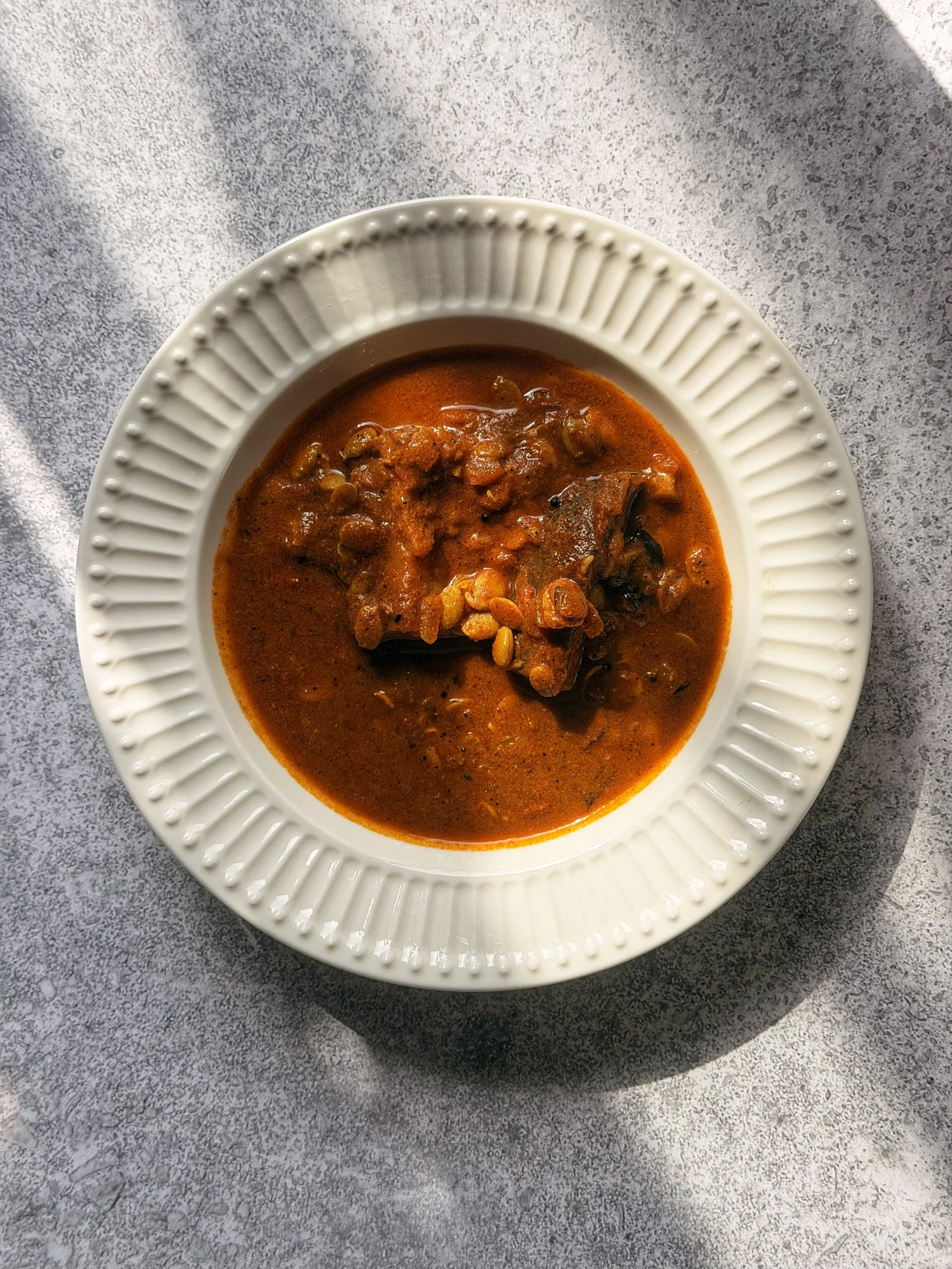
Hitikida avarekalu are fresh field beans slipped out of their thin skins, a little bit of kitchen labour that pays off with beans that cook especially soft and creamy. Here they are paired with brinjal in a roasted coconut masala fragrant with Byadgi chilli and marathi moggu. Tamarind provides the sourness, while just enough jaggery rounds everything out. The brinjal absorbs the gravy as it cooks, while a few broken avarekalu disappear into it and give the saaru its body. It is the sort of deeply comforting Karnataka curry that makes a bowl of hot rice and ghee feel like an entirely complete plan.
Ingredients
For the Avarekalu & Brinjal
1½ cups fresh shelled avarekalu
200–250 g small green or purple brinjals
Salt, to taste
For the Roasted Masala
½ cup fresh grated coconut
1½ tbsp coriander seeds
5–6 dried Byadgi chillies
½ tsp cumin seeds
½ tsp black peppercorns
1 large or 2 small marathi moggu
2 cm cinnamon
2 cloves
1 tsp poppy seeds, optional
½ medium onion, sliced
4–5 garlic cloves
½ cup fresh coriander leaves, loosely packed
¼ tsp turmeric powder
1 tsp oil
For the Saaru
1½ tbsp oil
½ tsp mustard seeds
10–12 curry leaves
A pinch of hing
1 medium onion, finely chopped
1 small tomato, finely chopped
15 g tamarind
1–2 tsp jaggery
About 2½ cups water, as required
Salt, to taste
Method
Peel the Avarekalu
Soak the shelled avarekalu in warm water for 2–3 hours, or in room-temperature water for around 4 hours.
Take a bean between your thumb and forefinger and gently squeeze. The tender inner bean should slip easily from its thin outer skin. Continue until all the beans are peeled, keeping the finished hitikida avarekalu submerged in water while you work.
Don't discard any beans that split during peeling. The broken pieces will soften and partially dissolve during cooking, naturally thickening the saaru.
Prepare the Brinjal
Remove the stalks and cut small brinjals lengthwise into quarters. Cut larger ones into about 6 wedges.
Keep the pieces submerged in lightly salted water until needed to prevent discolouration.
Keep the wedges reasonably substantial. They are going to simmer directly in the gravy and should remain recognisable in the finished dish.
Roast the Masala
Heat 1 tsp oil in a small kadai over medium-low heat.
Add the marathi moggu and fry for 20–30 seconds.
Add the coriander seeds, cumin, peppercorns, cinnamon, cloves, poppy seeds and Byadgi chillies. Roast gently for 1–2 minutes, until fragrant.
Add the sliced onion and garlic. Continue frying until the onion softens and begins developing a little colour.
Add the grated coconut and roast over medium-low heat until it turns light golden. Avoid taking the coconut to a deep brown.
Remove from the heat and allow the mixture to cool.
Transfer everything to a grinder. Add the fresh coriander and turmeric along with approximately ½ cup water. Grind to a very smooth paste.
Build the Saaru Base
Heat 1½ tbsp oil in a kadai or heavy saucepan.
Add the mustard seeds and allow them to crackle.
Add the curry leaves and hing, followed immediately by the finely chopped onion.
Sauté over medium heat for 5–7 minutes, until the onion is soft and lightly golden.
Add the chopped tomato with a small pinch of salt. Cook for another 4–5 minutes, until the tomato has completely softened and broken down.
Cook the Hitikida Avarekalu
Drain the peeled avarekalu and add them to the pan.
Sauté for about 2 minutes.
Add the ground coconut masala and cook over medium-low heat for 4–5 minutes, stirring regularly. The masala should lose its raw aroma and become noticeably fragrant.
Add 1¾ cups water and salt to taste.
Bring to a boil, reduce the heat and partially cover.
Simmer for 8–10 minutes, until the avarekalu are partially cooked but still retain a little bite.
Add the Brinjal
Drain the brinjal and add it to the saaru.
Fold the pieces gently through the gravy. Add another ¼–½ cup water if the saaru has become too thick.
Partially cover and simmer gently for 10–12 minutes.
Avoid vigorous stirring once the brinjal begins to soften. You want tender wedges rather than mashed brinjal disappearing into the gravy.
Check the avarekalu as well. They should eventually become soft and creamy inside, while the brinjal should be completely tender but still hold its shape.
Add Tamarind & Jaggery
While the vegetables cook, soak the tamarind in ½ cup hot water for about 15 minutes. Squeeze thoroughly and strain to make a concentrated extract.
Once the avarekalu and brinjal are tender, add the tamarind extract and 1 tsp jaggery.
Simmer uncovered for another 6–8 minutes.
Taste and adjust the salt, tamarind and jaggery as necessary.
The saaru should have a noticeable sweet-sour balance, but shouldn't taste overtly sweet. The jaggery is primarily there to round out the tamarind and chilli.
Adjust the Consistency
The finished saaru should be substantial but pourable, rather than thick like a kurma.
The peeled beans, particularly the broken ones, will naturally soften into the roasted coconut masala and give the gravy some body.
If it is too thick, loosen it with a little hot water and bring it back to a simmer.
If it is too thin, simmer uncovered for a few more minutes.
Rest Before Serving
Turn off the heat, cover and leave the saaru to rest for 15–20 minutes.
This short rest makes a noticeable difference. The brinjal absorbs some of the masala while the roasted coconut, marathi moggu, tamarind and jaggery settle into the gravy.
To Serve
Spoon the Hitikida Avarekalu Badanekayi Saaru generously over hot rice and finish with a little ghee. It is equally good alongside ragi mudde.
Since the saaru already combines beans and brinjal, keep the rest of the meal simple. A sabsige soppu palya, sandige or papad, and plain curd are more than enough.