
Shengdana Chicken
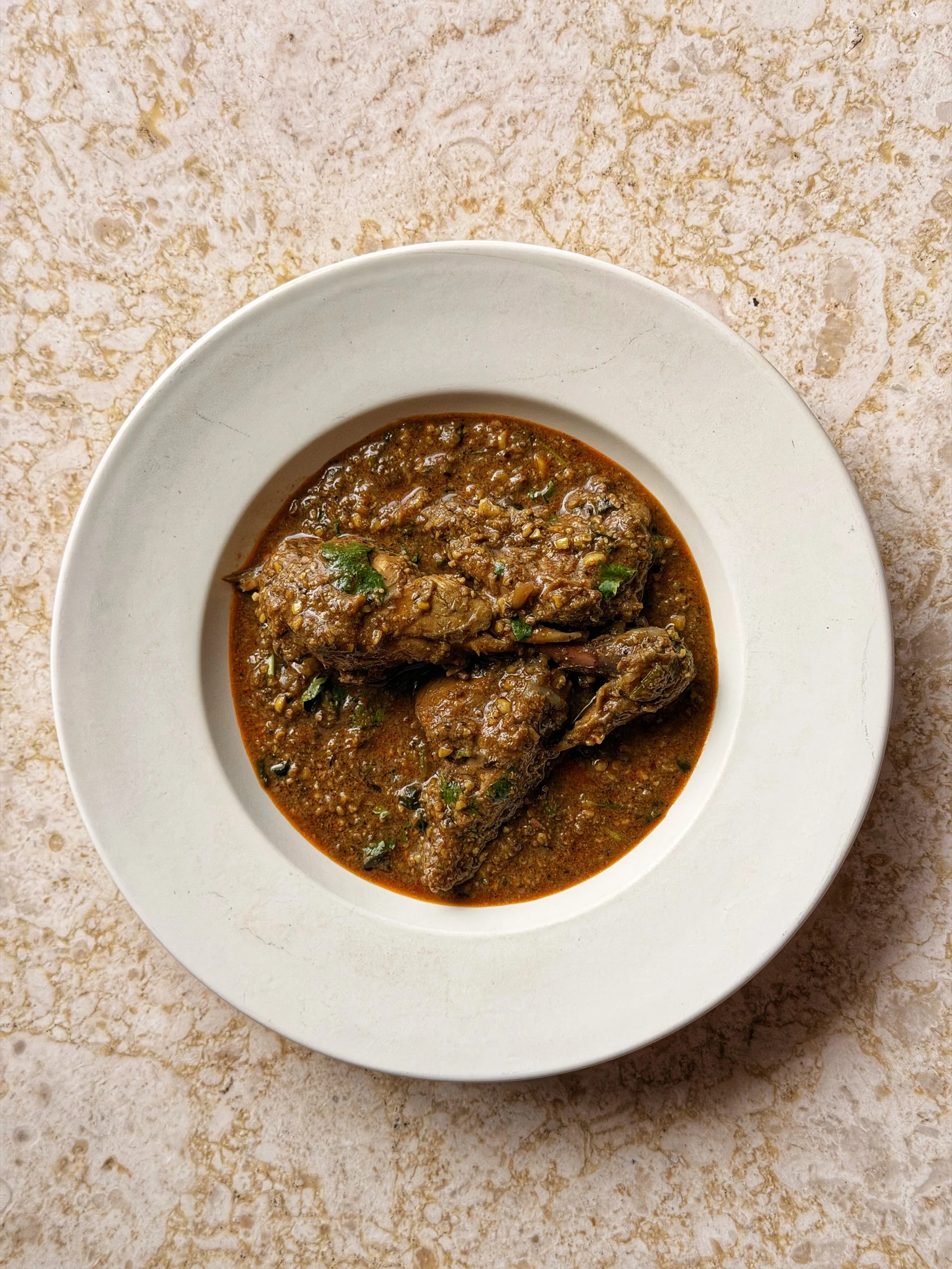
In the kitchens of Vidarbha and Marathwada, peanuts have a habit of sneaking into everyday cooking and making everything considerably more interesting. In Shengdana Chicken, they are roasted, coarsely ground and cooked with Kanda Lasun Masala until they turn into a thick, nutty gravy that clings shamelessly to the chicken. There is no coconut, cream or fancy thickener required. The peanuts have that department covered. Spicy, earthy and unapologetically rustic, this is the sort of curry that makes a bhakri less of an accompaniment and more of an essential piece of eating equipment.
Ingredients
For the Marinade
800 g bone-in chicken, cut into medium curry pieces
2 inch piece of ginger
25 garlic cloves
4–5 green chillies
½ tsp turmeric powder
1 tsp salt
1 tbsp peanut oil
For the Shengdana Masala
100 g raw peanuts
2 tbsp Kanda Lasun Masala
1½ tbsp coriander powder
½ tsp cumin powder
1 tsp Kashmiri chilli powder
½ tsp hot red chilli powder, optional
½ tsp turmeric powder
For the Curry
2 medium onions, finely chopped
3 tbsp peanut oil
½ tsp cumin seeds
1 small piece cinnamon
2 cloves
1 bay leaf
350–450 ml hot water, as required
Salt, to taste
A small handful of fresh coriander, chopped
1–2 tsp peanut oil, optional, to finish
Method
Marinate the Chicken
Coarsely grind the ginger, garlic and green chillies using as little water as possible.
Add the paste to the chicken along with the turmeric, salt and peanut oil.
Mix thoroughly, making sure the marinade coats all the pieces.
Cover and marinate for 1–2 hours. You can extend this to about 4 hours, but doesn't need an overnight marinade.
Prepare the Shengdana Masala
Dry-roast the peanuts over medium-low heat, stirring regularly, until evenly browned and aromatic.
Allow them to cool, then rub away most of the skins.
Grind the peanuts to a coarse powder rather than a smooth paste. A little texture is desirable in this curry.
Combine the ground peanuts with the Kanda Lasun Masala, coriander powder, cumin powder, Kashmiri chilli powder, hot chilli powder if using, and turmeric.
Set aside.
Brown the Onions
Heat 3 tbsp peanut oil in a heavy-bottomed kadai.
Add the cumin seeds, cinnamon, cloves and bay leaf. Fry for about 20–30 seconds, until fragrant.
Add the chopped onions and cook over medium heat for 8–10 minutes, stirring regularly, until deep golden brown.
Take your time here. Properly browned onions provide sweetness and depth to balance the roasted peanuts and chilli.
Bhuno the Chicken
Add the marinated chicken along with all the marinade.
Increase the heat to medium-high and cook for 7–8 minutes, stirring frequently.
The chicken should lose its raw appearance and begin to brown lightly while the ginger, garlic and green chilli paste cooks down.
Add the Shengdana Masala
Reduce the heat to low and add the prepared peanut masala.
Mix thoroughly for about 30 seconds, then immediately add approximately 100 ml hot water.
Cook over medium-low heat for 3–4 minutes, stirring frequently.
Peanut powder has an impressive ability to go from perfectly fine to welded onto the bottom of your kadai, so keep an eye on it. Add another small splash of hot water if the masala starts catching.
The mixture should become thick, aromatic and slightly glossy.
Cook the Chicken
Add another 250 ml hot water and mix well.
Bring to a gentle boil, then reduce the heat to low-medium and cover.
Cook for 12–15 minutes, stirring once or twice, until the chicken is cooked through.
Reduce the Gravy
Remove the lid and simmer for another 5–8 minutes, allowing the gravy to reduce.
Add a little more hot water if necessary.
The finished gravy should be medium-thick, slightly coarse and distinctly nutty, coating the chicken while leaving enough gravy to attack with a piece of bhakri.
Taste and adjust the salt and chilli.
Finish with plenty of chopped coriander and, if you like, 1–2 tsp peanut oil for an extra hit of roasted nuttiness.
Turn off the heat and rest the curry for 10 minutes before serving.
Serving
Serve hot with:
Jowar or bajra bhakri
Chapati
Steamed rice
Raw onion and lime on the side
Like many peanut-based curries, the gravy will continue to thicken as it sits. If reheating later, loosen it with a splash of hot water