
Smoked Pork with Colocasia and Axone
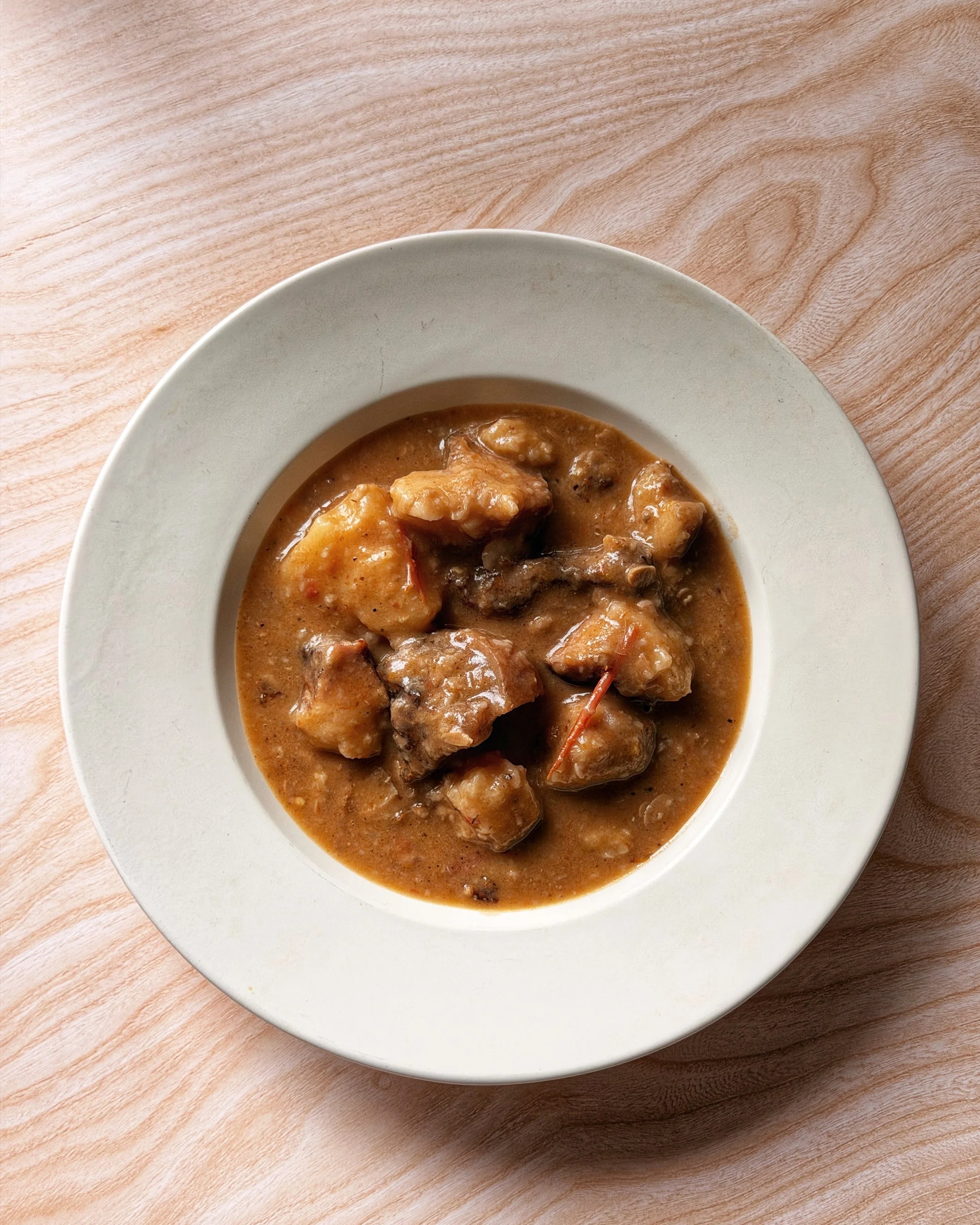
A Naga-style pork curry built around three ingredients that do almost all the work: smoked pork, colocasia and axone. There is no elaborate masala or frying involved. Everything cooks together in one pot, allowing the smoke from the pork and the distinctive fermented character of axone to flavour the entire broth.
Ingredients
Serves 3–4
500 g smoked pork
300 g colocasia (taro/arbi)
3–4 tbsp axone, fermented soybean
2 small dried Naga King chillies (raja mircha), or 1 large
3 medium tomatoes
Salt, to taste
Water, as required
Method
Prepare the pork and colocasia
Rinse the smoked pork briefly with warm water to remove any excess surface smoke or soot.
Cut it into medium-sized pieces.
Peel the colocasia and cut larger ones into chunks. Leave smaller ones whole or halved.
Colocasia can irritate the skin for some people when raw, so applying mustard oil on your hands before handling them is useful if you are sensitive to it.
Cook everything together
Place the smoked pork in a heavy-bottomed pot.
Add the colocasia, tomatoes, axone, dried Naga King chillies and a little salt.
Add enough water to just cover the ingredients.
Bring to a boil, then reduce the heat and cover.
Simmer gently until the pork is tender and the colocasia is completely cooked through.
Depending on how the pork has been smoked and cured, this can take anywhere froman hour or longer. Don't rely entirely on the clock. The pork decides when the pork is ready.
Add a little hot water during cooking if the pot begins to dry out.
Mash the vegetables
Once the pork is tender, carefully remove the tomatoes, chillies and most of the colocasia from the pot.
Transfer them to a mortar and pestle and mash into a coarse paste.
You can leave a few pieces of colocasia whole for texture.
The mashed colocasia does double duty here. Apart from being an ingredient in its own right, its starch naturally thickens the broth.
Finish the curry
Return the mashed mixture to the pot and stir gently to incorporate it into the cooking liquid.
Add a little hot water if the gravy has become too thick.
Simmer uncovered for another 3–5 minutes.
Taste and adjust the salt.
Turn off the heat and allow the curry to rest for about 10 minutes before serving.
Serving
Serve piping hot with plain steamed rice.
The finished curry should have a rustic, moderately thick gravy, with plenty of smoke from the pork, fermented funk from the axone and serious heat from the Naga King chilli.
A Few Notes
Axone
Axone, also commonly written akhuni, is fermented soybean widely used in Naga cooking. It can be fresh, dried, smoked or made into cakes depending on the producer and preparation.
For this curry, 3–4 tbsp fresh or prepared axone works well. Its fermentation provides so much savoury depth that the dish really doesn't need an elaborate supporting cast of spices.
Keep the aromatics restrained
Ginger and garlic are deliberately absent here. With smoked pork, axone and Naga King chilli already competing for your attention, adding more aromatics can start muddying the flavour.
If you really want ginger or garlic, lightly crush a small amount and add it towards the end of cooking rather than building a conventional fried masala.
About the chilli
Dried Naga King chilli provides both heat and its distinctive fruity aroma. If unavailable, you can substitute fresh green chillies or dried red chillies, although the flavour will naturally be different.
And if your particular batch of raja mircha is especially enthusiastic, starting with less is perfectly respectable.
Potato variation
Potatoes can replace the colocasia. They will still provide starch and body to the gravy, although you lose some of the earthy character and slightly slippery texture that makes colocasia particularly interesting here.