
Agri-Style Jitada Fish Curry
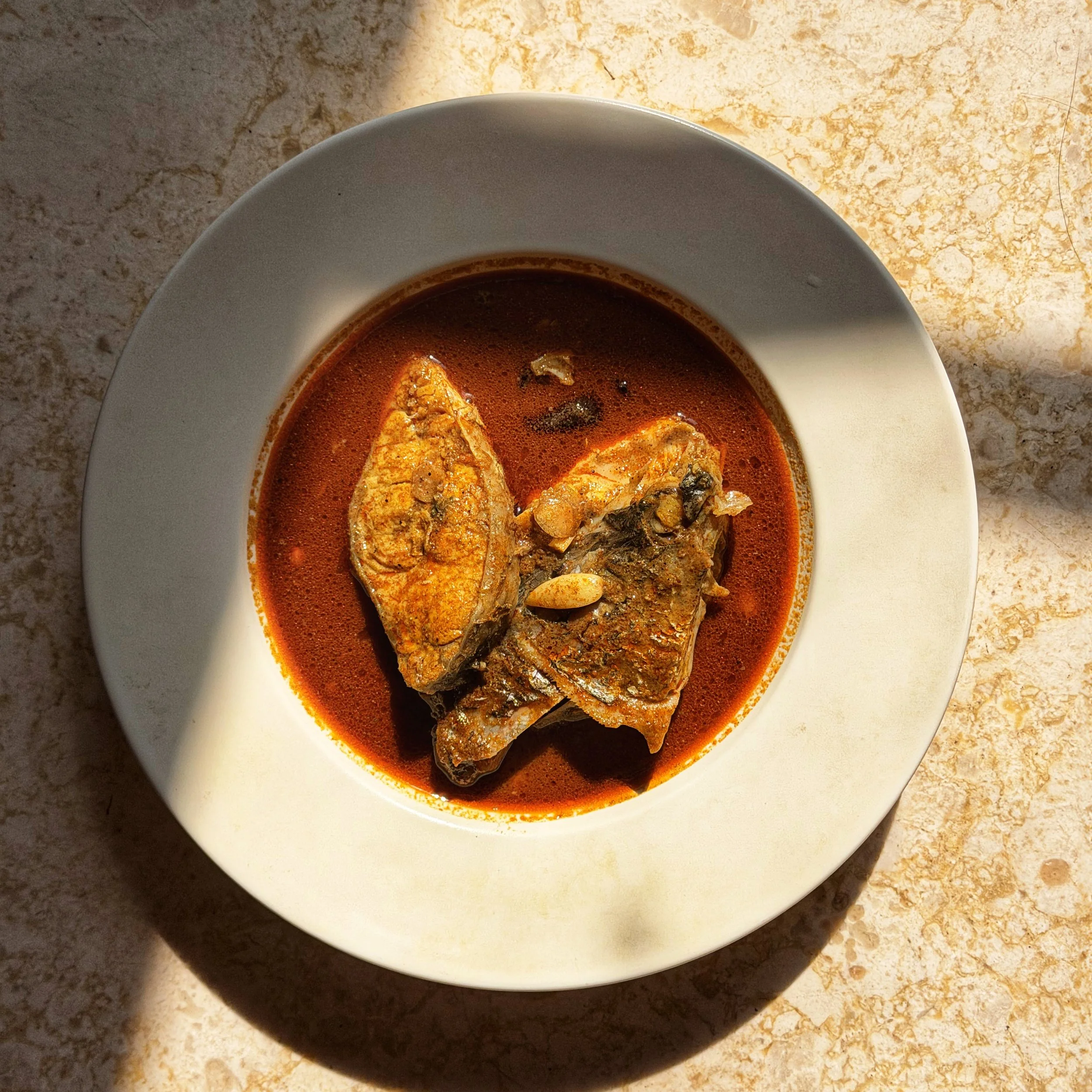
This is the kind of fish curry where garlic takes up the main character energy. A charred coconut and coriander vatan gives the gravy its earthy backbone, Agri Koli masala brings the heat, and kokum adds just enough sourness to keep everything in check. Then there are those golden, bruised pieces of garlic hiding in the gravy. This is a family recipe from my Agri kitchen, and honestly, finding one of those pieces of garlic in your rice is one of the best parts of the whole operation.
The fish we use for this is Jitada, as it is commonly called in Maharashtra. Elsewhere, you may know the same fish as bhetki in Bengal and barramundi in English. For this curry, I like buying a whole fish weighing around 1.5–2.5 kg. At that size, it has a good balance of firm meat and fat. Even grey mullet works beautifully for this dish.
We usually buy the whole fish and use the bony, flavourful pieces such as the head, tail and belly, along with a few meaty pieces for the curry. The prime meaty portions are kept aside for frying. That's the advantage of buying the whole fish: one fish gives you both a great curry and some excellent fried fish.
Ingredients
For the fish
500 g Jitada/barramundi, a mixture of head, tail, belly and meaty pieces
1 tsp turmeric powder
Juice of ½ lemon
Salt, to taste
For the vatan
¼ whole dried coconut
1 cup fresh coriander leaves
1 whole garlic bulb, cloves separated and peeled
For the curry
10–12 cloves garlic
2–3 tbsp Agri Koli masala
2 medium potatoes, cubed, or 3 small brinjals, quartered
4 tbsp groundnut oil
4–5 pieces kokum, or a small ball of tamarind paste
Water, as required
Salt, to taste
Method
Marinate the fish
Wash the fish pieces thoroughly and pat them dry.
Season with turmeric, lemon juice and salt. Mix gently so that the pieces are evenly coated.
Cover and set aside for 30 minutes.
Prepare the vatan
Place the dried coconut directly over a low flame and roast it until the surface becomes deeply charred, almost black.
Don't be alarmed by the colour. This is intentional and gives the curry its distinctive roasted flavour.
Allow the coconut to cool, then break it into smaller pieces.
Add the roasted coconut, coriander leaves and one whole garlic bulb to a blender and grind into a coarse paste.
You can add a small splash of water if necessary, but keep the vatan fairly thick.
Prepare the garlic
Take the remaining garlic cloves and bruise them with the flat side of a knife.
Don't chop or crush them completely. You want the cloves broken and flattened while still retaining their shape.
Garlic is the main character in this curry. Finding one of those soft, golden pieces of garlic while eating is half the fun.
Build the curry
Heat the groundnut oil in a wide kadai over medium heat.
Add the bruised garlic and fry until it becomes golden and fragrant.
Add the Agri Koli masala and stir vigorously.
Fry the masala carefully for a minute or two, making sure it roasts properly without burning. It should become slightly darker and intensely fragrant.
Add the prepared vatan.
Fry briefly, stirring continuously.
You don't need to cook the vatan for very long. The coconut has already been roasted, and you want the coriander to retain some of its fresh character.
Cook the vegetables
Add enough water to create a loose curry, followed by the kokum and salt.
Bring the curry to a boil.
Add the cubed potatoes or quartered brinjals.
Reduce the heat, cover and cook until the vegetables are completely tender.
Add the fish
Gently place the marinated fish pieces into the curry.
Handle them carefully from this point onwards. Don't stir the curry vigorously, as the fish can break apart.
Cover and cook for 8–10 minutes, or until the fish is just cooked through.
Fish cooks quickly, and overcooking it will make the flesh dry and cause the pieces to fall apart.
Turn off the heat and taste for salt.
Let the curry rest for about 30 minutes before serving. This gives the fish time to absorb some of the masala and allows the flavours of the curry to settle.
Serving
This is traditionally the kind of curry that wants something substantial alongside it.
Serve with rice bhakri or plain steamed rice, preferably with a piece of fried Jitada on the side.
Add some raw sliced onions to the plate for crunch and a little freshness.
And if you're eating it with your hands, don't waste the garlic. That's the good stuff.