
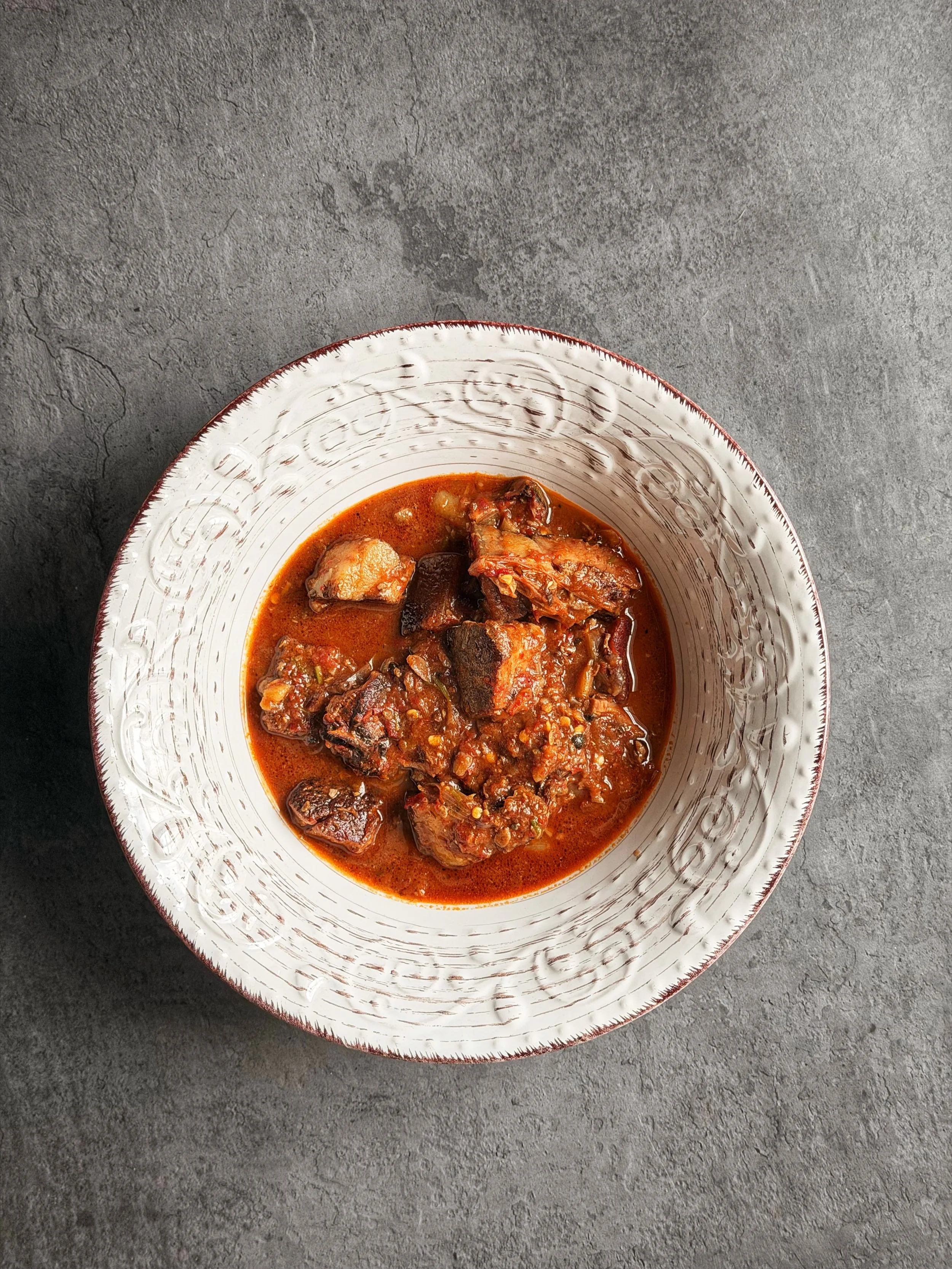
Smoked pork with Axone is one of the most characteristic preparations of Sumi Naga cuisine. The pungent, deeply savoury flavour of fermented soybeans complements the smokiness of the pork, while tomatoes, chillies and garlic provide the remaining layers of flavour. Like many traditional Naga meat preparations, the dish relies on the inherent character of its ingredients rather than elaborate spice blends or added oil.
Ingredients
500 g smoked pork, skin and fat intact
2–3 tbsp fresh Axone (fermented soybeans)
3 medium ripe tomatoes
30 g young garlic, peeled
1 Raja Mircha (Naga king chilli)
4–5 mild red chillies
1 medium potato, cubed
½ tsp Mongmong Jang (Naga Sichuan pepper), optional
600–750 ml water
Salt to taste
Substitutions: If fresh Axone is unavailable, use dried Axone softened in a little hot water. Regular garlic can be used in place of young garlic.
Method
Prepare the ingredients
Thoroughly wash the smoked pork with hot water to remove any surface soot or impurities.
Cut the pork into approximately 4 cm chunks, retaining the skin and fat.
Coarsely pound the young garlic using a mortar and pestle and set aside.
Cook the smoked pork
Place the smoked pork, whole tomatoes, raja mircha and mild red chillies in a heavy-bottomed pot.
Add just enough water to nearly cover the meat. Season lightly with salt, keeping in mind that the smoked pork may already contain some salt.
Bring to a boil, reduce the heat, cover and simmer gently until the tomatoes and chillies have softened.
Prepare and add the Axone paste
Remove the softened tomatoes and chillies from the pot and allow them to cool slightly.
Transfer them to a mortar along with the fresh Axone and pound into a coarse, rustic paste. Avoid grinding the mixture too finely, as the texture of the fermented soybeans is an important part of the finished dish.
Return the pounded mixture to the pot and stir it into the cooking liquid.
Add the cubed potato and continue simmering, partially covered, until the pork is tender, the skin has softened and the potatoes are cooked through.
Add small quantities of hot water if necessary during cooking.
Reduce and thicken the gravy
Once the pork and potatoes are tender, remove the lid.
Take one of the cooked potato cubes and roughly mash it into the gravy. This helps thicken the cooking liquid naturally without the need for additional thickening agents.
Add the coarsely pounded garlic and continue cooking uncovered for another 5–7 minutes, allowing the gravy to reduce and the garlic to release its aroma.
The finished gravy should be fairly thick, rustic and slightly granular from the fermented soybeans, with visible droplets of rendered pork fat on the surface.
Finish with Mongmong jang
Taste and adjust the salt.
If using Mongmong jang, lightly crush it just before adding it to the pot during the final two minutes of cooking. Adding it towards the end helps retain its distinctive citrusy aroma and gently numbing character.
Turn off the heat, cover the pot and allow the pork to rest for 10–15 minutes before serving.
Serving
Serve hot with plain steamed rice, boiled leafy greens and a traditional Naga chilli chutney.