
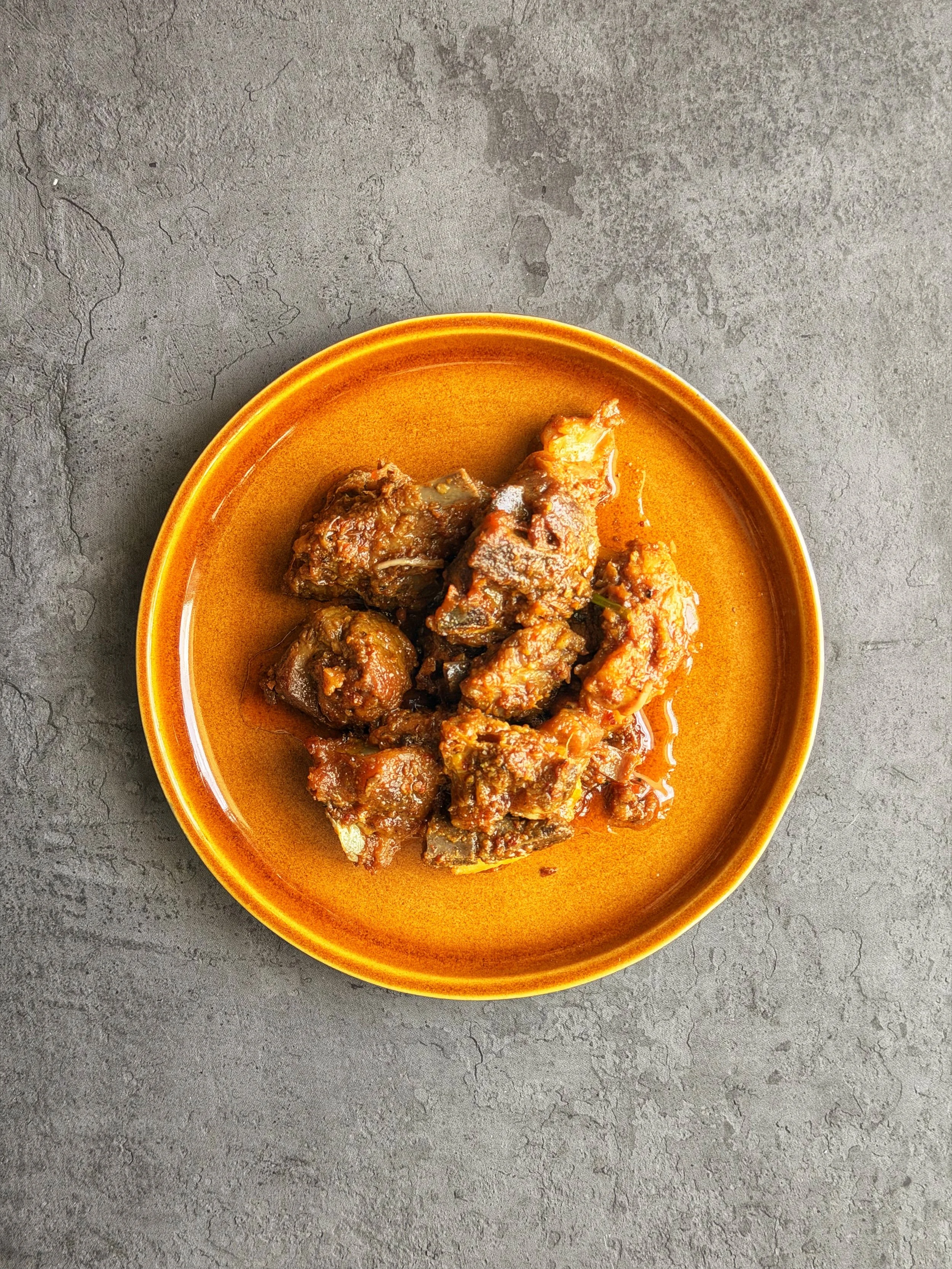
Khasi ko Pakku is a traditional Nepali goat preparation particularly associated with Dashain, the country's major autumn festival. Unlike a conventional curry, Pakku is cooked slowly with mustard oil, yogurt and spices, allowing the meat to tenderise in its own juices before the cooking liquid reduces into a thick, intensely flavoured coating.
The defining characteristic is the cooking technique. Rather than building a separate onion-tomato gravy, the meat is marinated thoroughly and cooked over low heat, with very little or no additional water.
Ingredients
For the meat and marinade
1 kg goat meat, preferably bone-in shoulder, cut into 4–5 cm pieces
80 ml mustard oil, divided
2 tbsp ginger-garlic paste
3 tbsp thick plain yogurt
2 tsp ground cumin
2 tsp ground coriander
1 tsp turmeric powder
2 tsp Kashmiri chilli powder
½–1 tsp hot red chilli powder, depending on preference
½ tsp freshly ground black pepper
1¾ tsp salt, or to taste
Whole spices
2 black cardamom pods
4 green cardamom pods
5 cloves
1 piece cinnamon, approximately 5 cm
2 bay leaves
A small pinch of freshly grated nutmeg
1 tbsp ghee, to finish
Method
Marinate the goat
Pat the goat pieces dry with kitchen paper.
In a large mixing bowl, combine 50 ml mustard oil, ginger-garlic paste, yogurt, ground cumin, coriander, turmeric, both chilli powders, black pepper and salt.
Add the goat and massage the marinade thoroughly into the meat for approximately 3–4 minutes, making sure every piece is evenly coated.
Cover and refrigerate for at least 3–4 hours, preferably overnight.
Remove the meat from the refrigerator approximately 30 minutes before cooking.
Temper the whole spices
Heat the remaining 30 ml mustard oil in a heavy-bottomed kadai, Dutch oven or thick-bottomed saucepan.
Allow the oil to heat until shimmering and just beginning to smoke, then reduce the heat slightly.
Add the black cardamom, green cardamom, cloves, cinnamon and bay leaves.
Fry for 30–45 seconds, stirring gently until the spices become aromatic.
Avoid burning them, as this will introduce bitterness into the finished dish.
Begin cooking the meat
Add the marinated goat to the pan, along with all the remaining marinade.
Increase the heat to medium and cook for approximately 8–10 minutes, turning the pieces occasionally.
The meat should gradually change colour, while the yogurt and spices begin coating its surface.
As the goat heats, it will start releasing moisture into the pan.
Once the meat has changed colour and the marinade begins simmering, reduce the heat to low and cover with a tight-fitting lid.
Slow-cook in its own juices
Continue cooking the goat over very low heat for approximately 2–3 hours, checking every 15–20 minutes.
Stir gently whenever necessary to prevent the masala from sticking to the bottom of the pan.
The meat should release enough moisture to cook gradually without the addition of water. The trapped steam and cooking juices help tenderise the goat while concentrating the spices.
If the pan begins drying out before the meat becomes tender, reduce the heat further. Add a small splash of hot water only if necessary to prevent scorching.
The exact cooking time will depend on the age of the animal, the size of the pieces and the cut being used.
Continue until the goat is tender and the meat begins yielding easily when pressed with a fork.
Reduce the masala
Once the goat is tender, remove the lid.
Increase the heat slightly and continue cooking uncovered for approximately 10–20 minutes, turning the pieces carefully.
Allow the remaining liquid to evaporate gradually.
As the moisture reduces, the spices and cooking juices will form a thick coating around the meat, and small amounts of oil will begin separating from the masala.
The objective is a dry to semi-dry preparation, with deeply flavoured meat rather than a loose gravy.
Avoid aggressively frying the goat at this stage, particularly if using lean pieces, as the meat can become dry.
Finish and rest
Sprinkle the freshly grated nutmeg over the meat.
Add the ghee and gently fold everything together.
Taste and adjust the salt if necessary.
Turn off the heat, cover loosely and allow the Pakku to rest for approximately 10 minutes before serving.
Serve
Transfer the goat to a serving dish, spooning any remaining concentrated masala and cooking fat over the pieces.
Serve hot with steamed rice, chiura (beaten rice) or sel roti.
Getting the texture right
The meat: Tender and succulent, preferably with enough connective tissue to withstand prolonged cooking. The pieces should retain their shape rather than completely falling apart.
The masala: Thick, dark and tightly coating the meat. There should be little free liquid remaining in the pan.
The flavour: Richly savoury, warmly spiced and distinctly mustard-oil-forward, with the spices complementing rather than overwhelming the flavour of the goat.