
Pandi Curry
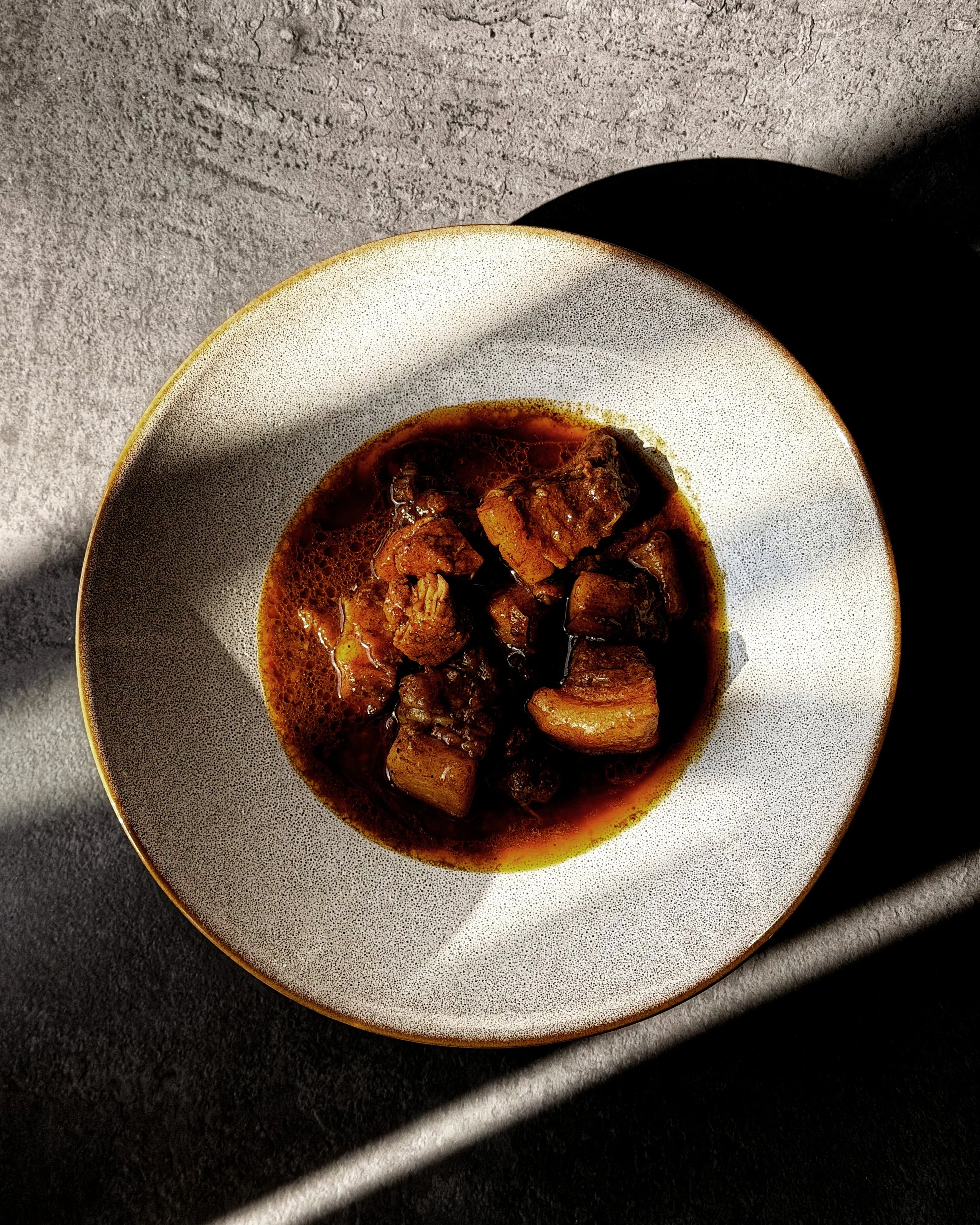
Pandi Curry is perhaps the dish most closely associated with Kodava cooking. Pork, preferably with plenty of fat, is cooked with deeply roasted spices and finished with kachampuli, the dark, intensely sour vinegar traditionally used in Kodagu.
This version keeps the spice mixture relatively restrained and leaves a little more gravy than some drier preparations. The important things are using sufficiently fatty pork, roasting the spices properly and treating the kachampuli with some respect. Its strength can vary enormously, particularly between homemade and commercial versions, so start cautiously and add more only after tasting.
Like many slow-cooked meat dishes, Pandi Curry is even better after a night's rest. Make it a day ahead if you can.
Ingredients
For the pork
750 g pork, with a good proportion of fat and skin, cut into 2.5 to 5 cm pieces
I used 500 g bone-in pork shoulder and 250 g pork belly
½ tbsp red chilli powder, or to taste
¾ tsp turmeric powder
1 tbsp ginger, roughly pounded
8 to 10 garlic cloves, roughly pounded
Salt, a pinch for pounding the ginger and garlic
For the roasted spice powder
1 tbsp coriander seeds
½ tbsp mustard seeds
½ tbsp cumin seeds
½ tbsp black peppercorns
¼ tsp fenugreek seeds
2 cloves
½ inch cinnamon
For the curry
1 cup shallots, sliced
2 green chillies, slit
2 tbsp gingelly oil, or rendered pork fat
About ½ tsp kachampuli, plus more if required
Salt, to taste
About 2 cups hot water, plus more as required
Method
Marinate the pork
Roughly pound the ginger and garlic with a pinch of salt.
Combine the pork with the ginger-garlic, chilli powder, and turmeric. Mix thoroughly so that every piece is coated.
Cover and leave to marinate for at least 1 hour.
Roast the spices
Roast all the spices separately in a heavy pan over medium-low heat. Different spices roast at different rates, so doing them individually gives you much better control.
Take the coriander seeds and cumin to an even, deep brown without allowing them to burn. This dark roasting is important to the characteristic colour and flavour of the curry.
Roast the mustard seeds until they begin to sputter. Roast the peppercorns only lightly. Gently roast the fenugreek, cloves and cinnamon until aromatic, taking particular care with the fenugreek as it can become bitter if scorched.
Allow everything to cool completely, then grind together to a fine powder.
Start the curry
Heat the gingelly oil or rendered pork fat in a deep kadai over medium heat.
Add the sliced shallots and cook patiently until evenly golden. Don't take them all the way to dark brown.
Add the slit green chillies and fry briefly.
Increase the heat and add the marinated pork along with salt to taste. Fry well, turning the pieces frequently, until the pork begins to colour and any moisture released by the meat has reduced.
Add the freshly ground spice powder and continue frying until intensely aromatic and the spices have coated the pork.
Braise
Pour in about 2 cups hot water and bring everything to a boil.
Reduce to a gentle simmer, cover and cook until the pork is completely tender. Stir occasionally and add a little more hot water whenever necessary to prevent the curry from drying out before the meat is cooked.
The exact cooking time will depend on the cuts of pork being used.
Reduce the gravy
Once the pork is tender, remove the lid and simmer until the gravy reaches the consistency you like.
This version can be left with enough dark gravy to spoon over rice, or reduced further for a more concentrated, clingy Pandi Curry.
Taste and adjust the salt.
Add the kachampuli
Add ½ teaspoon kachampuli and stir thoroughly. Simmer for another 2 to 3 minutes, then taste.
Kachampuli varies enormously in strength and concentration. Homemade kachampuli from a Kodagu household can be extremely potent, while some commercial versions are considerably more diluted. Always begin with less than you think you need. You can add another few drops after tasting, but you cannot take it back out.
The finished curry should have a distinct sour edge without allowing the kachampuli to overwhelm the pork and roasted spices.
Rest
Take the curry off the heat and allow it to rest before serving.
Better still, cool it completely, refrigerate it overnight and gently reheat it the following day. Pandi Curry develops considerably more character after sitting for a while.
Serve with kadambuttu, akki otti, nool puttu or rice.