
Creamy Puttanesca
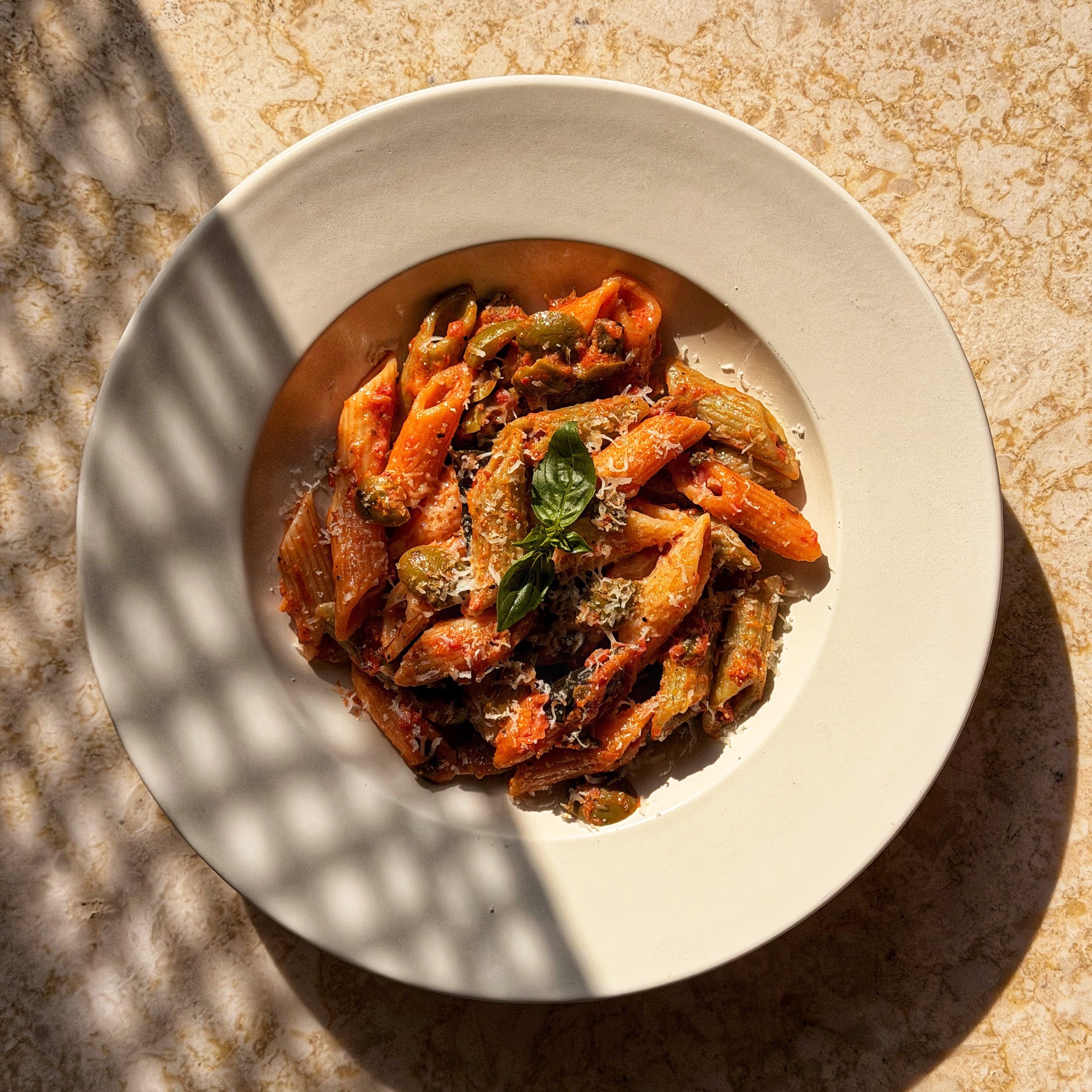
Puttanesca is not a pasta that believes in subtlety. Garlic, anchovies, olives, capers and chilli all arrive at the same time and make themselves heard. Traditionally there is no cream involved, but I like the idea of giving all that briny intensity somewhere soft to land. The cream rounds out the sharp edges without taking away the attitude. Think of it as puttanesca, after a very good spa day.
Ingredients
Pasta
400 g pasta
Base
3 tbsp extra virgin olive oil
7–8 cloves garlic, finely chopped
Umami
8–10 anchovy fillets, or 3 tsp anchovy paste
Heat
1–1½ tsp red chilli flakes, adjusted to taste
Sauce
400–450 g crushed tomatoes
1 tbsp tomato paste
Brine
⅔ cup green olives, sliced
3 tbsp capers, rinsed
Cream
200–240 ml fresh cream
Seasoning
Black pepper, to taste
1 tsp dried oregano, optional
To finish
1 tsp lemon juice, optional
1 tsp extra virgin olive oil
Chopped parsley or basil
Grated Parmesan, optional
Method
Cook the pasta
Bring a large pot of water to a boil and cook the pasta in well-salted water until just shy of al dente.
Before draining, reserve at least 1 cup of the pasta water.
Build the base
Heat the olive oil in a wide sauté pan or kadhai over medium heat.
Add the chopped garlic and cook gently until fragrant. Do not let it brown too much.
Add the anchovies and chilli flakes. Cook for 1–2 minutes, stirring and pressing the anchovies with the back of the spoon until they dissolve into the oil.
This is where a lot of the flavour comes from. The anchovies don't make the pasta taste fishy. They essentially disappear into the sauce and leave behind a concentrated layer of umami.
Make the puttanesca sauce
Add the tomatoes, tomato paste, olives and capers.
Stir well and cook over medium heat for 8–10 minutes, allowing the tomatoes to reduce slightly and the flavours to concentrate.
Add the oregano and a generous amount of freshly ground black pepper.
At this stage, do not add salt. The anchovies, olives and capers already bring a serious amount of sodium to the party.
Add the cream
Reduce the heat to low and stir in the cream.
Simmer gently for 2–3 minutes until the sauce becomes smooth and silky.
Don't boil the sauce aggressively after adding the cream. Gentle heat is all it needs.
Finish the pasta
Add the drained pasta directly to the sauce.
Toss thoroughly, adding a splash of reserved pasta water as needed. The starch in the pasta water helps emulsify the sauce and gives it a glossy, clingy texture.
Continue tossing until the pasta is properly coated and cooked to al dente.
Taste before adding any salt.
Finish with a few drops of lemon juice and a drizzle of extra virgin olive oil. The lemon isn't there to make the sauce sour. It simply cuts through the richness of the cream and wakes everything back up.
Finish with chopped parsley or basil and, if you like, some grated Parmesan.
Balancing the Sauce
Puttanesca has a lot of strong ingredients, so small adjustments can make a big difference.
Too salty?
Add a little cream or loosen the sauce with pasta water.
Tastes flat?
Add a few drops of lemon juice or a small amount of caper brine.
Too heavy?
Add a splash of pasta water and another drizzle of extra virgin olive oil.
Too acidic?
A little more cream will round things out.
The finished sauce should be creamy but still distinctly puttanesca: tomato-rich, briny, garlicky, spicy and packed with umami. The cream should soften the edges, not erase them.