
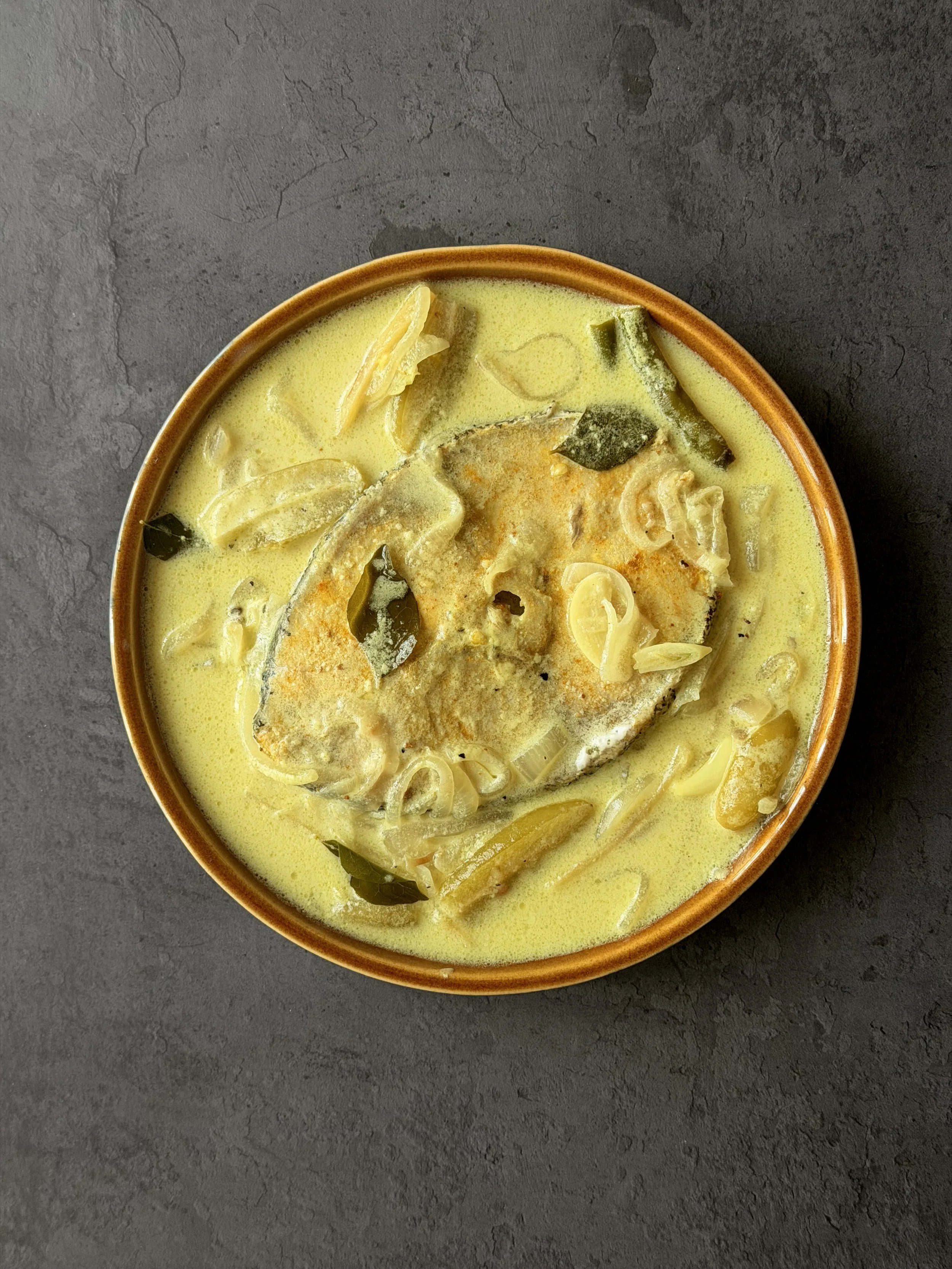
A delicate, pale-yellow fish curry made with coconut milk, green chillies, ginger and fresh bilimbi (irumban puli). Unlike versions of fish molee that use tomatoes or lemon juice, this preparation relies entirely on bilimbi for its acidity.
The fish is lightly fried before being gently simmered in thin coconut milk with sliced bilimbi. Thick coconut milk is added towards the end, producing a creamy, fragrant gravy with a gentle sourness.
Ingredients
For the fish
500 g seer fish (neymeen) or pearl spot (karimeen), cleaned and cut into steaks or suitable portions
⅛ tsp turmeric powder
½ tsp salt
1 tbsp coconut oil, for shallow-frying
For the molee
60–80 g fresh bilimbi (irumban puli), approximately 5–7 fruits, sliced lengthwise
2 tbsp coconut oil
1 medium onion (approximately 120 g), thinly sliced
20 g ginger, cut into fine juliennes
4 garlic cloves, thinly sliced
3–4 green chillies, slit lengthwise
2 sprigs curry leaves
½ tsp black peppercorns, coarsely crushed
⅛ tsp turmeric powder
200 ml thin coconut milk
100 ml thick coconut milk
Salt, to taste
Total turmeric used: ¼ tsp, divided equally between the fish and the gravy.
Method
Prepare the bilimbi
Wash the bilimbi thoroughly and trim off the stalk ends.
Slice each fruit lengthwise into halves, or quarters if particularly large. Leave the seeds and soft centres intact.
There is no need to peel the fruit or extract its juice. The bilimbi will gradually release its acidity as it cooks in the coconut milk.
Start with approximately 60 g of bilimbi, keeping the remaining 20 g aside in case the gravy needs additional sourness.
Marinate and lightly fry the fish
Pat the fish dry with kitchen paper.
Rub the pieces with ⅛ tsp turmeric powder and ½ tsp salt. Set aside for 10–15 minutes.
Heat 1 tbsp coconut oil in a wide, heavy-bottomed pan over medium heat.
Add the fish and fry for approximately 60–90 seconds on each side, just until the exterior firms up and develops a very light golden colour.
The fish should remain largely uncooked inside.
Carefully remove the pieces and set aside.
The objective is not to develop a crisp crust. This brief frying helps the fish retain its shape when it is subsequently simmered in coconut milk.
Prepare the aromatic base
In the same pan, add the remaining 2 tbsp coconut oil and reduce the heat to medium-low.
Add the sliced onion and sauté for 3–4 minutes until soft and translucent. Avoid browning, as the finished molee should retain its characteristic pale colour.
Add the ginger juliennes, sliced garlic, slit green chillies and one sprig of curry leaves.
Continue sautéing for approximately 2 minutes until fragrant.
Add the coarsely crushed black pepper and remaining ⅛ tsp turmeric powder. Stir for another 20–30 seconds.
The turmeric should lightly colour the oil without turning the onion mixture a deep yellow.
Cook the bilimbi in thin coconut milk
Add the sliced bilimbi to the aromatic mixture and toss gently for approximately 30 seconds.
Pour in thin coconut milk and add ½ tsp salt.
Bring the mixture to a gentle simmer over medium-low heat.
Cook uncovered for 5–7 minutes, allowing the bilimbi to soften and release its acidity into the coconut milk.
The fruit should become slightly tender while still retaining its shape.
Taste the gravy at this stage. It should have a clean, noticeable sourness, slightly more pronounced than you want in the finished curry.
The thick coconut milk added later will mellow the acidity.
If the bilimbi is particularly sour, avoid prolonged simmering. If the gravy tastes too mild, cook for another 1–2 minutes or add a few of the reserved bilimbi slices.
Simmer the fish
Carefully return the lightly fried fish to the pan, arranging the pieces in a single layer.
Spoon some of the coconut milk and bilimbi over the fish.
Cover and simmer over low heat for approximately 5–8 minutes, depending on the thickness of the pieces.
Avoid stirring with a spoon, as this can break the delicate fish. Instead, gently swirl the pan occasionally to redistribute the gravy.
Cook until the fish is opaque and flakes easily at its thickest point.
Finish with thick coconut milk
Reduce the heat to its lowest setting.
Pour in the thick coconut milk and gently swirl the pan to incorporate it into the gravy.
Add the remaining sprig of curry leaves.
Warm for another 2–3 minutes, keeping the heat low and avoiding a vigorous boil.
Taste and adjust the salt.
The finished gravy should be pale yellow, lightly peppery, creamy and gently sour, with the bilimbi providing a clean acidity that balances the richness of the coconut milk.
Rest and serve
Turn off the heat, cover the pan and allow the molee to rest for 10–15 minutes before serving.
This resting period allows the flavours to settle and the acidity of the bilimbi to distribute more evenly through the gravy.
Serve warm with appam or plain steamed rice.
Substitutes for Bilimbi
Raw green mango (40–60 g): Peel and slice thinly. Add during the thin coconut milk stage. Start with a smaller quantity and adjust according to the sourness.
Lemon or lime juice (1–2 tsp): Add to taste towards the end of cooking, after turning off the heat.
Kudampuli / Malabar tamarind (1 small piece): Soak in warm water and add during the thin coconut milk stage. Remove once the gravy reaches the desired level of sournes.