
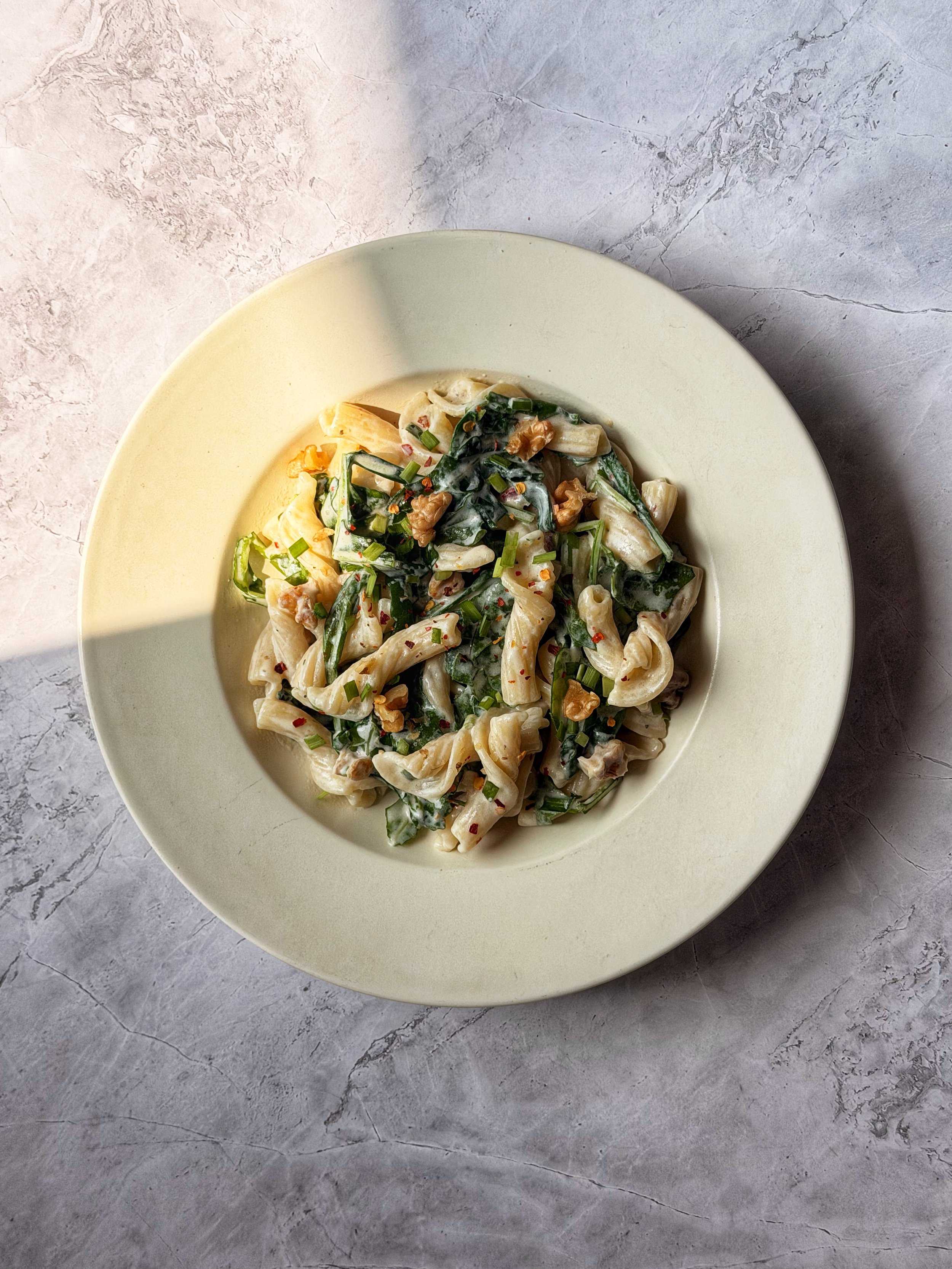
The important bit here is how the chèvre is handled. Mixing the soft goat cheese with olive oil before introducing hot pasta water helps it turn into a smooth, creamy coating rather than a grainy sauce. Truffle chèvre makes the dish particularly aromatic, but good plain chèvre works perfectly well too.
Torchietti is excellent because all those twists catch the cheese and walnuts. Other good choices include casarecce, gemelli, fusilli, strozzapreti, radiatori or orecchiette. I'd favour a short, textured pasta over spaghetti or another long shape.
Ingredients
350 g torchietti, or another short textured pasta
100 g truffle chèvre, or plain soft chèvre
5 tbsp extra virgin olive oil
100 g arugula
¾ cup walnuts, toasted and roughly chopped
⅓ cup chives, finely chopped
Red pepper flakes, to taste
Salt, as needed
¾ cup pasta cooking water, reserved
Method
Toast the walnuts
Toast the walnuts in a dry pan over medium-low heat until fragrant and lightly coloured. Allow them to cool, then roughly chop and set aside.
Prepare the chèvre
Place the chèvre in a large bowl. Add the olive oil, ¾ tsp salt and red pepper flakes to taste.
Mash thoroughly with a fork until the cheese and oil form a smooth, creamy mixture. Don't worry if it initially looks as though the oil doesn't want to cooperate. Keep working it together until incorporated.
Cook the pasta
Bring a large pot of generously salted water to a boil.
Add the pasta and cook until al dente, according to the packet instructions.
Before draining, reserve at least ¾ cup of the pasta cooking water.
Drain the pasta and immediately return it to the warm pot.
Make the sauce
Add the arugula and chèvre mixture to the hot pasta.
Start with about ½ cup of the reserved pasta water and toss vigorously until the chèvre melts into a smooth sauce that coats the pasta and the arugula begins to wilt.
Add more pasta water, a little at a time, if necessary. The sauce should be creamy and glossy rather than thick or stodgy.
Keep the heat off or extremely low while doing this. There is no need to boil the chèvre sauce.
Finish
Add most of the toasted walnuts and chopped chives, reserving a little of each for garnish.
Toss again and taste. Adjust with salt and additional red pepper flakes if needed.
Transfer immediately to warmed bowls and finish with the reserved walnuts and chives. A small drizzle of extra virgin olive oil is also welcome.
A note on the sauce
Don't treat the chèvre like Parmesan in a conventional pasta emulsion. Soft goat cheese is acid-set and can become chalky or grainy when heated aggressively.
Mash it thoroughly with the olive oil first, then let the heat of the pasta and its starchy cooking water turn it into the sauce. This is one of those recipes where the technique is considerably more important than the ingredient list.