
Kadhi Muthiya
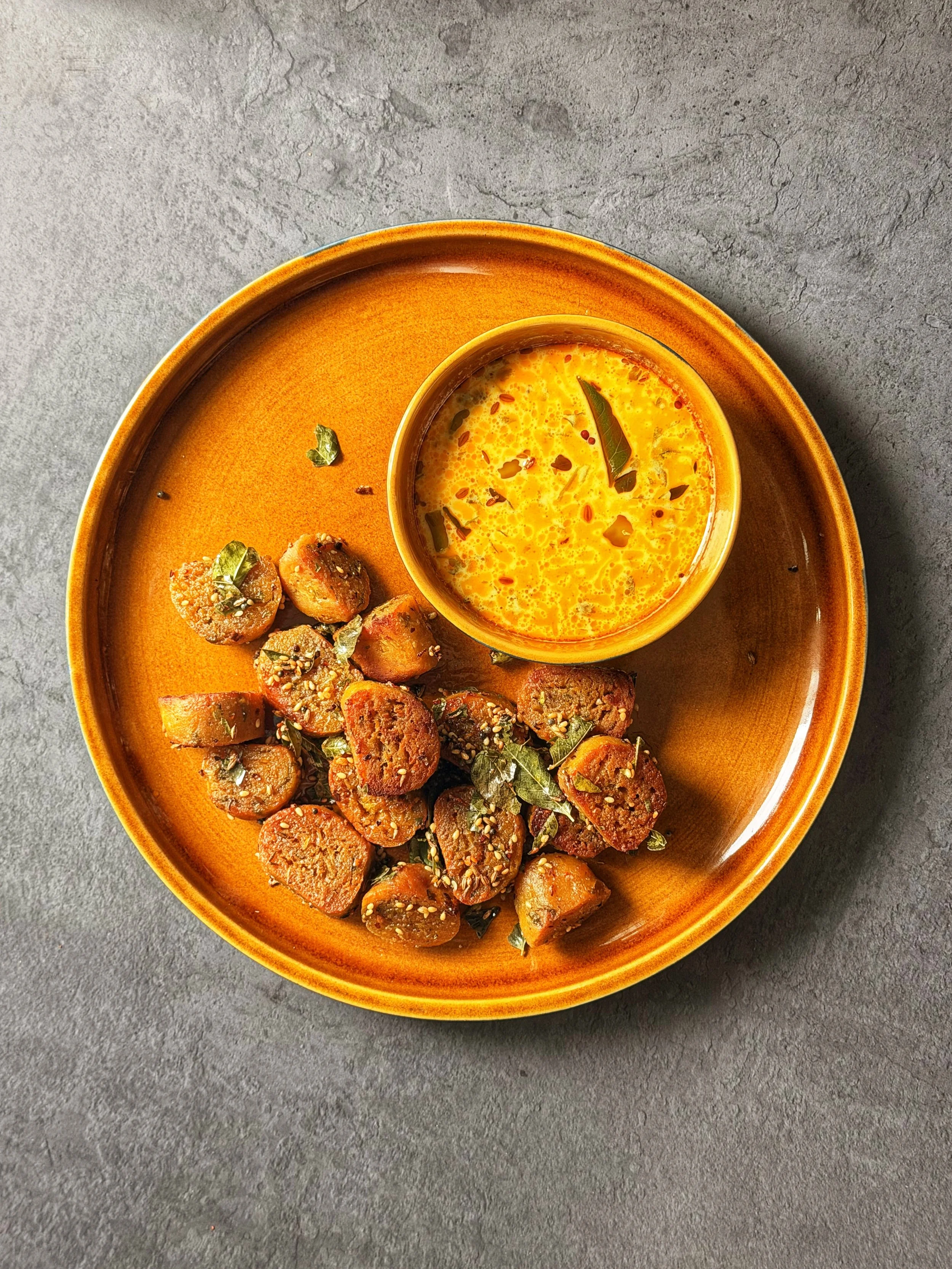
Muthiya may be more immediately associated with Gujarati cooking, but this combination of steamed muthiya and kadhi is also found in Rajasthani Jain cooking. Here, bottle gourd and leftover cooked rice are worked into a dough with wheat flour and besan, steamed, sliced, then fried with sesame, chillies and curry leaves. The muthiya can be eaten just like that, but paired with a thin, gently cooked curd and besan kadhi, they become a much more substantial meal.
Ingredients
For the muthiya
1 cup cooked rice
½ cup grated bottle gourd (lauki)
1 cup whole wheat flour
1 cup besan
1 tsp red chilli powder
½ tsp turmeric powder
½ tsp garam masala
1 tsp sugar
1 tsp ajwain
A pinch of asafoetida
1 tsp salt, or to taste
A pinch of baking soda
3 tsp oil
Water, only if required
Oil, for greasing
For frying the muthiya
2 tbsp oil
½ tsp mustard seeds
½ tsp cumin seeds
2 tsp sesame seeds
2 green chillies, chopped
2 sprigs curry leaves
¼ tsp turmeric powder
1 tsp red chilli powder
Salt, if required
For the kadhi
1 cup curd
3 tsp besan
½ tsp turmeric powder
Salt, to taste
Water, as required
A handful of coriander leaves, chopped
For the kadhi tadka
2 tsp ghee
½ tsp mustard seeds
½ tsp cumin seeds
2 green chillies, chopped
1 sprig curry leaves
A pinch of asafoetida
1 tsp red chilli powder
Method
Make the muthiya dough
Combine the cooked rice, grated bottle gourd, wheat flour, besan, red chilli powder, turmeric, garam masala, sugar, ajwain, asafoetida, salt, baking soda and oil in a large bowl.
Mix and knead everything together into a soft, slightly loose dough.
The bottle gourd will release quite a bit of moisture, so don't add any water initially. If the mixture still feels too dry after kneading, add water a splash at a time until it comes together.
Cover and rest for 15 minutes.
Shape and steam
Prepare a steamer and lightly grease the steaming plate with oil.
Grease your palms and divide the rested dough into portions. Roll each portion into a thick cylinder, roughly resembling a short, fat sausage.
Arrange the muthiya in the steamer, leaving a little room between them.
Steam for 15–20 minutes, or until cooked through. Insert a toothpick or skewer into the centre of one muthiya. It should come out clean.
Remove from the steamer and allow them to cool completely. Once cool enough to handle and properly set, slice into thick discs.
Fry the muthiya
Heat 2 tbsp oil in a wide kadai.
Add the mustard seeds and allow them to splutter. Add the cumin seeds, curry leaves, chopped green chillies and sesame seeds. Fry briefly until aromatic and the sesame begins to toast.
Add the sliced muthiya, followed by the turmeric and red chilli powder. Add a little salt only if required.
Increase the heat and fry, turning the pieces carefully, until the muthiya develop lightly browned, crisp edges.
Remove from the heat and set aside.
Prepare the kadhi
Whisk together the curd, besan, turmeric and salt until completely smooth.
Gradually whisk in enough water to produce a thin, pourable kadhi.
Transfer to a saucepan and place over low heat.
Cook for 20–30 minutes, stirring frequently, particularly during the early stages so the curd remains smooth and the besan doesn't settle or catch on the bottom.
The kadhi is ready when the raw flavour of the besan has completely disappeared and the mixture tastes integrated rather than floury.
Make the tadka
Heat the ghee in a small tadka pan.
Add the mustard seeds and let them splutter. Add the cumin seeds, green chillies, curry leaves and asafoetida and fry briefly.
Lower the heat and add the red chilli powder. It will bloom almost immediately, so take care not to burn it.
Pour the hot tadka directly over the kadhi.
Check the seasoning, add the chopped coriander and switch off the heat.
Cover and leave the kadhi to rest for 10 minutes, allowing the tadka to infuse.
Serve
Serve the hot kadhi with the fried muthiya.
You can keep the muthiya separate until serving if you want to preserve their browned edges, or add them to the kadhi shortly before eating if you prefer them softer and soaked with the tangy gravy.