
Chilled Nizakana
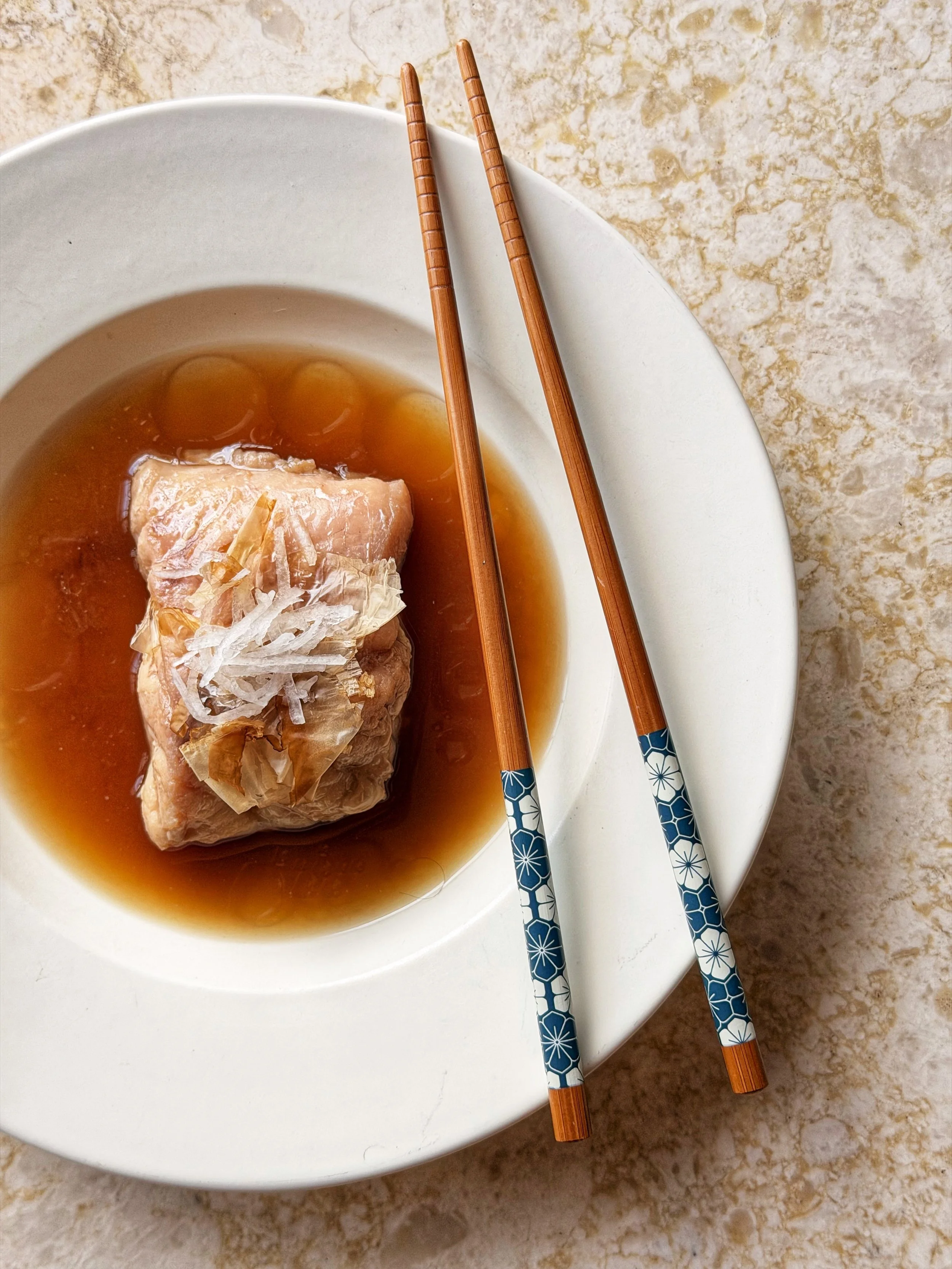
Nizakana is a wonderfully gentle Japanese way of cooking fish, simmering it briefly in seasoned dashi rather than frying or grilling it into submission. This version takes things one step further by letting the fish cool and chill in its braising liquid, giving all that soy, sake, mirin and ginger plenty of time to get acquainted. The real geekery, though, is hiding in the dashi, where kombu, shiitake and dried fish bring different umami compounds to the party and make each other taste even better. Light, deeply savoury and particularly lovely on a hot day, it is proof that sometimes the best thing you can do to a good piece of fish is very little.
Ingredients
Fish
400–500 g fish fillets or steaks
A pinch of salt
Firm white fish such as snapper, sea bass, grouper or barramundi works particularly well.
Cold-Extracted Dashi
Makes approximately 1 litre
1 litre cold water
10–15 g kombu
3–4 dried shiitake mushrooms
15–20 g dried anchovies
You will need 250 ml dashi for the nizakana. Refrigerate or freeze the remainder for another dish.
Braising Liquid
250 ml prepared dashi
60 ml Japanese soy sauce
60 ml sake
30 ml mirin
1 tbsp sugar
20 g ginger, thinly sliced
Garnishes
Choose one or several:
Spring onion, very finely sliced
Fragrant scallion oil
Grated daikon
Bonito flakes
Toasted sesame seeds
Method
Make the cold-extracted dashi
If using larger dried anchovies, remove the heads and dark innards where practical. This helps reduce bitterness. Very small anchovies can be left whole.
Gently wipe the kombu with a damp cloth. Don't scrub or rinse away the pale powdery coating on its surface.
Place the kombu, dried shiitake and anchovies in a container with 1 litre cold water.
Cover and refrigerate for 12–18 hours. Eight hours is sufficient in a pinch, but avoid extracting for much longer than 24 hours.
Strain through a fine sieve and reserve.
Why the combination works
There is some useful food chemistry happening here. Kombu is rich in glutamate, dried shiitake contributes guanylate, and dried fish contributes inosinate. Together these compounds amplify the perception of umami far beyond what any one ingredient manages alone.
Basically, teamwork.
Salt the fish
Lightly season the fish with salt and leave for 15 minutes.
Pat thoroughly dry with kitchen paper.
Salting draws out some surface moisture while slightly firming the flesh, which helps the fish retain its texture during braising.
Blanch the fish
Place the fish in a heatproof dish.
Pour boiling water over it and leave for approximately 10–15 seconds, then immediately rinse or briefly immerse it in cold water.
Pat dry.
This technique, known as shimofuri, removes surface proteins, blood and impurities that could otherwise cloud the braising liquid or give it a slightly muddy flavour.
Prepare the braising liquid
In a wide, shallow pan, combine:
250 ml dashi
Soy sauce
Sake
Mirin
Sugar
Sliced ginger
Bring to a gentle simmer and stir until the sugar dissolves.
The liquid should taste savoury and gently sweet rather than aggressively salty.
Braise the fish
Arrange the fish in a single layer in the simmering liquid.
Ideally, the liquid should reach roughly halfway up the fish. Add a small amount of water or dashi if necessary.
Cut a circle of baking paper slightly smaller than the pan and make a small hole in its centre. Place it directly over the fish as a makeshift otoshibuta, or drop lid.
Simmer very gently for:
8–10 minutes for fillets
12–15 minutes for thick steaks
Avoid a vigorous boil. Fish is considerably less forgiving than meat and doesn't need to be bullied into submission.
The flesh should be opaque and just beginning to flake when tested.
Cool in the braising liquid
Turn off the heat and leave the fish in the braising liquid for approximately 30 minutes.
This is an important part of the recipe. As the fish cools, it continues to take on flavour from the seasoned dashi.
Chill
Carefully transfer the fish to a container and pour enough braising liquid over it to keep it moist.
Cover and refrigerate for at least 2 hours, though overnight is even better.
The resting time allows the soy, sake, ginger and dashi flavours to settle into the fish.
Serve
Remove the fish from the refrigerator about 15 minutes before serving. You want it chilled rather than painfully refrigerator-cold.
Place the fish in a shallow bowl or plate and spoon a little of the chilled braising liquid around it.
Finish with your choice of spring onion, grated daikon, toasted sesame seeds or a small scattering of bonito flakes.
The finished dish should be clean, delicate and intensely savoury, with firm but tender fish and a light braising liquid carrying plenty of umami.